
Between February 2025 and January 2026, Iran's exports of base metals and articles thereof reached over USD 10.1 billion, accounting for 18.38% of the country's total export basket. That figure marks the sector as the second-largest export category in Iran, yet it also reflects an 18.85% decline compared to the previous period. For a trader entering the steel export business seriously, that decline is itself a signal: the market is repricing on quality, and only suppliers who manage metallurgical grades, inspection documentation, and contract structure with precision keep their share. Coolak International Group built this guide on verified customs data and direct experience in Iran's steel supply chain to clarify the path into this market for international buyers.
Key Takeaways:
Base metals hold an 18.38% share of Iran's export basket, ranking second nationally, though the recent decline signals sharper quality competition.
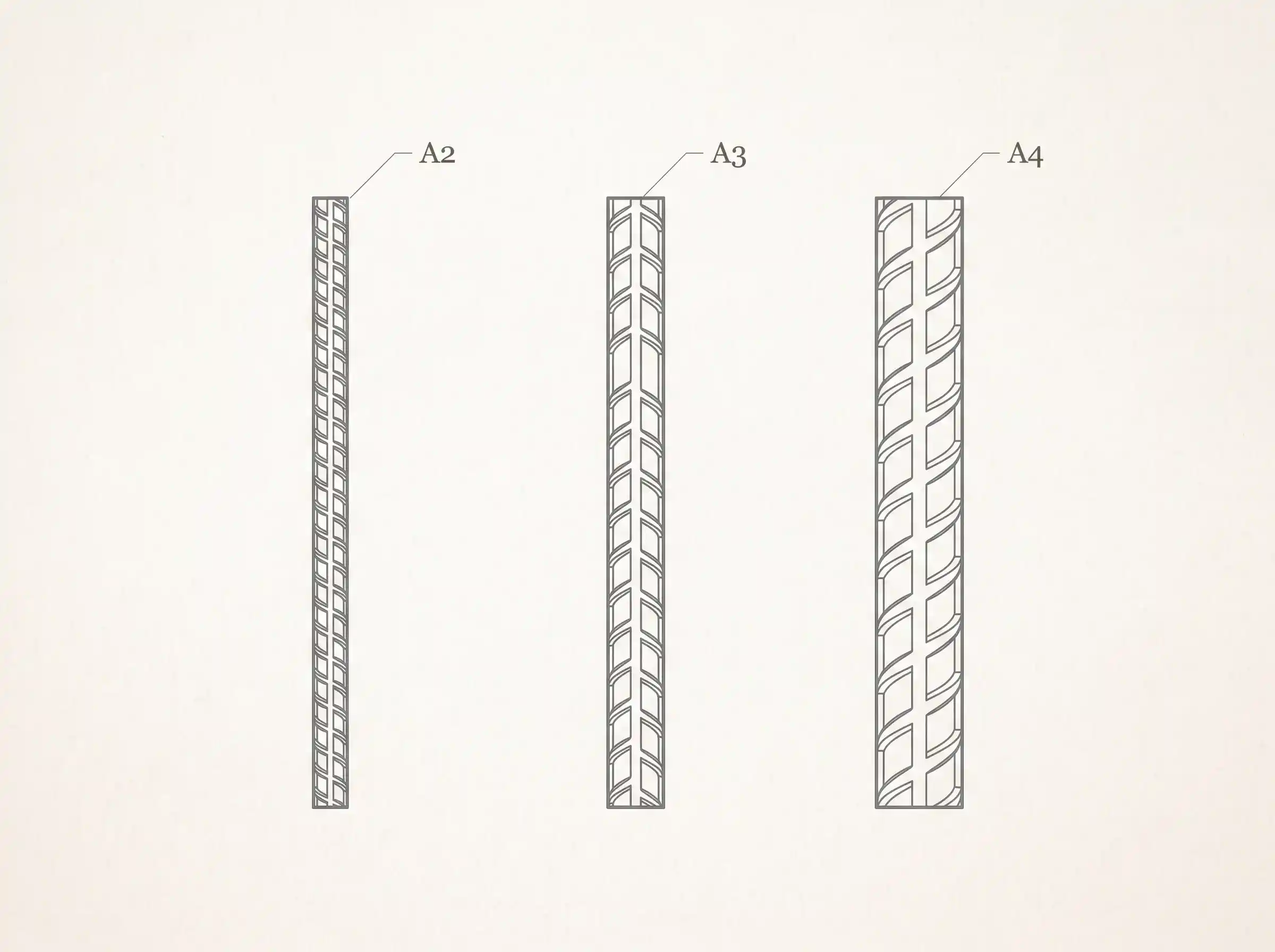
Choosing the right grade (A2/A3/A4 under ASTM A615 and BS 4449) is a precondition for smooth clearance at the destination customs.
Independent third-party inspection (SGS, Intertek, Bureau Veritas) is the undeniable record of quality compliance in shipping documents.
An irrevocable Letter of Credit under UCP600 remains the most reliable tool for covering financial risk on high-tonnage shipments.
Reading Iran's Steel Export Data Correctly
Before any commercial decision, understanding customs data correctly shapes the negotiation with a buyer. Steel sits within a broader category called base metals and articles thereof, which also includes copper cathode and other base metals, though steel products form its dominant share.
The Share of Base Metals and the Recent Downward Trend
Customs data from February 2025 through January 2026 puts the value of this category's exports at USD 10,123,981,392, representing 18.38% of the country's total exports. What surface-level analysis usually misses is the 18.85% drop in that figure compared to the start of the same period.
Why Did Exports in This Category Decline?
This decline should not be read as a shrinking market. Three factors act on this number at once:
Global price swings in steel and copper, which directly reduce the dollar value of shipments even when export tonnage stays flat.
Tighter buyer scrutiny on quality inspection, shifting a larger share of deals toward suppliers with more complete documentation.
Growing regional competition from Turkey and CIS countries in shared markets across Africa and Central Asia.
For a trader entering the market under these conditions, the margin for error has narrowed, and choosing a supplier with a clear track record of documentation matters more than it did a few years ago.
Product Diversity: From Billets to Rebar and Coils
Steel trade is not a single product. The chain actually begins before iron ever gets smelted: steel mills choose between two primary feedstocks for a blast furnace or a direct reduction unit, and the difference between iron ore pellets and concentrate has a direct impact on the final product's quality. The chain then moves into semi-finished goods such as billet, bloom, and slab, ending in finished products such as deformed rebar, plain bar, coil, and structural beams. Each product carries distinct industrial applications and logistics sensitivities. If your focus sits further upstream in this chain, Coolak's guide to sourcing iron ore pellets gives a full view of where this supply chain begins.
Deformed Bar vs. Wire Rod Coil: Which Fits Your Project?
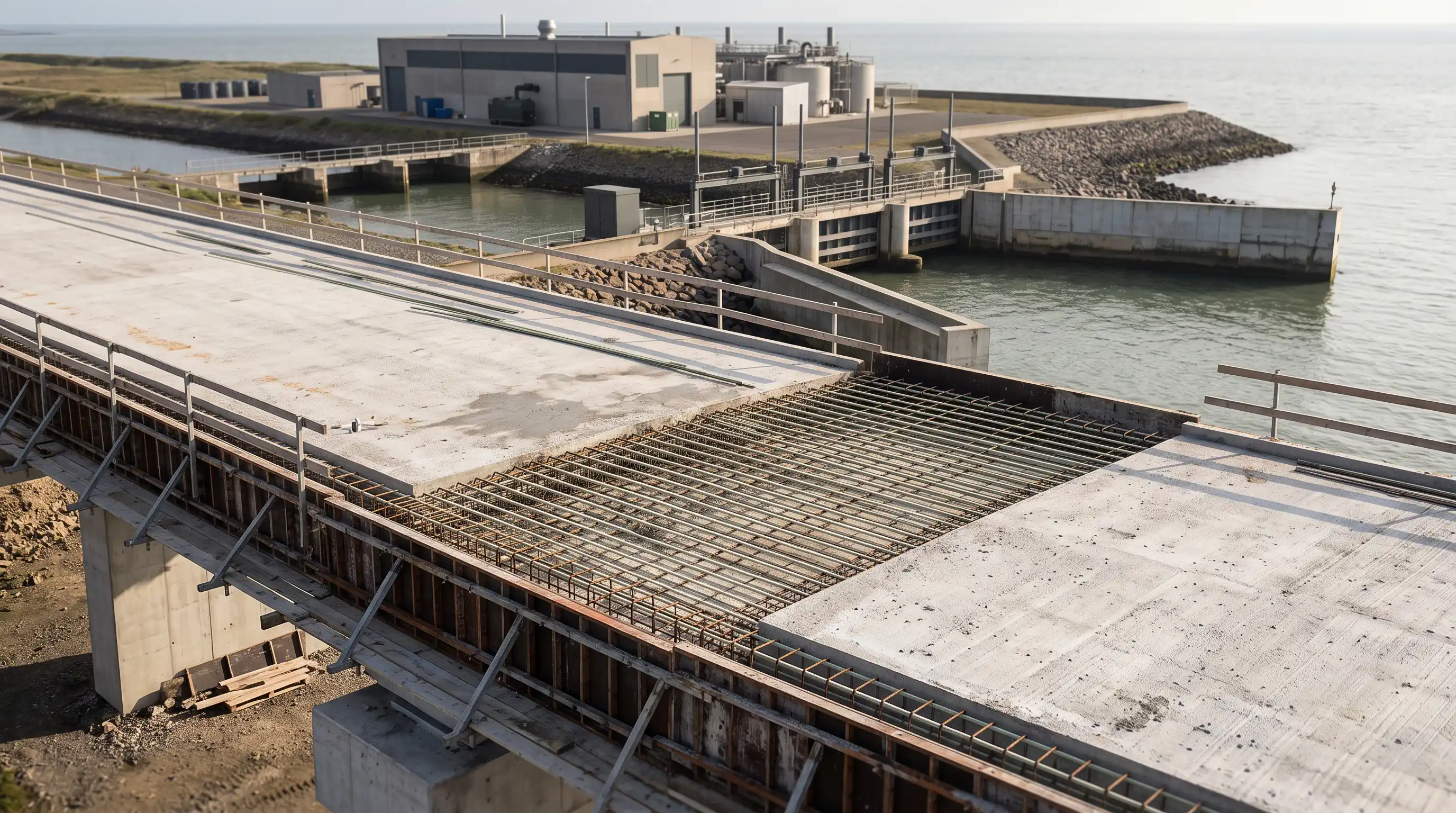
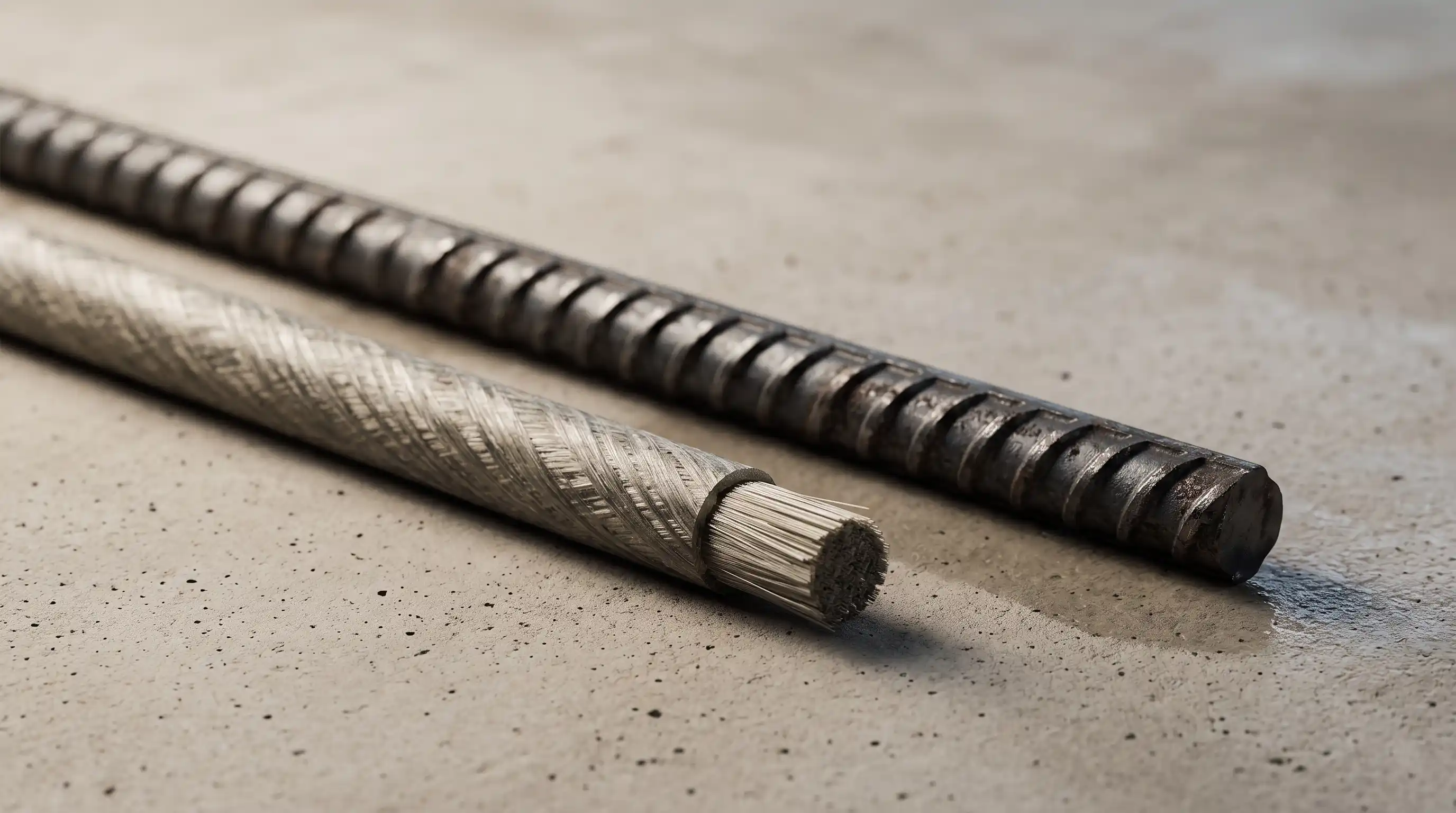
Deformed bar features surface ribs designed to bond better with concrete, and it goes into reinforced concrete structures, columns, beams, and slabs; common diameters run from 10 to 40 mm in 6, 9, or 12 meter lengths. Wire rod coil, by contrast, ships in large rings weighing 1.8 to 2.5 tons and mainly feeds nail production, barbed wire, and industrial wire mesh manufacturing.
Technical Specifications of Export-Grade Iranian Rebar
Parameter | Range / Value |
|---|---|
Diameter | 5.5 to 40 mm |
Grade | A2 (St37), A3 (St52), A4 (St60/Gr60) |
Tensile Strength | 370 to 600 MPa |
Yield Strength | 225 to 500 MPa |
Elongation at Break | Min. 14% (grade-dependent) |
Standards | ASTM A615, BS 4449, ISO 6935, DIN 488, ISIRI 3132 |
Chemical Composition | Carbon 0.14–0.25%, Manganese 0.40–1.20%, Phosphorus & Sulfur below 0.055% |
This is the same specification table listed on Coolak's Steel Rebar product page and forms the technical basis for negotiations with producing mills such as Mobarakeh Steel, Khuzestan Steel, and Hormozgan Steel.
Metallurgical Grades and the Standards Governing Global Markets
No inspection body shows leniency on steel quality, because this product ties directly to human safety in civil infrastructure projects.
ASTM A615 vs. BS 4449 and DIN 488
Producers adapt their output to different standards depending on the export destination. ASTM A615 is the primary reference across the American market and many international projects, defining tensile and yield strength with high precision. BS 4449 and DIN 488, in turn, are the accepted standards across European markets and parts of the Persian Gulf region. For destinations across the Commonwealth of Independent States (CIS) and Central Asia, compliance with Russia's GOST standard is a firm prerequisite for export.
Reading a Mill Certificate in Plain Terms
A mill certificate is a document issued by the producing plant that lists the product grade, heat number, actual chemical composition, and tensile test results. A professional buyer checks this document against the standard specified in the contract before final acceptance of a shipment; any mismatch between the heat number on the certificate and the physical packaging label is a serious warning sign for the deal.
The Decisive Role of Independent Inspection (SGS, Intertek, Bureau Veritas)
Trust in international trade never rests on verbal claims. The presence of third-party inspection companies at loading ports is a commercial requirement, not an optional extra.
The Pre-Shipment Inspection Cycle: From Sampling to Q&Q Certificates
The inspection process typically runs through four stages: random sampling of the cargo at the warehouse or wharf, mechanical testing (tensile strength, elongation) at an accredited laboratory, dimensional checks (diameter, length, bundle weight), and finally the issuance of a Quality and Quantity (Q&Q) certificate. This certificate becomes an undeniable part of the shipping documents and a condition for releasing payment under a letter of credit.
Engineering Heavy Logistics: From the Mill to the Ship's Deck
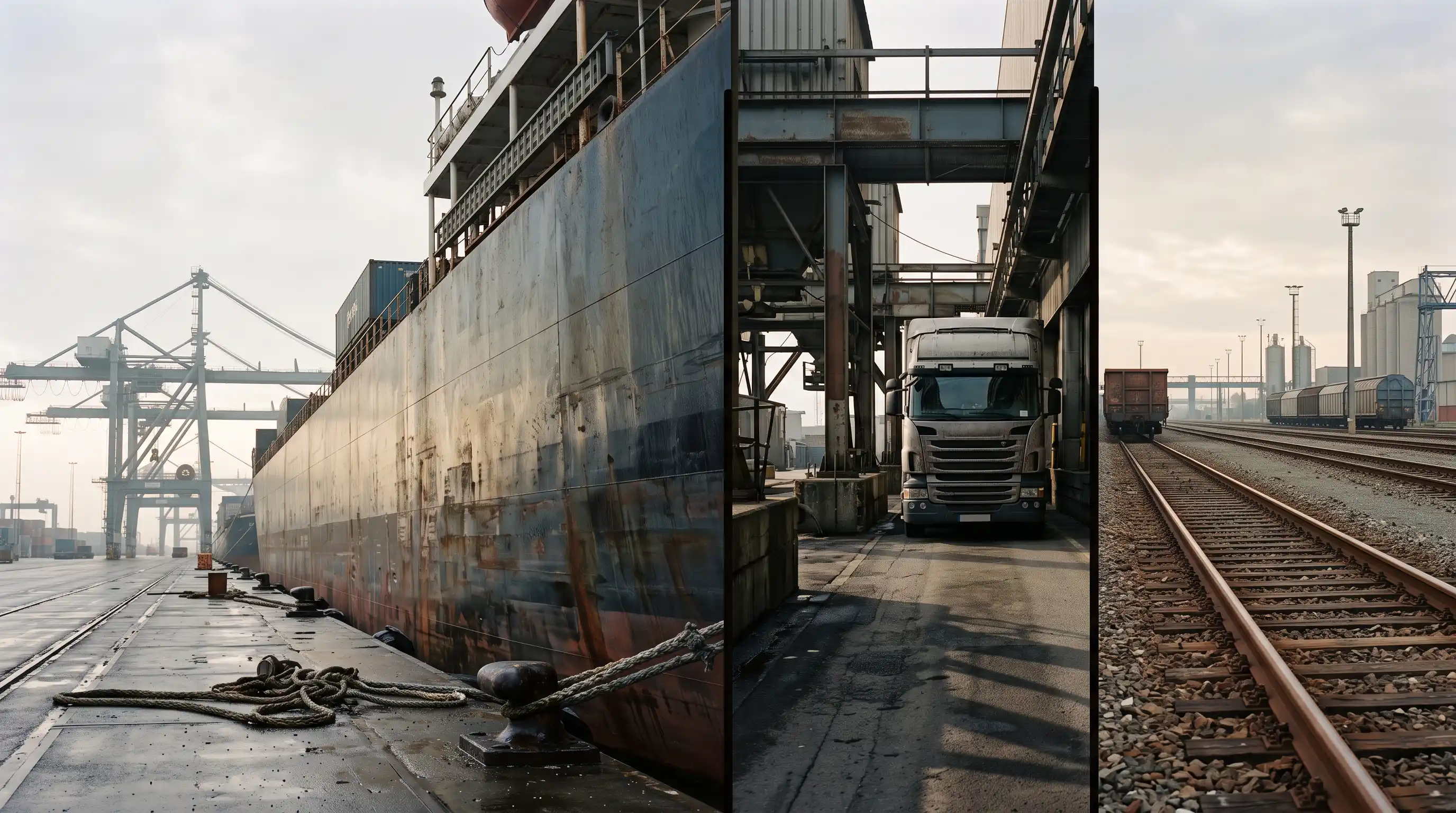
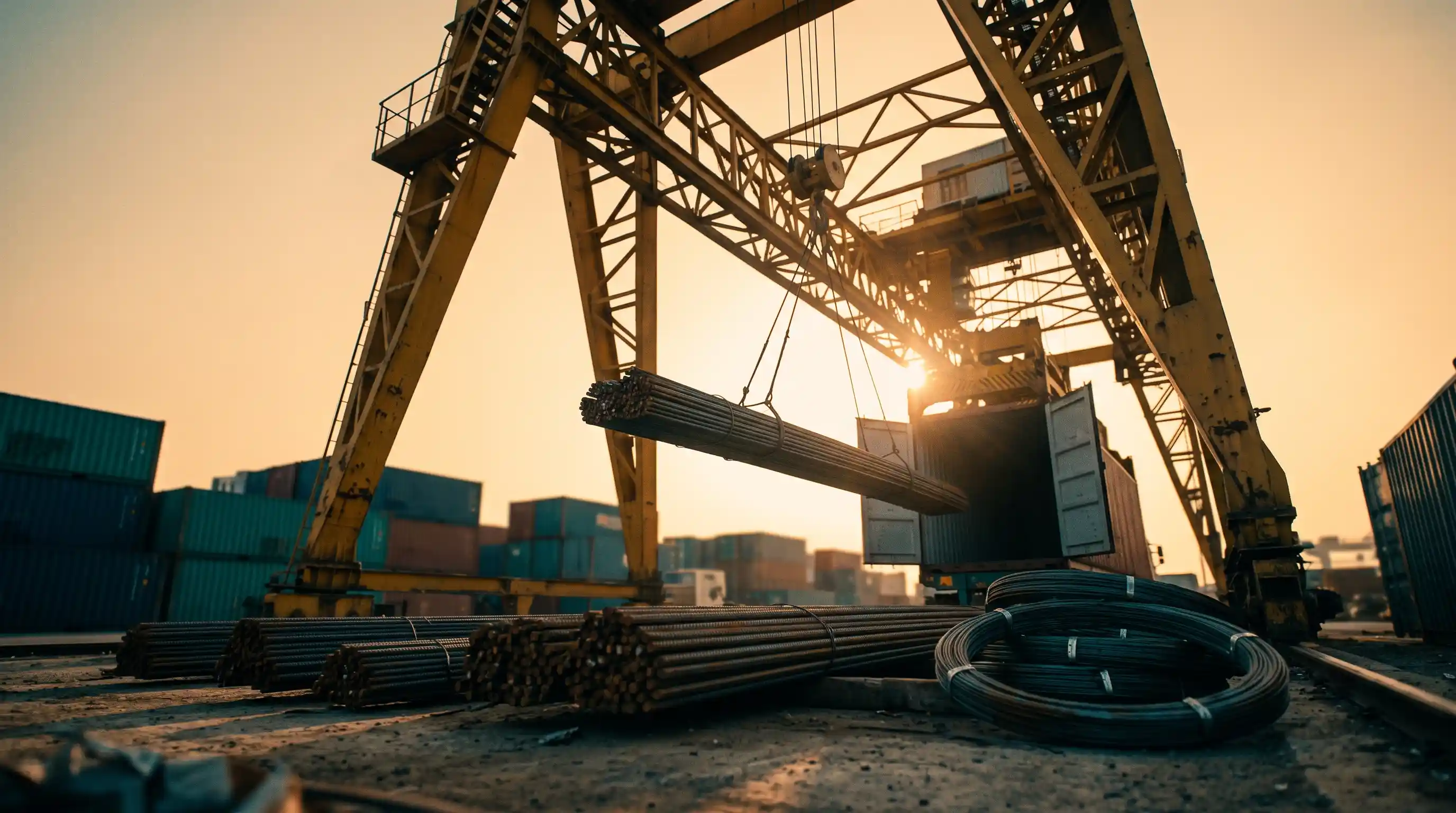
The next major challenge after quality approval is moving tens of thousands of tons of steel from the mill to the destination port. Steel counts as heavy and bulky cargo, and any mismanagement of packaging quickly turns into a financial loss.
Bar and Coil Packaging: What the Contract Must Specify
Bar rebar ships in 2 to 3-ton bundles secured with steel bands and labeled; each label must include grade, diameter, length, weight, batch number, and manufacturer name. Coil rebar ships as rings with an inner diameter of 760 mm and outer diameter of 1,200 mm, bound with steel wire and ready for container or bulk vessel loading. If your focus centers on the rebar market specifically, Coolak's comprehensive guide to Iranian rebar export covers deeper market analysis and operational technique for this exact product.
Choosing the Right Incoterm for High-Tonnage Shipments
Setting a clear boundary for responsibilities, costs, and risk transfer between buyer and seller happens only through the correct choice of trade term under Incoterms 2020. In steel trade, FOB suits buyers who run their own shipping line arrangements; CFR applies when the seller covers freight cost to the destination port; and CIF is chosen when marine insurance coverage also falls on the seller.
Container Loading Capacity and Real Tonnage Calculations
For accurate shipment planning, knowing real container capacity matters: a 20ft container typically holds around 25 tons of rebar, and a 40ft container holds around 27 tons. For larger volumes, overland transport to neighboring countries such as Iraq, Afghanistan, Turkmenistan, and Azerbaijan is also a competitive option. Lead time for stock items usually runs 5 to 7 working days, while production orders take 30 to 45 working days depending on volume.
Financial Structure and Legal Risk Coverage Under ICC Rules
Steel shipments carry high financial value, which puts financial security at the top of both parties' priorities in any contract. If your interest extends to a broader base-metals portfolio, Coolak's complete copper cathode guide and copper cathode quality standards offer a complementary view of pricing logic and inspection in another base metal.
Irrevocable Letters of Credit and the UCP600 Mechanism
Using an irrevocable Letter of Credit remains the strongest tool for covering financial risk. The issuing bank releases payment only once all shipping documents and quality inspection reports are submitted without any discrepancy, under the rules of UCP600. The International Chamber of Commerce (ICC) provides precise frameworks for interpreting these documents, and adherence to them prevents legal disputes from reaching international courts.
Alternative Payment Structures: TT and SBLC
For mid-sized transactions, payment via SWIFT wire transfer (TT/MT103) with 30% advance and balance settled against shipping documents is common. For long-term, multi-shipment contracts, a Standby Letter of Credit (SBLC – MT760) offers more flexibility to both sides. Designing this structure correctly is exactly the work handled through Coolak's international trade contracts service.

Building a Strategic Partnership for Secure Steel Trade
Trading steel products goes beyond moving a commodity. It requires the precise architecture of an integrated supply system. Since its founding in 2017, Coolak International Group has held to one belief: a transaction's success is decided long before any contract is signed. Deals often stall not because a genuine buyer or supplier is missing, but because of incomplete information, unverified partners, and hidden risk. We close that gap through complete transparency at every stage, careful verification of suppliers, and practical transaction structures, even when the right advice is to walk away from a deal that isn't in your best interest. To review your sourcing or sales need, submit your request through Coolak's Trade Requests page.
Need product guidance?
Contact our team for specifications, availability, and pricing details.