GFRP rebar applications should be evaluated from the project outward, not from a list of generic material advantages inward. A coastal location, persistent moisture, chloride exposure, or a need for lighter reinforcement may justify technical review, but none of those conditions by itself establishes that GFRP is suitable for the structural member.
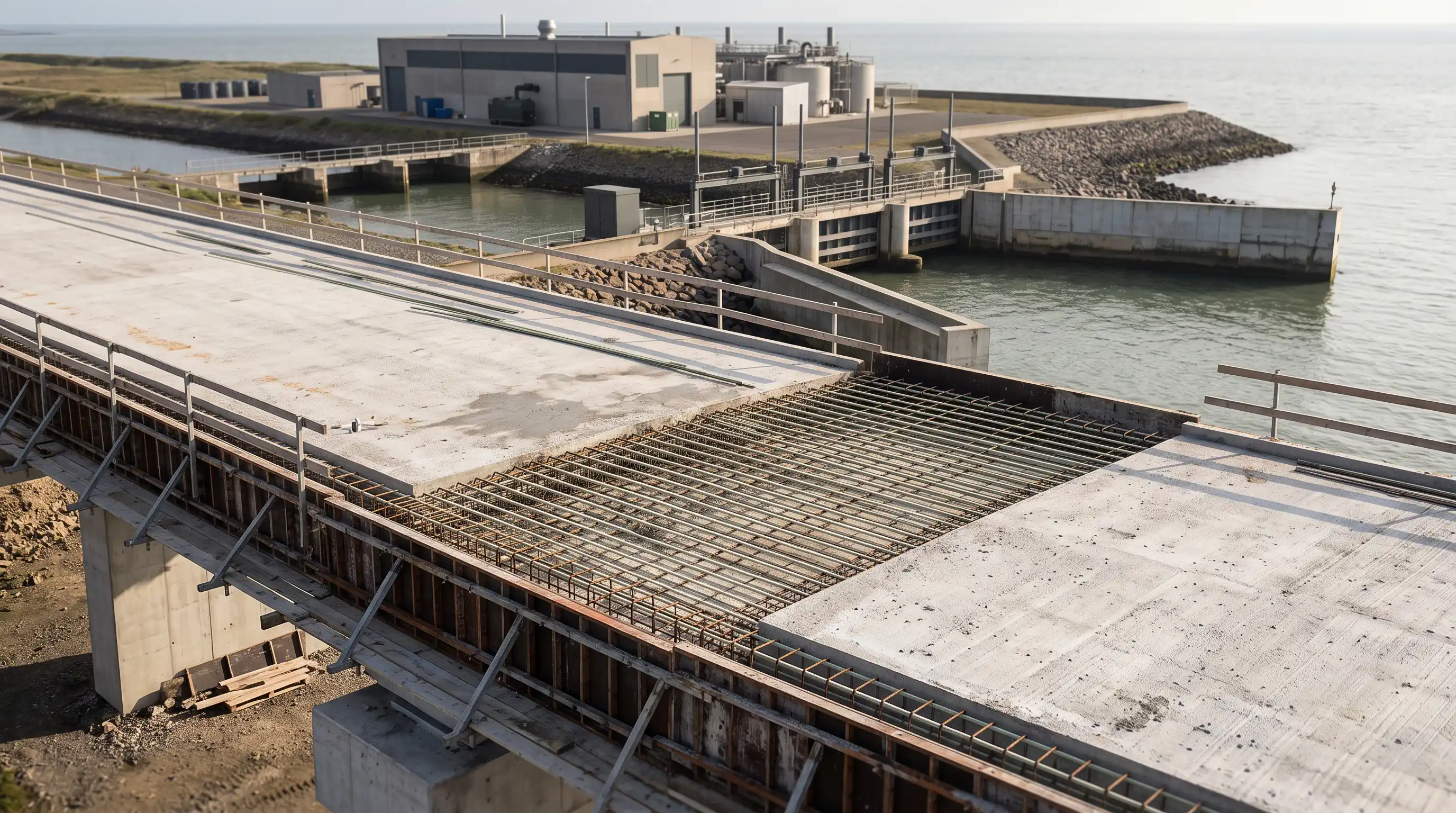
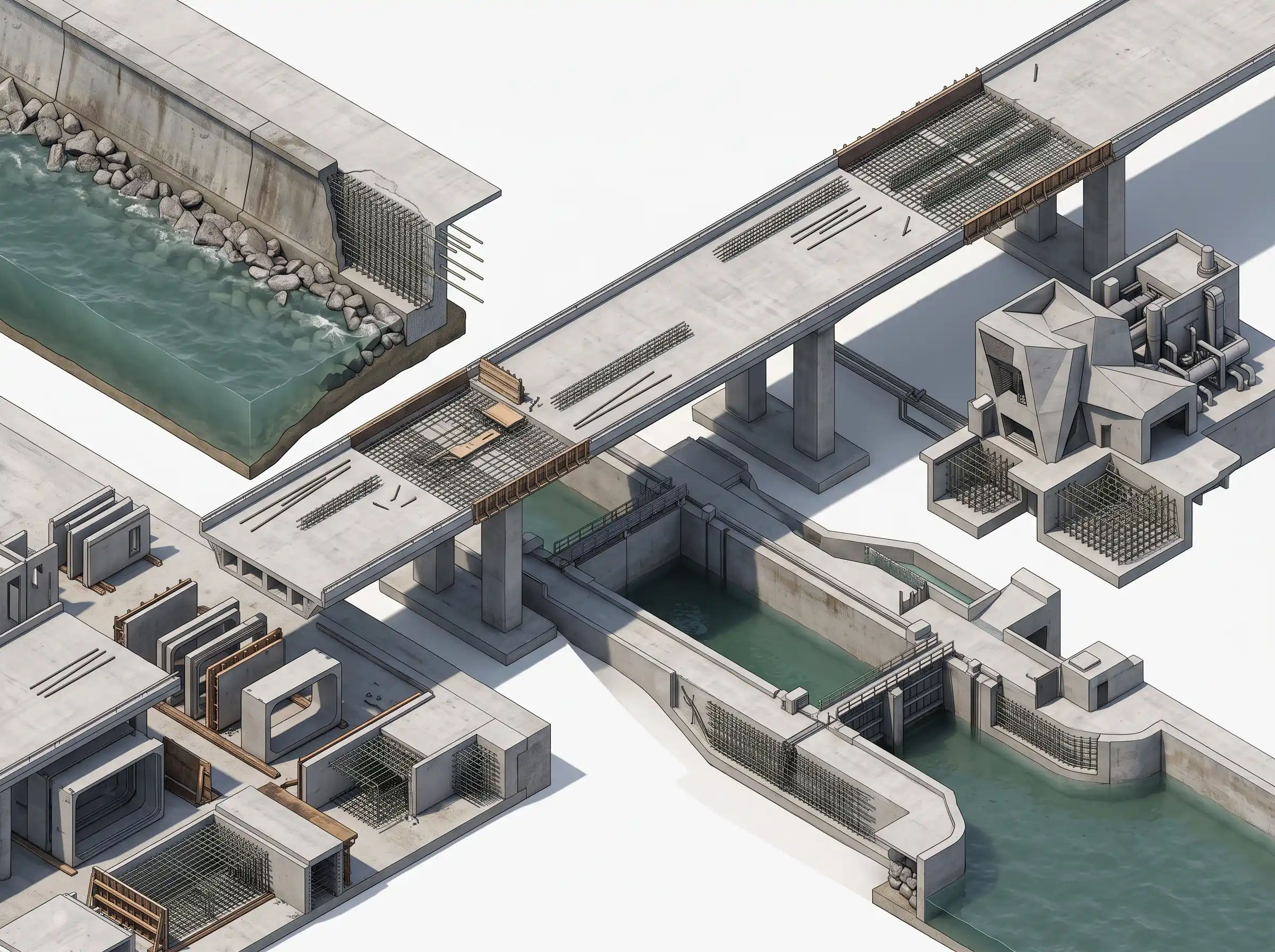
GFRP reinforcement has been used or studied in seawalls, bridge decks, pavements, precast elements, piles, and specialized facilities requiring non-ferrous reinforcement. ACI also identifies structures susceptible to corrosion and structures requiring non-ferrous materials because of electromagnetic considerations as important contexts for GFRP-reinforced concrete.

Coolak International Group approaches these applications as project-selection questions. For each use case, the useful sequence is the same: identify the exposure, understand the structural function, match the relevant material characteristic, identify the limitation, then verify the governing design requirements and product evidence. The presence of a successful case study is evidence that an application is possible; it is not approval for a different project.
Key Takeaways:
Define exposure and member function before considering GFRP as a reinforcement option.
In marine, bridge, or hydraulic projects, evaluate serviceability, stiffness, fire/temperature, detailing, and construction alongside corrosion.
Put bent shapes, chemical exposure, or electromagnetic requirements into the design and RFQ from the beginning rather than treating them as later procurement details.
Read application cases as evidence of real use, not as substitutes for engineering approval or project-specific design.
Where Is GFRP Rebar Used?
GFRP is most often evaluated where corrosion of steel reinforcement, chloride exposure, reinforcement weight, or non-metallic characteristics have direct project value.
Documented or researched use cases include:
marine and coastal concrete;
bridge and transportation infrastructure;
concrete exposed to deicing salts;
selected water and hydraulic infrastructure;
selected industrial or aggressive environments;
electromagnetic-sensitive facilities;
precast concrete components;
concrete pavements and slabs;
piles and selected foundation elements;
specialized infrastructure such as precast tunnel segments.
This list does not imply universal suitability. ACI provides a separate design framework for GFRP-reinforced structural concrete, which reflects the need to connect each application to material properties, member behavior, detailing, and construction requirements.
Why Does the Application Matter More Than a Generic Material Claim?
Corrosion resistance, lower weight, or high tensile capacity are not sufficient reasons on their own to specify GFRP.
The reinforcement needs to fit:
the structural function;
exposure conditions;
serviceability requirements;
stiffness demands;
fire and temperature requirements;
required bar geometry;
fabrication and construction constraints;
applicable design provisions;
project specification;
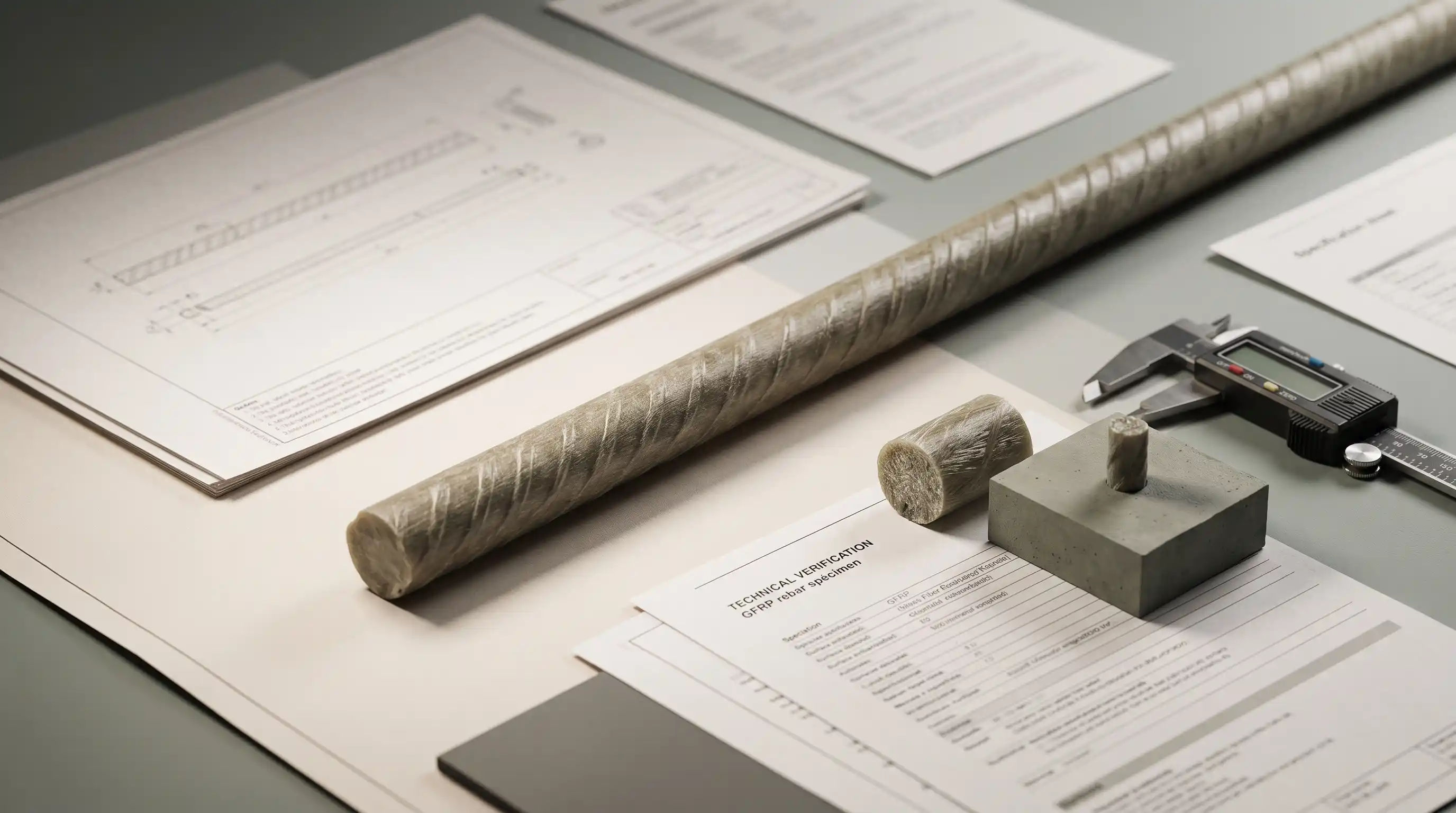
product qualification and documentation.
A chloride-exposed structure is a useful example. Non-metallic reinforcement may address one durability concern, but the member must still satisfy cracking, deformation, strength, development, construction, and inspection requirements.
The cluster guides on GFRP rebar properties, GFRP standards and specifications, and GFRP vs steel rebar provide the material, standards, and comparison background. This article keeps its focus on use cases and application selection.

How Is GFRP Rebar Used in Marine and Coastal Structures?
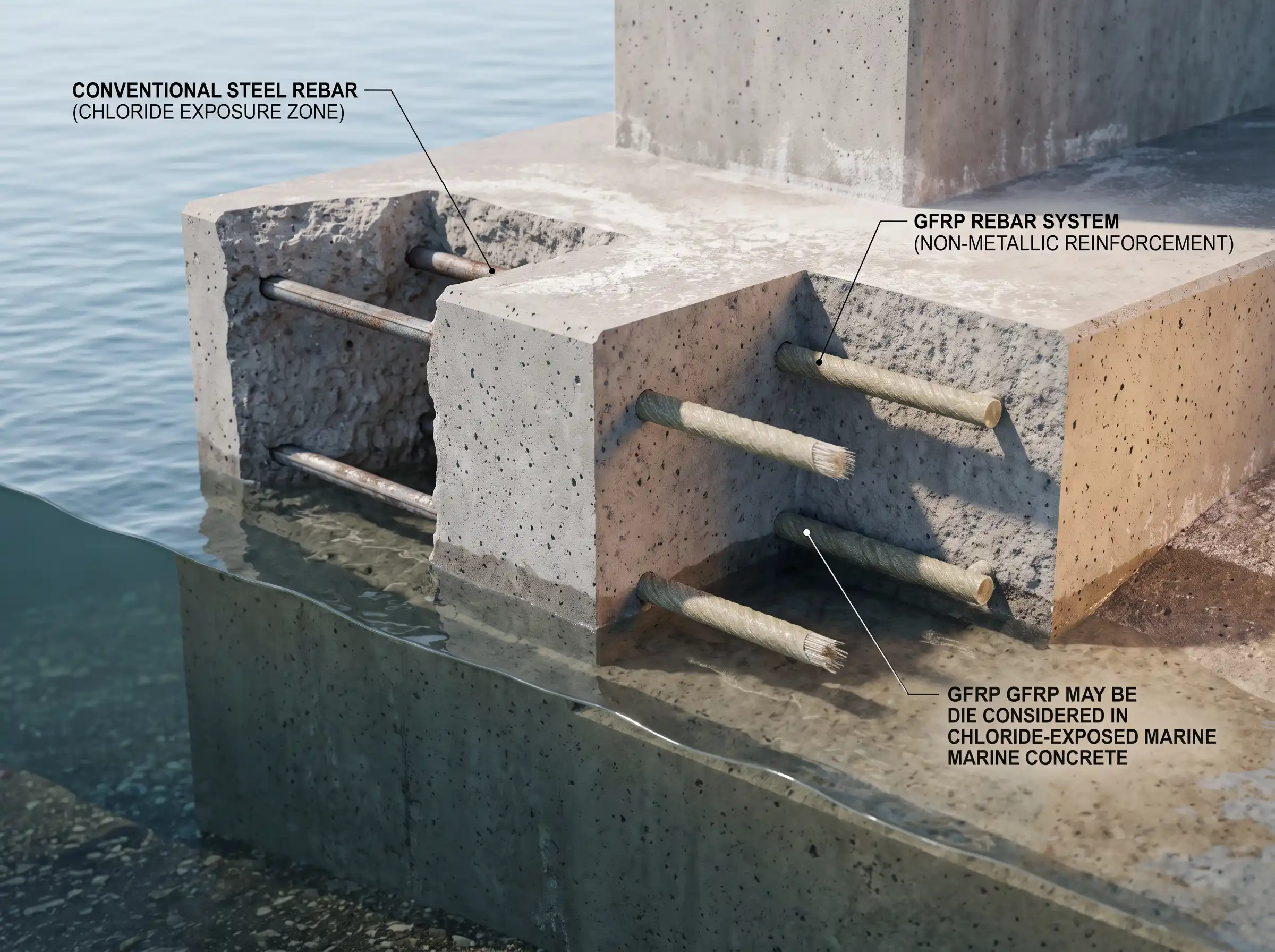
Marine and coastal structures are among the clearest documented GFRP applications because chloride-rich exposure can make reinforcing-steel corrosion a major durability issue.
Potential applications include:
seawalls;
waterfront concrete;
docks;
jetties;
marine piles;
bulkheads;
sea-facing structural concrete;
coastal bridge components.
ACI documented the Charleston Battery seawall retrofit, where GFRP reinforcement was incorporated into wall components and the seaside face, with corrosion resistance cited as a selection factor.
ACI has also documented the Flagler Beach secant-pile seawall, which used GFRP reinforcing bars in its piles and continuous cap.
Why May GFRP Be Considered?
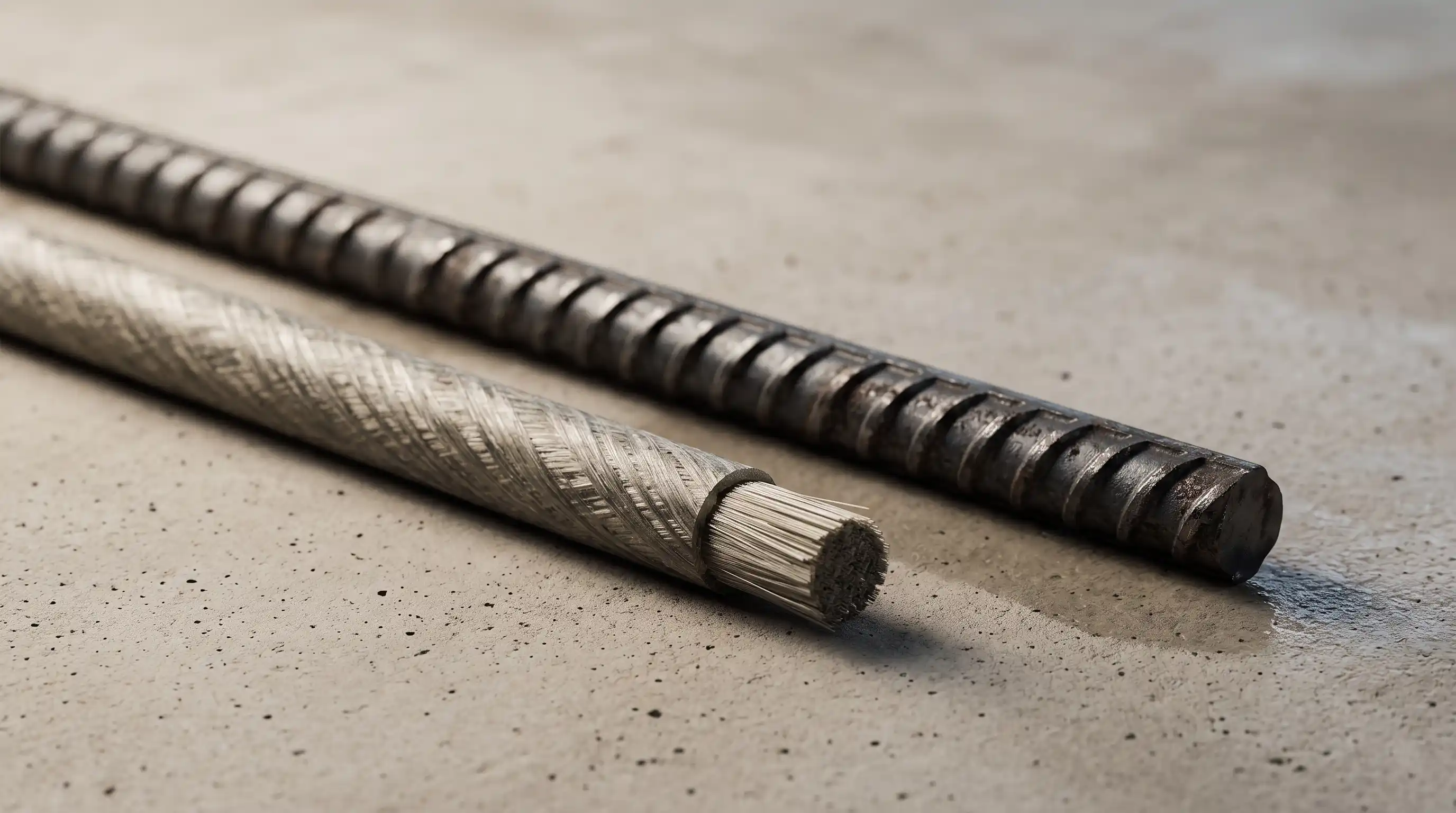
The main connection is the non-metallic reinforcement system. GFRP does not undergo the conventional electrochemical rusting mechanism associated with reinforcing steel, which can make it relevant to a marine durability strategy.
What Needs Verification?
Marine use should not be translated into a claim that seawater cannot affect a composite system.
The project team still needs to assess:
fiber/resin system;
product qualification;
temperature;
moisture and alkaline exposure;
manufacturing quality;
structural requirements;
applicable design provisions.
A documented seawall establishes precedent, not automatic suitability for another seawall.
How Is GFRP Used in Bridge Decks and Transportation Infrastructure?
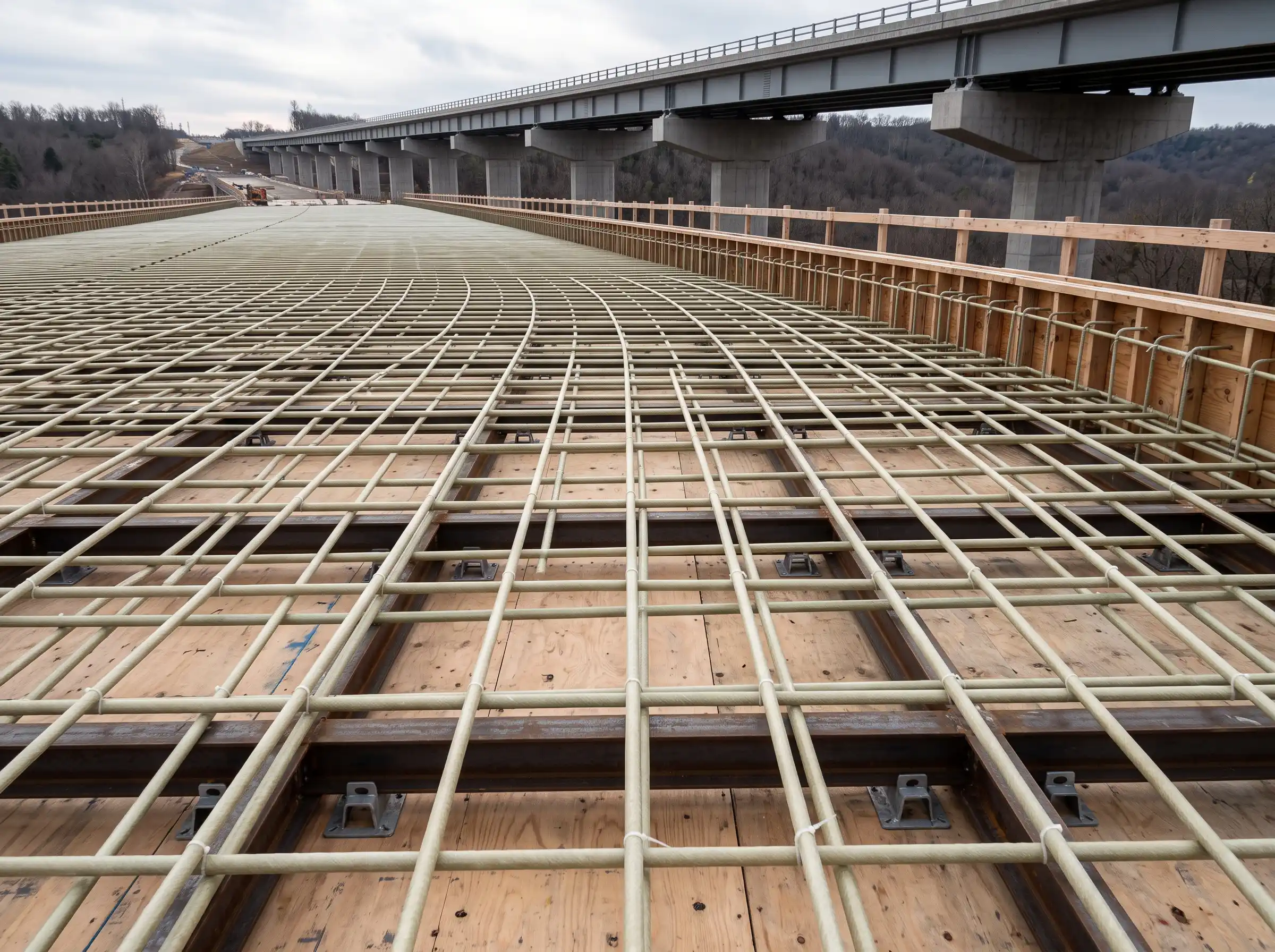
GFRP has documented use in concrete bridge decks and other transportation components where durability and chloride exposure influence reinforcement selection.
FHWA's FRP Composite Technology resources include GFRP reinforcement in bridge construction and document the casting of a GFRP-reinforced concrete bridge deck.
Potential applications include:
bridge decks;
approach slabs;
selected traffic barriers or railings where specified;
precast bridge components;
selected substructure components;
transportation concrete exposed to chlorides.
An ACI case study for the US 41 bridge over North Creek documents GFRP reinforcement in a cast-in-place flat-slab superstructure and in precast substructure panels.
Why May It Be Considered?
Relevant drivers can include:
chloride exposure;
corrosion-related durability;
lower reinforcement weight where logistics matter;
infrastructure life-cycle objectives.
What Needs Verification?
A documented bridge application does not establish GFRP as the default bridge-deck material. The governing bridge authority, design requirements, serviceability, detailing, bar configuration, construction practices, and product qualification remain controlling factors.
Why Is GFRP Considered in Concrete Exposed to Deicing Salts?
Deicing salts can introduce chlorides into transportation concrete, which is why non-metallic reinforcement may enter the durability discussion.
FHWA describes chloride from deicing salts as a contributor to reinforcing-steel corrosion in bridge decks.
Relevant contexts can include:
bridge decks;
road structures;
selected parking infrastructure;
chloride-exposed transportation slabs.
This application is related to marine exposure but not identical to it. The chloride source may be winter maintenance rather than seawater.
GFRP removes the conventional steel-rusting mechanism from the reinforcement system, but the structure still needs appropriate serviceability, stiffness, cracking, detailing, design, and durability evaluation.
Where Can GFRP Fit in Water and Hydraulic Infrastructure?
GFRP can be evaluated in selected water-related concrete structures where persistent moisture or corrosion strategy is relevant, but contact with water alone is not a sufficient specification.
Potential contexts include:
concrete channels;
selected hydraulic structures;
water-control infrastructure;
selected tanks where the project design permits;
concrete subject to persistent moisture.
ACI has documented a large mudflow-protection project using GFRP-reinforced concrete facilities and diversion channels. The project followed its own jurisdiction-specific design and material standards, making it evidence of a real hydraulic/infrastructure use rather than a universal design model.
Why May It Be Considered?
Moisture exposure and corrosion-related durability can support evaluation of a non-metallic reinforcement system.
What Needs Verification?
No general conclusion should be drawn for every potable-water tank, wastewater facility, or chemical tank.
The project needs to verify:
resin system;
water or process chemistry;
temperature;
environmental exposure;
design requirements;
product qualification.
Can GFRP Be Used in Industrial or Chemical Environments?
GFRP may be considered in selected industrial environments when corrosion exposure or a non-metallic reinforcement requirement has clear project value, but it should not be described as universally chemical-proof.
Composite performance can depend on:
resin chemistry;
glass-fiber system;
chemical type;
concentration;
temperature;
duration of exposure;
concrete protection;
manufacturing quality.
ACI identifies structures susceptible to corrosion as a relevant context for GFRP and ties appropriate use to environmental and structural factors.
That distinction matters for procurement. “Industrial environment” is too broad for an RFQ. If concrete will face an acid, alkali, solvent, process liquid, or another defined exposure, compatibility evidence should relate to the actual resin/product system and exposure conditions.
Why Is GFRP Used in Some Electromagnetic-Sensitive Facilities?
Because GFRP is a non-metallic reinforcement system, it can be relevant where a project requires non-ferrous reinforcement for electromagnetic reasons.
ACI specifically identifies structures requiring non-ferrous materials due to electromagnetic considerations as a context for GFRP.
A 2026 ACI technical Q&A also notes that MRI rooms have used the magnetic transparency of GFRP reinforcement.
Potential contexts include selected:
research facilities;
MRI-related zones;
laboratories;
structures near specialized electromagnetic equipment;
electrical or technical facilities with defined reinforcement requirements.
This should not be translated into claims such as “invisible to all electromagnetic systems.” The equipment designer and project specification need to define the actual requirement.
How Is GFRP Used in Precast Concrete?
GFRP has been used and studied in selected precast concrete components, where factory production can support controlled geometry and reinforcement preparation.
ACI published a 2026 full-scale study of precast concrete stadium bleacher units reinforced with GFRP bars.
Research and case studies also document GFRP in precast bridge components and reinforced precast deck systems.
Potential reasons for evaluation include:
durability requirements;
controlled factory production;
lower reinforcement weight during handling;
planned factory-produced bar shapes.
A critical distinction must remain clear:
GFRP rebar in precast concrete is not the same thing as a structural FRP deck or FRP panel.
This article concerns concrete reinforced internally with GFRP bars. A structural FRP panel is a different composite product with a different structural system.
Is GFRP Used in Concrete Pavements and Slabs?
Yes, GFRP reinforcement in concrete pavements is a documented research application, but it should not be treated as a default pavement recommendation.
FHWA carried out a dedicated research program on continuously reinforced concrete pavement (CRCP) using GFRP rebars. The work addressed concrete shrinkage, temperature effects, crack development, and the different restraint behavior associated with GFRP and steel reinforcement.
This is a useful example of why corrosion resistance is not the only design variable. Pavement and slab applications can require attention to:
shrinkage;
thermal stresses;
crack spacing;
crack control;
elastic modulus;
restraint conditions.
Research published through ACI has also examined GFRP in slabs-on-ground and flatwork applications.
The accurate description is therefore documented and researched application, not universal design preference.
Can GFRP Be Used in Foundations and Concrete Piles?
GFRP has been studied and implemented in selected pile and foundation applications, particularly where marine or aggressive exposure affects the reinforcement strategy.
ACI published research on concrete piles reinforced entirely with GFRP bars and spirals and conditioned in laboratory-simulated marine environments. The work examined both durability and structural response.
Another ACI publication documents the design and driving performance of GFRP-reinforced precast concrete piles for coastal construction.
Why May It Be Considered?
Relevant factors include:
marine exposure;
corrosion concerns;
requirement for nonmetallic reinforcement.
What Needs Verification?
Pile and foundation behavior is highly project-specific. Axial and flexural demands, installation or driving conditions, connections, handling, durability, and governing design requirements need engineering review.
A project case should never be converted into a generic pile-capacity recommendation.
Are There Specialized Tunnel Applications for GFRP Rebar?
There is credible research on GFRP-reinforced precast tunnel segments, but this evidence should not be generalized to every tunneling or mining application.
ACI published full-scale research on precast concrete tunnel lining segments reinforced with GFRP bars and ties. The investigation addressed bending behavior, cracking, deflection, failure mechanisms, and design provisions.
This supports precast tunnel segments as a legitimate research/application topic.
It does not, by itself, establish claims for:
all tunnel linings;
mining reinforcement;
temporary support;
soft-eye structures;
specialized cutting zones.
Each of those uses would require its own technical evidence and project specification.
When Does a GFRP Application Need Extra Evaluation?
Extra evaluation is required whenever GFRP's material behavior can materially affect the controlling requirement of the structure.
Fire and Elevated Temperature
The polymer matrix makes temperature and fire performance a dedicated design subject. ACI's current GFRP design program includes requirements for fire and elevated-temperature conditions.
High Stiffness Demand
GFRP commonly has a lower elastic modulus than steel. Where deflection, crack behavior, or stiffness controls the design, serviceability may become a central selection factor.
Field-Bent Reinforcement Requirements
GFRP fabrication differs from conventional steel. Projects requiring bent shapes need geometry and manufacturing planning before procurement rather than an assumption of conventional field bending.
Ductility-Critical Conditions
GFRP does not have conventional steel-like yielding. Applications where structural behavior depends strongly on ductility or plastic response need code-based evaluation by the responsible designer.
Projects Without a Clear Approval Path
The material should not be ordered first and justified later. If the local jurisdiction, governing code, or project specification does not provide a clear acceptance path, that issue should be resolved before procurement.
GFRP Application Selection Matrix
Project Condition | Why GFRP May Be Considered | What Must Be Verified |
|---|---|---|
Marine / coastal | Corrosion strategy in chloride exposure | Product durability + design + exposure |
Bridge deck | Chlorides and durability | Code + serviceability + detailing |
Deicing-salt exposure | Non-metallic reinforcement | Structural requirements + exposure |
Hydraulic infrastructure | Moisture/corrosion strategy | Environmental compatibility |
Industrial environment | Selected corrosion conditions | Resin/chemical compatibility |
Electromagnetic-sensitive facility | Non-metallic reinforcement | Equipment/project requirement |
Precast element | Durability + controlled fabrication | Geometry + handling + specification |
Pavement / slab | Selected corrosion strategy | Shrinkage + temperature + crack control |
Foundation / pile | Aggressive exposure | Structural design + installation |
Tunnel segment | Precast/corrosion considerations | Design acceptance + serviceability |
The matrix identifies the next engineering question; it does not declare GFRP suitable for a project.

How Should a Project Team Decide If GFRP Is Appropriate?
The evaluation should begin with the project condition and end with product verification, not begin with a product brochure.
Step 1 — Define the Exposure
Identify the actual exposure:
marine or saltwater;
chlorides;
deicing salts;
persistent moisture;
chemical exposure;
electromagnetic requirement.
Terms such as “aggressive environment” are too broad on their own.
Step 2 — Define the Structural Requirements
Clarify:
member type;
load function;
stiffness requirements;
serviceability criteria;
fire/temperature requirements;
geometry and detailing.
Step 3 — Check the Applicable Design Framework
Where its scope applies, ACI CODE-440.11-22 provides design requirements for structural concrete reinforced with GFRP bars. The project team must also check the jurisdiction and governing contract documents.
Step 4 — Verify the Product Specification
Review, as applicable:
ASTM reference and edition;
bar size;
surface configuration;
tensile properties;
tensile modulus;
straight/bent configuration;
qualification basis.
The detailed explanation belongs to the cluster guide on GFRP standards and specifications.
Step 5 — Complete Project-Specific Acceptance
Before final procurement, confirm:
engineer approval;
jurisdiction requirements;
inspection requirements;
technical documentation;
construction specification;
manufacturer and supplier evidence.
A case study cannot replace these steps.
What Product Information Should Be Checked for Each Application?
The product needs to be evaluated as a defined reinforcement system, not simply by the label GFRP rebar.
The project and procurement team should review:
product identification;
fiber system;
resin system;
surface profile;
bar size;
length;
straight or bent configuration;
tensile properties;
tensile modulus;
relevant bond/shear information where required;
applicable standard and edition;
qualification documentation;
environmental durability evidence where needed;
TDS;
relevant test reports;
manufacturer;
country of origin for the actual offer;
packaging and handling requirements.
A useful sourcing sequence is:
Application → Exposure → Structural Requirement → Code → Product Specification → Documentation → Commercial Offer
Turn the Application Into a Sourcing Specification
Understanding the use case is only the first step. A professional sourcing inquiry should convert the application into a defined requirement: member type, exposure, bar sizes, straight/bent geometry, applicable standard, documentation scope, quantity, and delivery requirement.
A request such as “GFRP for a marine project” becomes commercially useful only after the project team defines the exposure, member, required bar configuration, design basis, and documentation package.
Need product guidance?
Contact our team for specifications, availability, and pricing details.