
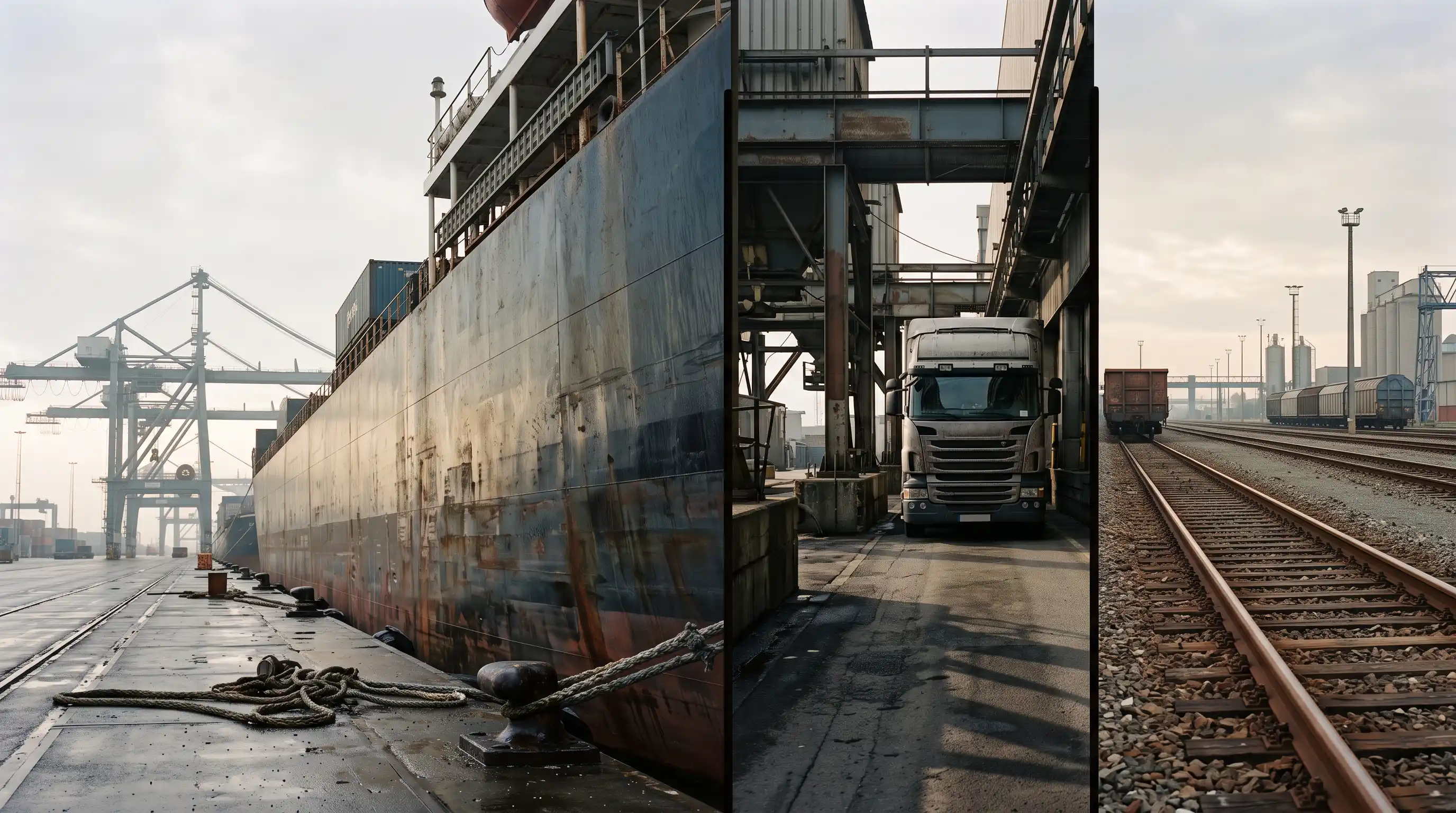
A buyer purchases a container of copper cathodes from an overseas supplier. The container enters the export terminal on Monday, but the vessel does not load it until Thursday. If it is damaged during those three days, which party bears the risk?
The answer depends on the contractual delivery arrangement, not simply on who pays ocean freight.
Incoterms® 2020 divides its eleven rules into two transport-mode groups. FAS, FOB, CFR and CIF apply specifically to sea and inland waterway transport. EXW, FCA, CPT, CIP, DAP, DPU and DDP work with all modes, including road, rail, containerized sea freight and multimodal transport.
The practical choice begins with how and where the goods are delivered, when risk passes, who arranges carriage and what insurance or customs obligations have been agreed.
Which Incoterms Apply to Sea, Road and Rail Transport?
The International Chamber of Commerce (ICC) does not classify its rules into three separate categories for sea, road and rail.
Instead, it recognizes four sea and inland waterway rules and seven rules available for any mode or modes of transport.
FAS, FOB, CFR and CIF relate to delivery alongside or on board a vessel. They are not designed for an independent road-only or rail-only delivery.
EXW, FCA, CPT, CIP, DAP, DPU and DDP can be used for road, rail, sea, air and combined transport chains.
This means the phrase "rail Incoterms" describes the application of an any-mode rule to a railway transaction; it is not a separate official ICC rule family.
The distinction also matters for ocean containers. If cargo is physically handed over to a carrier at a terminal before vessel loading, an any-mode rule may describe the transaction more accurately than a maritime-only rule.
For an introduction to the eleven rules, see the complete guide to Incoterms 2020.

Incoterms 2020 Transport-Mode Comparison Table
Rule | Eligible transport modes | Delivery and usual risk-transfer point | Main carriage arranged by | Seller's required cargo insurance |
|---|---|---|---|---|
EXW | Any mode | Goods made available at the named place, not loaded | Buyer | No |
FCA | Any mode | Handover to buyer-nominated carrier or person at agreed point | Buyer | No |
CPT | Any mode | Handover to seller-contracted carrier | Seller | No |
CIP | Any mode | As under CPT | Seller | Yes; normally Clause A |
DAP | Any mode | Named destination, ready for unloading | Seller | No |
DPU | Any mode | Named destination, after unloading | Seller | No |
DDP | Any mode | Named destination, ready for unloading, with required import formalities by seller | Seller | No |
FAS | Sea and inland waterway only | Alongside vessel at shipment port | Buyer | No |
FOB | Sea and inland waterway only | On board vessel at shipment port | Buyer | No |
CFR | Sea and inland waterway only | On board vessel at shipment port | Seller | No |
CIF | Sea and inland waterway only | On board vessel at shipment port | Seller | Yes; normally Clause C |
The insurance column refers to an obligation created by the rule itself. It does not imply that insurance is unnecessary or unavailable under other terms.
For successive carriers under CPT or CIP, risk normally transfers on delivery to the first carrier in the seller's carriage arrangements unless an appropriate different delivery point is agreed.
FCA has a further distinction: delivery at the seller's premises differs from delivery at another agreed location.
When Do FAS, FOB, CFR and CIF Fit Sea Freight?
The maritime-only rules should be evaluated when the seller's actual delivery obligation takes place alongside or on board a vessel.
FAS: Alongside the nominated vessel
Under FAS, the seller delivers goods alongside the vessel nominated by the buyer at the named shipment port. Risk normally transfers when that delivery occurs.
This may work for certain bulk or other cargoes handled directly alongside the vessel. Placement elsewhere in a port does not necessarily satisfy FAS.
FOB: On-board delivery
Under FOB, the seller delivers the goods on board the buyer-nominated vessel at the shipment port.
The buyer normally arranges the main maritime carriage and bears cargo risk after delivery.
FOB may suit bulk or breakbulk shipments with actual on-board delivery. Cargo type alone is not sufficient to determine the rule.
CFR: Freight paid to destination, risk transferred at origin
Under CFR, the seller contracts and pays for carriage to the named destination port. However, delivery and risk transfer normally take place when the goods are on board at the shipment port.
The seller's freight obligation does not mean that cargo risk remains with the seller throughout the voyage.
CIF: Maritime freight with required insurance
CIF follows the same on-board delivery structure as CFR, but requires the seller to obtain the agreed cargo insurance for the buyer's risk.
The default insurance requirement under Incoterms® 2020 normally corresponds to Institute Cargo Clauses (C) or equivalent coverage. Parties may agree on broader protection.
Why containerized sea freight needs special attention
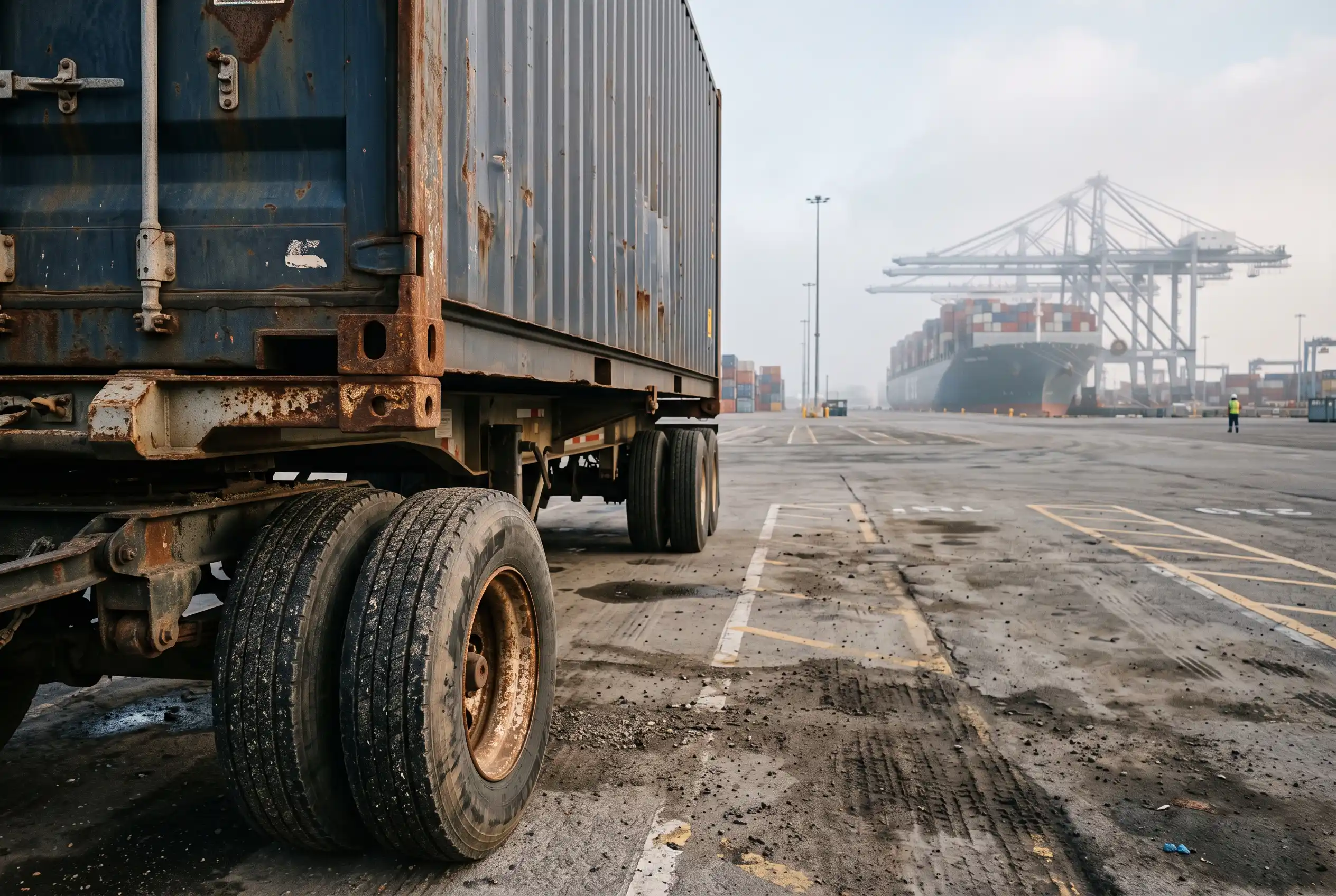
Containerized cargo commonly reaches the export terminal before vessel loading. If the parties intend delivery to occur at that earlier carrier handover, FCA may be more suitable than FOB.
Where the seller also undertakes to arrange the main carriage, CPT and CIP should be evaluated.
The distinction is explained in the ICC Academy comparison of FCA and FOB.
FOB is not automatically prohibited for every container transaction. The decisive question is whether the seller can perform the agreed on-board delivery obligation.
Choosing Incoterms for Road Freight
Road shipments can use any of the seven rules intended for all transport modes.
FCA at the seller's premises: The seller loads the goods onto the transport provided by the buyer and delivers them under the agreed FCA conditions.
FCA at another location: Delivery normally occurs with the goods on the seller's arriving vehicle, ready for unloading and at the disposal of the buyer-nominated carrier or person.
CPT and CIP: The seller arranges and pays for carriage to the named destination. Risk usually transfers earlier at carrier handover. CIP adds the seller's stipulated cargo insurance obligation.
DAP: The seller bears risk until the goods are made available at the destination on the arriving transport, ready for unloading.
DPU: The seller must unload the goods before completing delivery.
DDP: The seller assumes the applicable import-clearance and duty obligations in addition to destination delivery. The ability to perform these obligations must be verified for the importing country.
EXW can also be used, but it places loading and export-clearance responsibilities on the buyer under the standard rule, potentially creating practical difficulties for a foreign buyer. FCA is often worth considering instead.
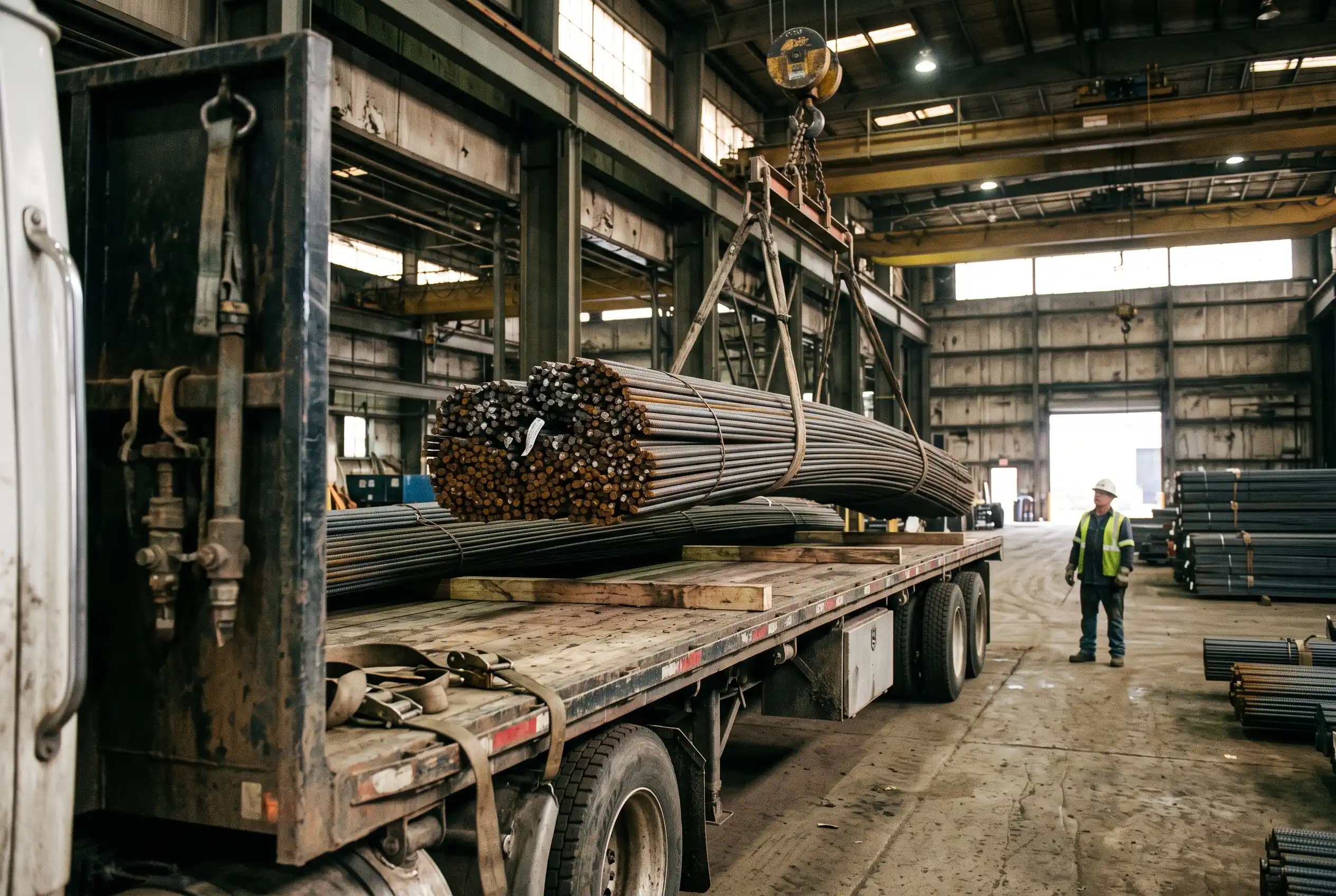
Road example: Steel rebar collected at origin
A buyer arranges a truck to collect bundles of steel rebar from the supplier's warehouse.
With FCA at the seller's premises, the seller's loading operation forms part of the delivery obligation.
If the parties instead agree on DAP at the buyer's warehouse, the seller bears cargo risk for a much longer portion of the journey.
The steel rebar product category provides product-related context, but road weights, securing arrangements, route permissions and unloading capabilities must be verified separately.
Choosing Incoterms for Rail Freight
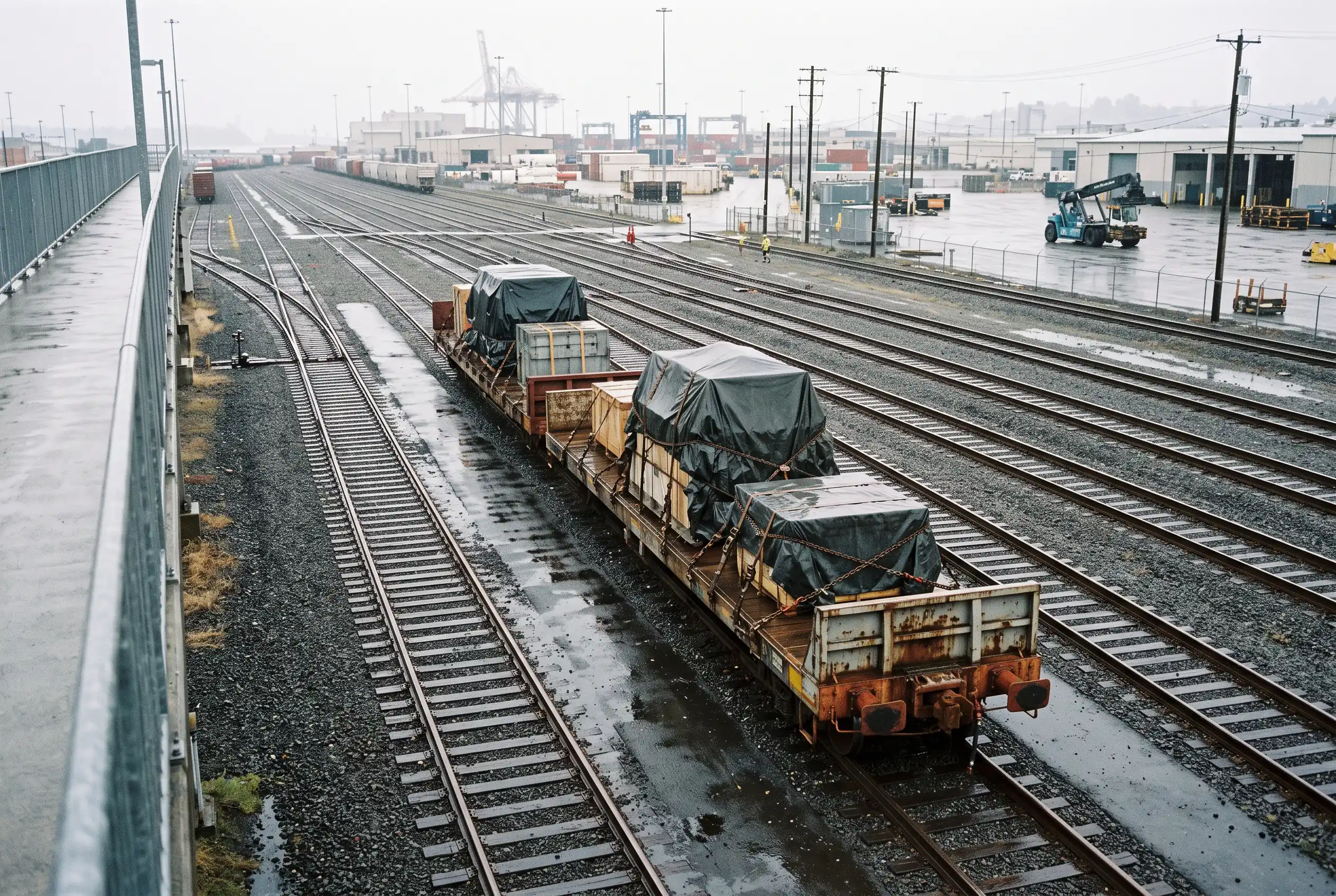
There is no rail-exclusive rule within Incoterms® 2020.
The appropriate candidate depends on whether the seller delivers at an origin rail terminal, contracts for carriage to a named destination, retains risk until arrival or undertakes unloading.
With FCA at an origin terminal, risk may transfer when the goods are delivered to the buyer-nominated carrier or person at the agreed point.
Under CPT or CIP, the seller pays for carriage to the named destination while risk normally passes earlier.
Under DAP, the seller retains cargo risk until delivery at the destination, ready for unloading. DPU extends that obligation to unloading.
Some railway routes may involve carrier changes, wagon transfers, border-terminal operations or multiple legal regimes.
Where relevant, the parties should confirm the applicability of CIM, SMGS or CIM/SMGS consignment documentation to the actual route. These arrangements must not be assumed to govern every international railway journey.
 FOB vs FCA, CFR vs CPT and CIF vs CIP
The following comparisons distinguish rules that can appear financially similar while producing different delivery and risk obligations.
FOB vs FCA: Vessel loading or carrier handover?
Factor | FOB | FCA |
|---|---|---|
Modes | Sea and inland waterway only | Any mode |
Delivery | On board buyer-nominated vessel | To buyer-nominated carrier or person at agreed place |
Risk transfer | Upon on-board delivery | Upon FCA delivery at agreed point |
Main carriage | Normally buyer | Normally buyer |
Seller-required insurance | No | No |
Export / import clearance | Seller / buyer | Seller / buyer |
Practical candidate | Bulk cargo with on-board delivery | Containers, inland or multimodal handover |
Example: Copper cathodes are packed in a container delivered to a terminal three days before loading.
If the agreed handover is to the buyer-nominated carrier at that terminal, FCA may better reflect the actual delivery arrangement.
For product identification and document requirements, the refined copper cathode category provides supplementary information. It does not establish a shipping method for any specific order.

CFR vs CPT: The freight destination is not the delivery point
Factor | CFR | CPT |
|---|---|---|
Modes | Sea and inland waterway only | Any mode |
Delivery | On board vessel at shipment port | To seller-contracted carrier |
Risk transfer | At on-board delivery in origin port | Normally at carrier handover |
Main freight | Seller to destination port | Seller to named destination |
Seller-required insurance | No | No |
Export / import clearance | Seller / buyer | Seller / buyer |
Example: A seller pays for moving industrial cargo to an overseas destination.
Under CFR, risk normally transfers when the goods are delivered on board the vessel at origin.
Under CPT, risk may transfer earlier when the goods are handed to the initial contracted carrier, even if the seller continues paying for several transport stages.
Neither CFR nor CPT independently requires the seller to obtain cargo insurance for the buyer.
CIF vs CIP: Different insurance defaults and delivery points
Factor | CIF | CIP |
|---|---|---|
Modes | Sea and inland waterway only | Any mode |
Delivery | On board vessel at shipment port | To seller-contracted carrier |
Risk transfer | On-board delivery at origin | Normally at carrier handover |
Main freight | Seller to destination port | Seller to named destination |
Seller-required insurance | Yes; normally Clause C | Yes; normally Clause A |
Export / import clearance | Seller / buyer | Seller / buyer |
Example: An international buyer requests freight and seller-procured cargo insurance for a container shipment involving road and sea transport.
If contractual delivery is intended to occur on handover to the seller's contracted carrier, CIP may reflect that structure more accurately than CIF.
The usual CIP insurance baseline is broader than the CIF baseline, but it remains subject to exclusions and policy conditions. The parties may also agree on different insurance terms.
For further detail, see the ICC Academy explanation of CIF versus CIP.
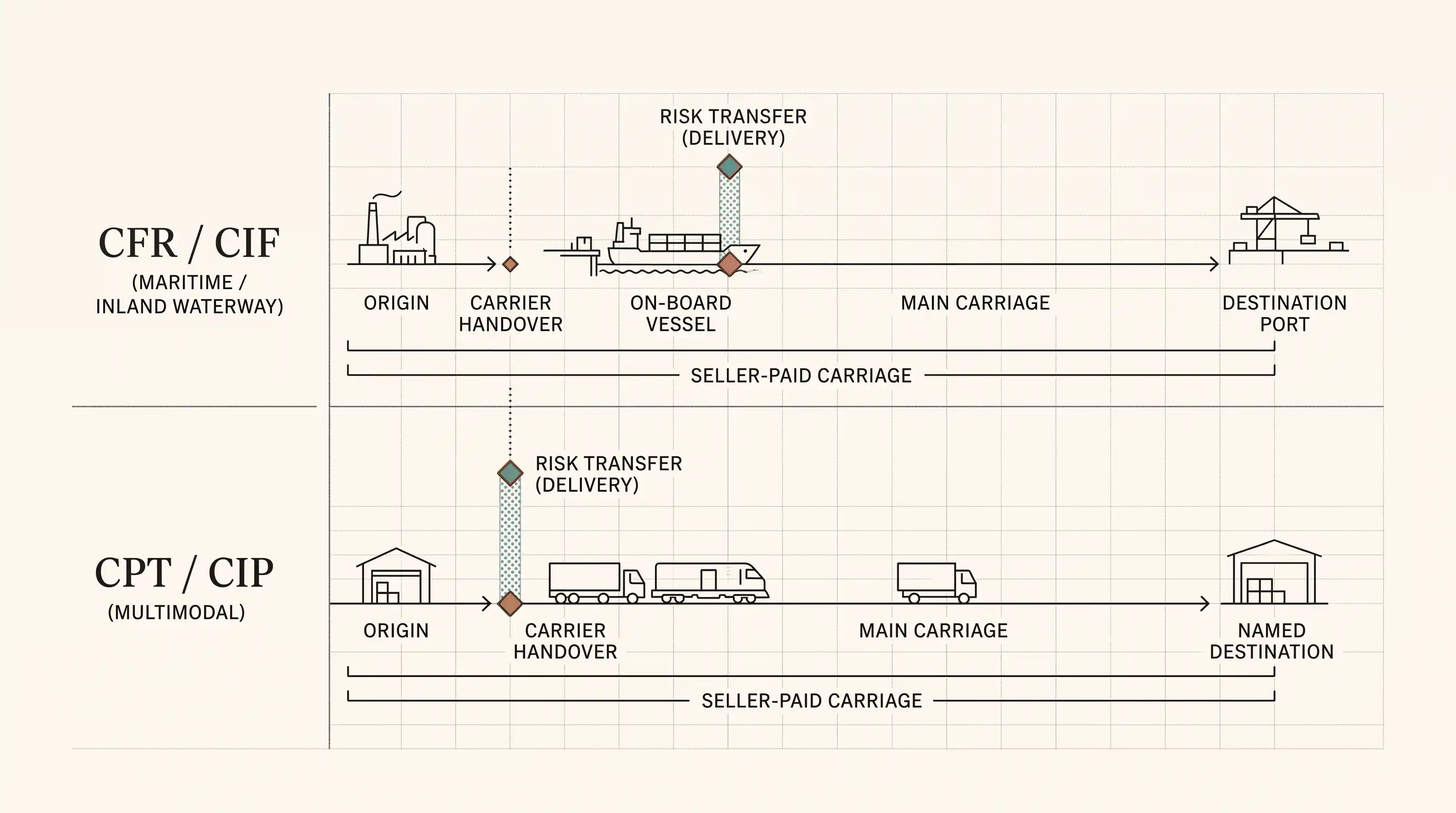
Why Multimodal Shipments Need a Precise Delivery Point
Consider an illustrative chain:
Seller's factory → Truck → Container terminal → Ocean vessel → Destination port → Rail or road carrier → Buyer's warehouse
The physical journey may remain unchanged while the seller's risk obligation varies significantly.
Example term | Delivery and risk-transfer point | Seller's carriage responsibility |
|---|---|---|
FCA at seller's premises | Delivery after loading onto buyer-provided transport under FCA | Main carriage normally buyer |
CPT to destination terminal | Normally carrier handover at origin | Carriage to destination terminal |
CIP to buyer's warehouse | As under CPT | Carriage to warehouse plus required insurance |
DAP at buyer's warehouse | Delivery at warehouse, ready for unloading | Carriage to destination delivery point |
DPU at buyer's warehouse | Delivery after unloading | Carriage plus unloading |
Under CPT or CIP, the seller may pay for the full transportation chain while the buyer carries the risk of cargo loss or damage from an earlier point.
Risk transfer does not eliminate the seller's separate duty to arrange the agreed carriage correctly.
The contract should identify the delivery point and the freight destination separately whenever they differ.
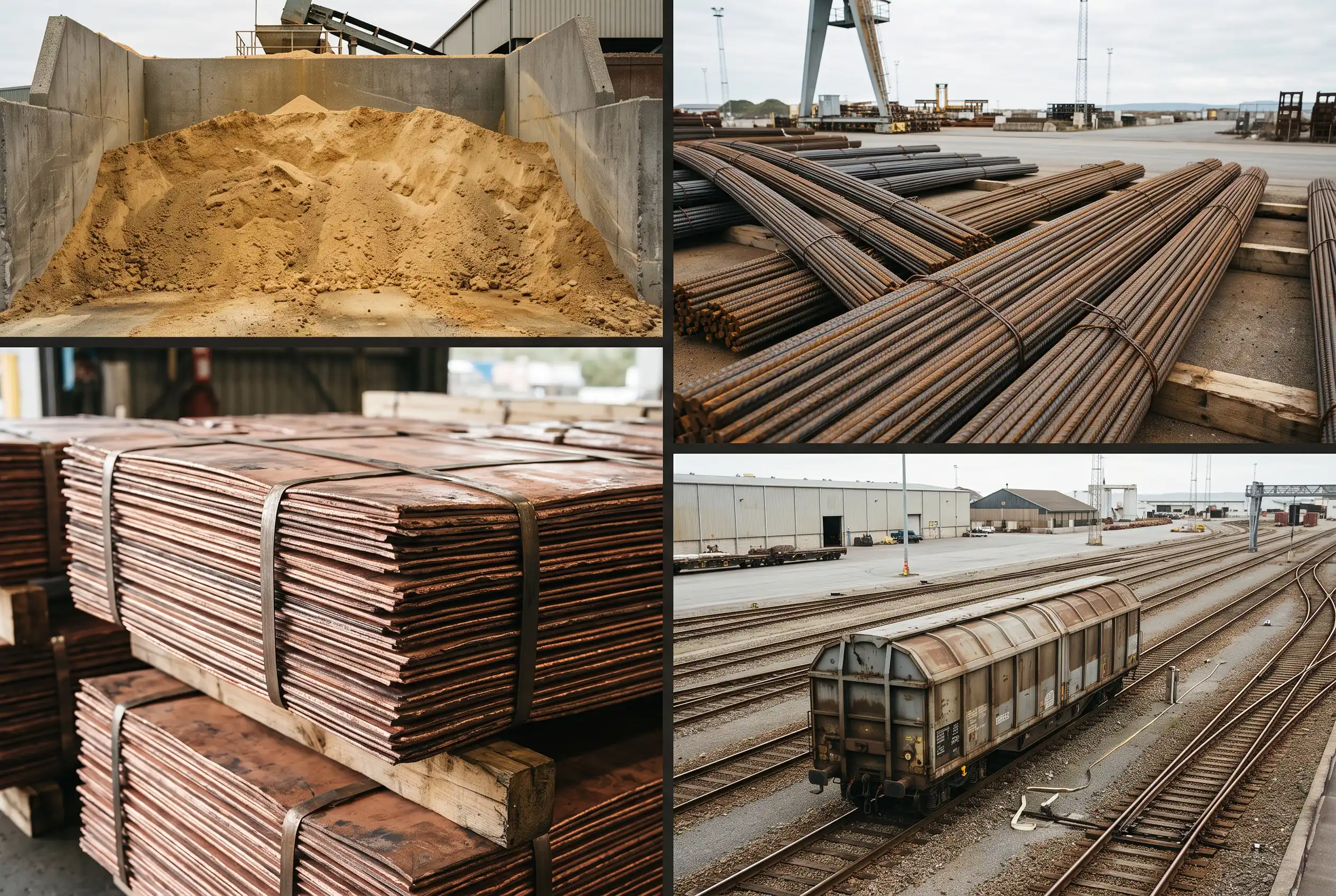
Four Practical Commodity Trade Scenarios
The following examples are hypothetical. They are not records of completed transactions, confirmed transport services or specific shipments by Coolak International Group.
Scenario 1: Bulk industrial sulfur by sea
An Iranian exporter plans a hypothetical sale of bulk industrial sulfur for shipment from an Iranian port to a foreign destination.
FOB may be evaluated where the buyer arranges carriage and the seller delivers on board. CFR may be relevant if the seller pays ocean freight to the destination port. CIF adds the seller's stipulated insurance requirement.
FAS may be considered if actual delivery is to take place alongside the vessel.
The industrial sulfur product category describes relevant product forms. It does not confirm that any particular sulfur cargo can be handled in bulk at a specified port.

Scenario 2: Containerized copper cathodes
A container carrying copper cathodes is handed to a carrier at an export terminal before vessel loading.
If the buyer nominates that carrier, FCA may align risk transfer with the operational handover.
If the seller contracts and pays for the onward journey, CPT or CIP may be more relevant.
The buyer should confirm the terminal handover point, cargo securing, receiving carrier, documentation and insurance arrangements.
Scenario 3: Steel rebar by truck
A supplier agrees to dispatch steel rebar to a buyer's warehouse in another country.
FCA may apply if the buyer's truck collects the goods and the seller loads them at the agreed premises.
CPT may be considered where the seller pays the road freight but risk transfers at the earlier carrier handover.
DAP or DPU may be more suitable when the seller is expected to retain risk until the destination, with DPU requiring unloading.
The Iran steel rebar export guide discusses related questions on grade identification, mill certificates, inspection and shipping documents.
Scenario 4: Industrial cargo by rail
A hypothetical cargo movement begins at an origin rail terminal and ends at a foreign destination terminal or warehouse.
FCA may apply to a delivery to the buyer-nominated carrier at origin.
CIP may be considered if the seller contracts for carriage and obtains the required insurance to the destination, without necessarily retaining risk until arrival.
DAP and DPU are alternatives where destination delivery or unloading is part of the seller's obligation.
The contract must still address relevant railway documentation, carrier changes, wagon handling, terminal operations and customs requirements.
A Practical Decision Checklist for Buyers and Sellers
Before agreeing on an Incoterms rule, answer six questions:
Where is the cargo physically handed over? The seller's premises, a carrier, a terminal, alongside a vessel, on board or at destination?
What transport modes are involved? Bulk ocean shipping, container transport, road, rail or multimodal carriage?
Who selects, contracts and pays the main carrier?
At which point should risk of loss or damage transfer?
Who obtains cargo insurance, and which coverage is required?
Who can legally and practically undertake export/import formalities, terminal charges and unloading?
These answers should lead to a shortlist of rules for commercial evaluation, not an automatic contractual recommendation.
Costs and Documents Incoterms Alone Do Not Settle
Incoterms rules do not replace the sales contract, carriage agreement, insurance policy or customs requirements.
A sea movement may require a Bill of Lading (B/L). Certain international road movements may involve a CMR consignment note. Rail movements may be subject to CIM, SMGS or CIM/SMGS arrangements where applicable.
The requirements of a letter of credit are separate. Under FCA Incoterms® 2020, the parties can agree on an arrangement involving an on-board B/L, but this requires coordination and does not automatically oblige a carrier to issue the required document.
Demurrage, detention, storage, wagon detention and terminal-handling charges can depend on more than the Incoterms risk-transfer point. They may be governed by the carriage contract, terminal conditions, the sales contract and the cause of delay.
Ownership, payment terms, inspection, product quality, contractual remedies, governing law and trade restrictions also require separate contractual consideration.
The export documents from Iran checklist provides additional context on commercial, shipping and customs documentation.

Common Incoterms Mistakes in Sea, Road and Rail Contracts
Mistake | Possible consequence | Recommended correction |
|---|---|---|
Using FOB for terminal-delivered containers without considering FCA | Misalignment of delivery and risk | Check actual carrier handover |
Assuming risk passes at destination under CFR, CIF, CPT or CIP | Cargo damage dispute | Separate freight destination and delivery point |
Using FOB or CIF for road-only or rail-only transport | Inappropriate rule | Evaluate any-mode rules |
Naming only a city rather than a precise delivery point | Unclear operational responsibility | Define the exact agreed location |
Treating CIP insurance as unlimited | Uncovered losses | Review insurance exclusions and terms |
Confusing DAP with DPU | Unloading disputes | State unloading obligations |
Using DDP without checking import feasibility | Unperformable customs obligation | Verify importing-country requirements |
Allocating demurrage solely by cargo risk | Unexpected terminal charges | Align sales and carriage contracts |
Omitting the Incoterms edition | Interpretation disputes | Specify the rule, named place and |
Final Considerations
Selecting an Incoterms rule starts with identifying the physical handover, not merely the transport mode.
FAS, FOB, CFR and CIF may be relevant to maritime shipments involving delivery alongside or on board a vessel. FCA, CPT, CIP and the other any-mode rules can provide suitable alternatives for containerized, road, rail and multimodal shipments.
The sales contract should identify the precise delivery point, risk-transfer arrangement, freight destination, insurance requirements, customs obligations and relevant transport documents.
For a transaction-specific review, international buyers can submit the cargo description, packing method, origin, destination, transport mode and proposed delivery point through the international trade contract and document services of Coolak International Group.

Need product guidance?
Contact our team for specifications, availability, and pricing details.