
A shipment may be commercially agreed and physically ready for dispatch, yet still be delayed because the invoice, packing list, customs declaration, certificate of origin, or transport documents do not describe the same transaction consistently.
The required document set depends on the shipment itself: the product, HS classification, destination country, agreed Incoterm, transport mode, payment structure, buyer requirements, and any product-specific licences or certificates. A practical exporter or buyer therefore needs a decision framework, not just a generic list.
In this guide, Coolak International Group explains which document groups matter, who usually prepares or issues each one, when they become relevant, and which consistency checks matter most. The article focuses on exports originating in Iran, but destination-country rules and current regulatory requirements must still be checked separately for each shipment.
Key Takeaways
Build the required document list before cargo preparation and transport booking.
Verify HS classification before relying on product-specific customs or regulatory assumptions.
Check invoice, packing list, origin data, weights, quantities, and transport references for full consistency.
Use the agreed Incoterm to understand responsibility, but do not assume it defines the whole document package.
Re-check both origin-side and destination-side requirements for every shipment.
What Documents Are Required to Export Goods from Iran?
The short answer is: export documents from Iran usually fall into five main groups, and the final document set depends on the shipment, destination, Incoterm, transport mode, payment method, and contract requirements.
Those five groups are:
Commercial documents
Customs and regulatory documents
Origin documents
Transport documents
Product-specific, contractual, or banking documents
The following matrix provides the main decision framework.
Document | Main purpose | Usually prepared/issued by | Stage | Always required? |
|---|---|---|---|---|
Proforma Invoice | Initial commercial offer and proposed terms | Seller | Negotiation | No |
Commercial Invoice | Final commercial shipment data | Seller | Pre-shipment/export | Common core document |
Packing List | Packages, quantities, weights, cargo breakdown | Seller / exporter | Shipment | Common where packaged cargo applies |
Customs Export Declaration | Formal customs declaration | Exporter / authorized declarant | Export clearance | Subject to customs procedure |
HS Code / Classification | Customs product identification | Declared and checked under applicable rules | Before customs filing | Classification is necessary; the exact code must be verified |
Certificate of Origin | Evidence of origin | Competent authority, where applicable | Before/after shipment | Depends on requirement |
Transport Document | Record or evidence of carriage | Carrier / transport operator | Shipment | Depends on mode |
Insurance Certificate | Evidence of insurance cover | Insurer | Shipment | Depends on contract / Incoterm |
COA / MTC / Inspection Certificate | Quality, analysis, or inspection evidence | Producer / lab / inspector | Product-specific | Conditional |
Export Permit / Licence | Regulatory authorization | Competent authority | Before export | Product-specific |

Commercial Documents Form the Core of the Transaction File
Commercial documents usually move the transaction from negotiation into execution. The most important are the Proforma Invoice, the Commercial Invoice, and, in many shipments, the Packing List.
Proforma Invoice vs. Commercial Invoice
A Proforma Invoice usually supports the negotiation or order stage. It often records the proposed goods, price, delivery basis, and initial commercial terms.
A Commercial Invoice, by contrast, records the commercial details used for the actual shipment and related procedures. It is the working commercial record behind many later checks, including buyer review, customs formalities, and banking or document presentation requirements.
The main difference is therefore one of timing and function:
Proforma Invoice: pre-execution commercial document
Commercial Invoice: execution-stage commercial document for the real shipment
These documents should not be treated as interchangeable. If price, quantity, packaging, Incoterm, or product description changes, those changes must be carried properly into the final Commercial Invoice.
What Should the Commercial Invoice Cover?
There is no single universal invoice template for all exports, but these data categories usually matter:
Seller identity
Buyer identity
Product description
Quantity and unit
Unit price and total value
Currency
Invoice number and date
Order or contract reference
Incoterm and named place, where agreed
Origin information, where relevant
Shipment or commercial references
The critical point is not only completeness. The invoice must also remain consistent with the packing list, customs declaration, origin documents, and transport document.
The Packing List Supports Physical Cargo Control
The Packing List shows how the goods are physically organized. It helps with warehouse handling, loading, unloading, inspection, weight checks, and dispute review.
Typical packing-list data include:
Number and type of packages
Net and gross weight
Dimensions, where relevant
Package marks or references
Package-by-package or pallet-by-pallet breakdown
Shipment totals
The Commercial Invoice and Packing List serve different purposes. The invoice describes the commercial transaction. The packing list describes the physical cargo structure.
A common mismatch is simple but costly:
invoice quantity ≠ packing-list quantity
Differences in package count, weights, or product breakdown can create avoidable delays.
The Customs Export Declaration Is the Customs Version of the Transaction
The export customs declaration records the shipment in the format required for export customs formalities. It generally depends on the product description, HS classification, value, origin, quantities, weights, and any related regulatory data.
In practice, the declaration must align with the underlying documents, including:
Commercial Invoice
Packing List
Product specifications, where relevant
Origin information
Product-specific permissions or licences, where applicable
Transport-related data at the relevant stage
If the product description in the invoice is broad, but the declaration uses a different or more specific description without support, or if value and weights do not match supporting documents, the risk of delay or correction increases.
This article does not attempt a click-by-click tutorial of Iranian customs interfaces, because operational systems can change. The durable rule is that the declaration must be built on defensible, consistent shipment data.
HS Code Affects the Documentation Logic
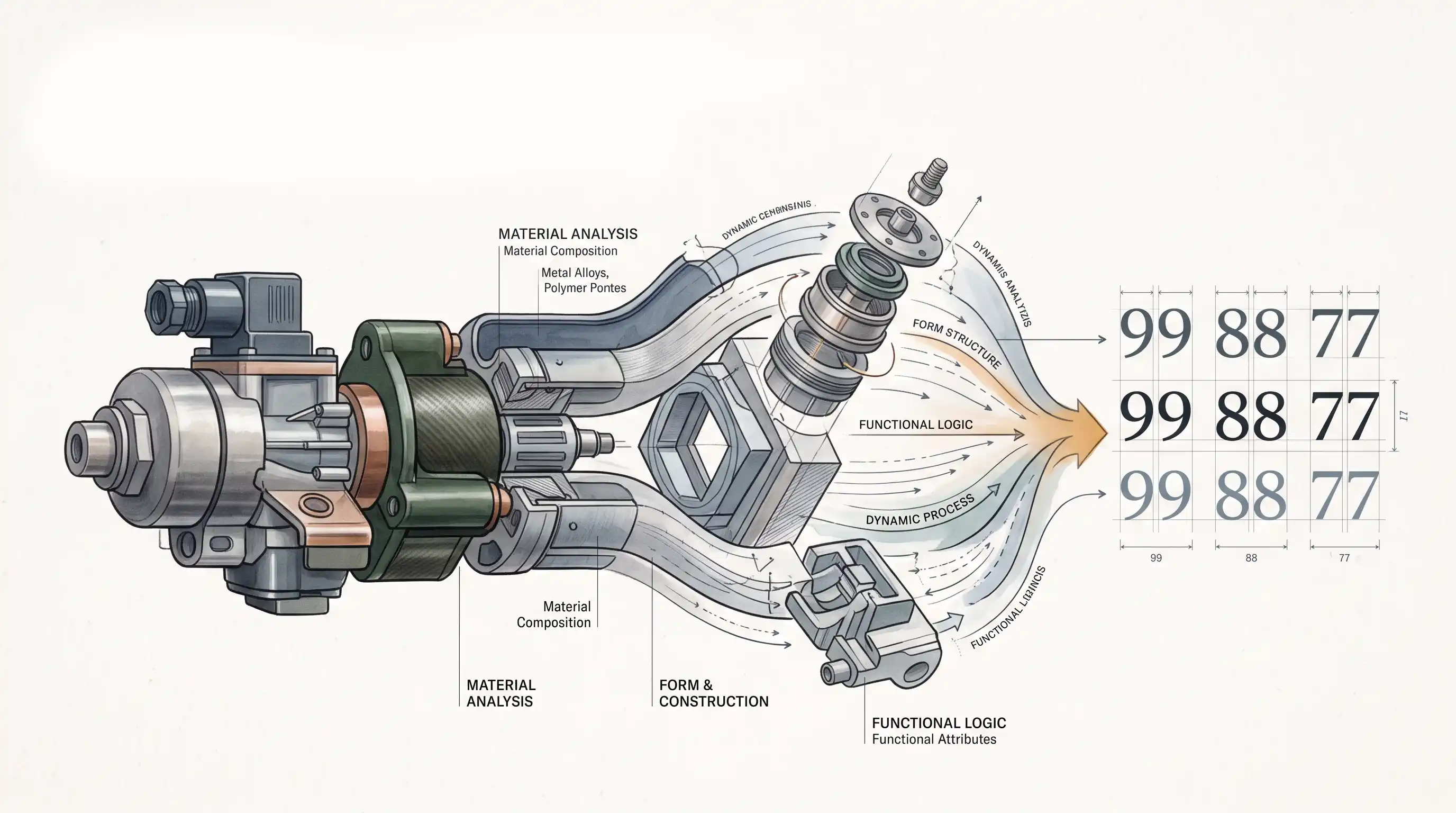
The HS Code is not just a reporting number. It influences how customs and many related controls identify the commodity. Correct classification can affect:
regulatory requirements
licence or permit needs
customs reporting
destination-country checks
product-specific documentation
Two products may have similar commercial names and still require different customs classifications. That is why product-specific document assumptions should not be made before classification is checked.
A Certificate of Origin May Be Important, but It Is Not Universal
A Certificate of Origin establishes the origin of the exported goods. Buyers, banks, and destination customs authorities may request it depending on the transaction.
Common reasons for requesting a COO include:
proving origin
supporting destination customs procedures
completing banking or documentary requirements
meeting buyer instructions
The key point is this: not every export shipment from Iran automatically requires a Certificate of Origin. The requirement depends on destination rules, transaction structure, trade arrangements, and the buyer’s or bank’s expectations.
Match the Transport Document to the Transport Mode
A transport document records or evidences the carriage of the cargo. The correct document depends on the actual mode of transport.

Sea
For sea freight, the main document is typically the Bill of Lading.
Air
For air freight, the standard document is the Air Waybill.
Road
For road transport, CMR may apply where relevant.
Multimodal or Other Structures
For multimodal or route-specific structures, the actual carrier or transport operator’s document should be used.
A transport document is not the same as a:
Commercial Invoice
Packing List
Certificate of Origin
Each serves a separate role.
How Incoterms 2020 Affect Document Responsibility
Incoterms allocate delivery obligations, costs, and risk within a defined scope between seller and buyer. As a result, they can influence who arranges certain documents or formalities. They do not, however, define the entire documentation package on their own.
For the full rule set, see Coolak’s Incoterms 2020 guide.

Issue | Why Incoterm matters |
|---|---|
Export clearance | Responsibility may differ by rule |
Main carriage | It identifies which party arranges the main transport |
Cargo insurance | Seller-side insurance obligations arise only under certain rules |
Import clearance | Allocation depends on the selected rule |
Delivery evidence | The transport or delivery document should fit the agreed delivery structure |
A frequent mistake is assuming that once an Incoterm is chosen, the full document list is automatically settled. It is not. Product, destination, contract, banking, and regulatory requirements still need separate review.
Product-Specific Documentation May Be Required
Many physical-goods exports need more than standard commercial documents. Technical, compliance, or product-quality documents may also be required.
Petrochemicals and Chemicals
Depending on the product and contract, documents may include:
COA
SDS
quality certificate
inspection certificate
product specification
If the cargo falls into this area, see The Complete Guide to Iran's Petrochemical Exports for broader commercial context.
Metals and Steel
Depending on the contract, relevant documents may include:
MTC / Mill Test Certificate
inspection certificate
dimensional or quality documentation
grade- or standard-related evidence
For this category, the Steel Export Guide is also relevant.
Minerals and Other Commodities
Depending on the commodity, required documents may include:
analysis results
weight or quantity certificate
inspection certificate
applicable regulatory permits
technical supporting documents
These should never be treated as universally mandatory for every export.
Some Goods Need Additional Permits or Regulatory Certificates
Some goods require additional authorization or regulatory documentation, while others do not.
Depending on the product and destination, this may include:
export permit or licence
health certificate
veterinary certificate
phytosanitary certificate
safety documentation
controlled-goods authorization
destination-specific certification
The compliance boundary is straightforward: requirements must be checked against the current rules of the responsible Iranian authority and the authorities of the destination country. A previous shipment should not be treated as a permanent model for all future shipments.
COA, Inspection Certificates, MTC, and SDS Are Not Substitutes
These documents usually sit alongside the main commercial set, not in place of it.
COA
A Certificate of Analysis reports tested or declared product characteristics.
Inspection Certificate
An inspection certificate records checks performed by an independent or nominated inspector when the contract or buyer requires that control.
MTC
A Mill Test Certificate is relevant to applicable metal and steel products.
SDS
A Safety Data Sheet provides safety-related information for applicable chemical products.
They are not interchangeable, and each serves a different purpose.
Banking and Payment Documents Should Be Defined Before Shipment
When payment depends on documentary compliance, the required presentation set must be defined before shipment. This is especially important where banks, buyers, or contracts are strict about wording, timing, or document order.
Relevant requirements may include:
contract-defined presentation set
bank instructions
LC conditions, where applicable
presentation deadlines
buyer-specific documentary wording
The practical rule is simple: if payment depends on compliant documents, the required set should not be clarified after shipment has already taken place.
Which Details Must Match Across Export Documents?
This is the most important operational quality-control section. Many problems do not arise because a document is missing. They arise because the available documents do not describe the same shipment consistently.
Detail | Where to check it | Why it matters |
|---|---|---|
Seller name | Invoice, contract, declaration, some certificates | The transaction party must be identified consistently |
Buyer / consignee | Invoice, transport document, certificates, contract | Wrong buyer or consignee data creates document risk |
Product description | Invoice, declaration, certificates, transport references | Broad or inconsistent descriptions create review problems |
HS classification | Declaration and relevant supporting forms | It affects customs and regulatory logic |
Quantity and unit | Invoice, packing list, declaration | Quantity mismatches are a common cause of correction |
Net / gross weight | Packing list, declaration, transport documents | Weight consistency matters for handling and customs |
Package count | Packing list, transport documents, inspection | It must reflect the actual shipment |
Origin | Invoice, COO, regulatory documents | Important for destination checks and buyer requirements |
Invoice number and date | Invoice, banking set, contract references | It supports traceability |
Incoterm and named place | Invoice, contract, execution documents | It clarifies the delivery structure |
Carrier / vessel / shipment references | Transport documents, some certificates, related communication | Important for matching and tracking |

A practical approach is to create one approved transaction data sheet and draft all documents from that reference set.
Export Documentation from Order to Shipment
Documentation becomes easier to manage when it is treated as a workflow rather than a pile of forms.
Stage 1 — Commercial Negotiation
Possible documents:
inquiry
offer
LOI / ICPO where applicable
Proforma Invoice
Stage 2 — Contract and Specification
Possible documents:
contract / SPA where applicable
technical specification
agreed Incoterm
inspection scope
payment requirements
Stage 3 — Export Preparation
Possible documents:
Commercial Invoice
Packing List
HS Code review
product-specific permissions where needed
origin or quality document planning
Stage 4 — Export Clearance
Possible documents:
customs export declaration
supporting records
regulatory approvals
relevant authority confirmations
Stage 5 — Shipment
Possible documents:
Bill of Lading / Air Waybill / CMR
insurance certificate where applicable
inspection or quality documents
Certificate of Origin where required
Stage 6 — Presentation to Buyer or Bank
Possible documents:
final document set
signed copies
bank- or buyer-required documents
supporting annexes
The earlier this workflow is defined, the lower the risk of last-minute corrections.
Common Export Documentation Mistakes
In practice, many delays trace back to a small number of repeat mistakes:
assuming one checklist works for all shipments
using an old Proforma Invoice as the basis of the final invoice without proper revision
mismatched quantities, weights, or package counts
over-general or inconsistent product descriptions
relying on an unverified HS Code
inconsistency between invoice and contract Incoterm wording
assuming a COO or COA is always required or never required
leaving bank-document requirements unresolved until after shipment
postponing product-specific documentation until the last stage
The most reliable answer is early document planning plus one structured consistency review before dispatch.
Pre-Shipment Export Document Checklist
Before the cargo moves, review the following:
Has the required document set been finalized for this exact product and destination?
Has the HS classification been checked?
Are the Commercial Invoice and Packing List fully aligned on quantity, unit, weight, and product description?
Is the Incoterm and named place correctly stated?
Have product-specific technical documents been identified?
Have permits or regulatory certificates been checked?
Does the transport document match the actual transport mode?
Is the buyer’s or bank’s required document set clearly defined?
Have final names, numbers, dates, and references been matched across the full set?
Need Help Reviewing Your Export Documents?
If you are preparing an export shipment from Iran, the best time to review the documentation structure is before the shipment moves, not after a mismatch appears.
Coolak International Group can help review transaction structure, commercial-document consistency, and documentation-related risk points.
Service page: International Trade Contracts and Commercial Documents
Submit a request: Trade Requests
Need product guidance?
Contact our team for specifications, availability, and pricing details.