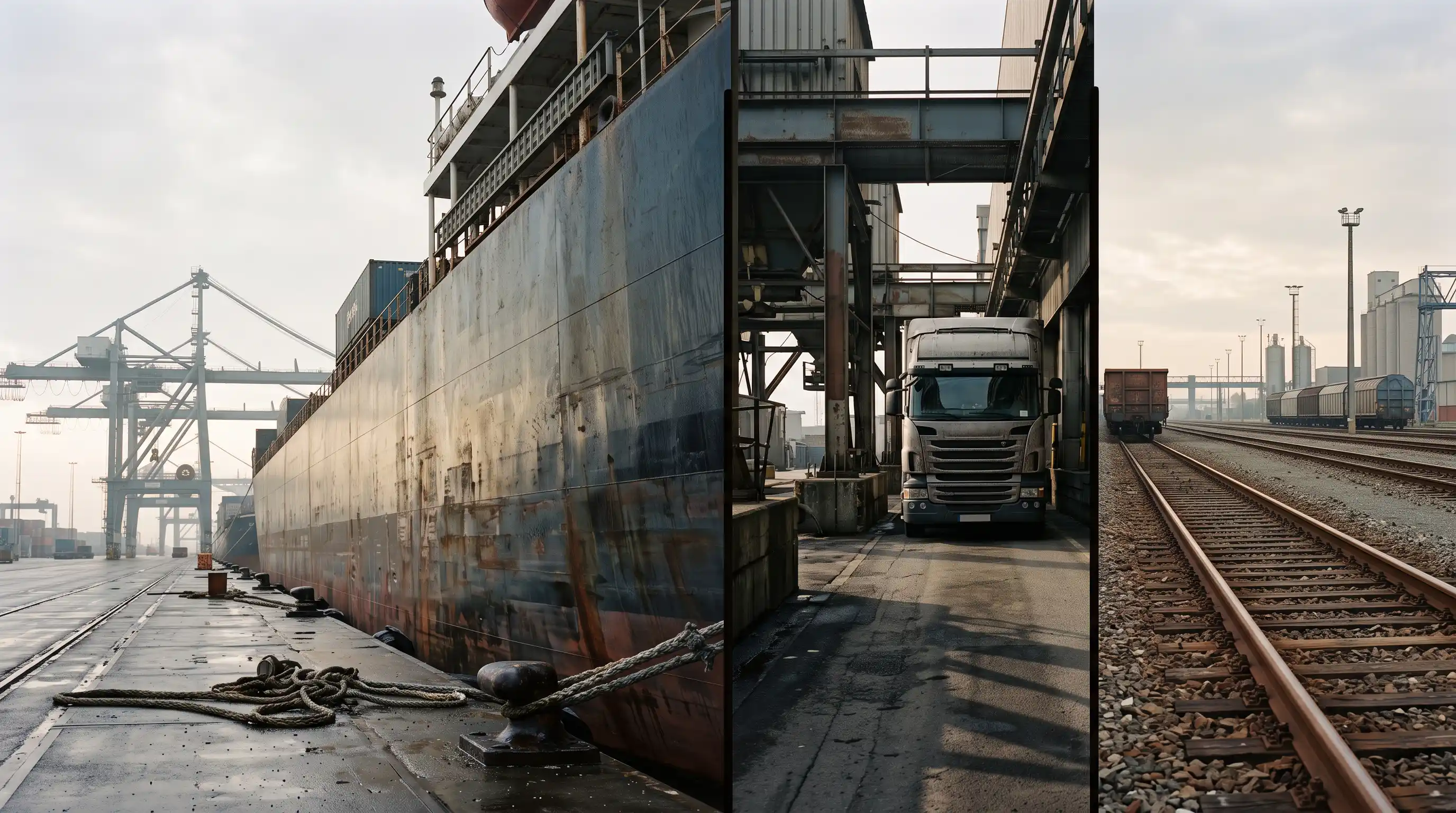
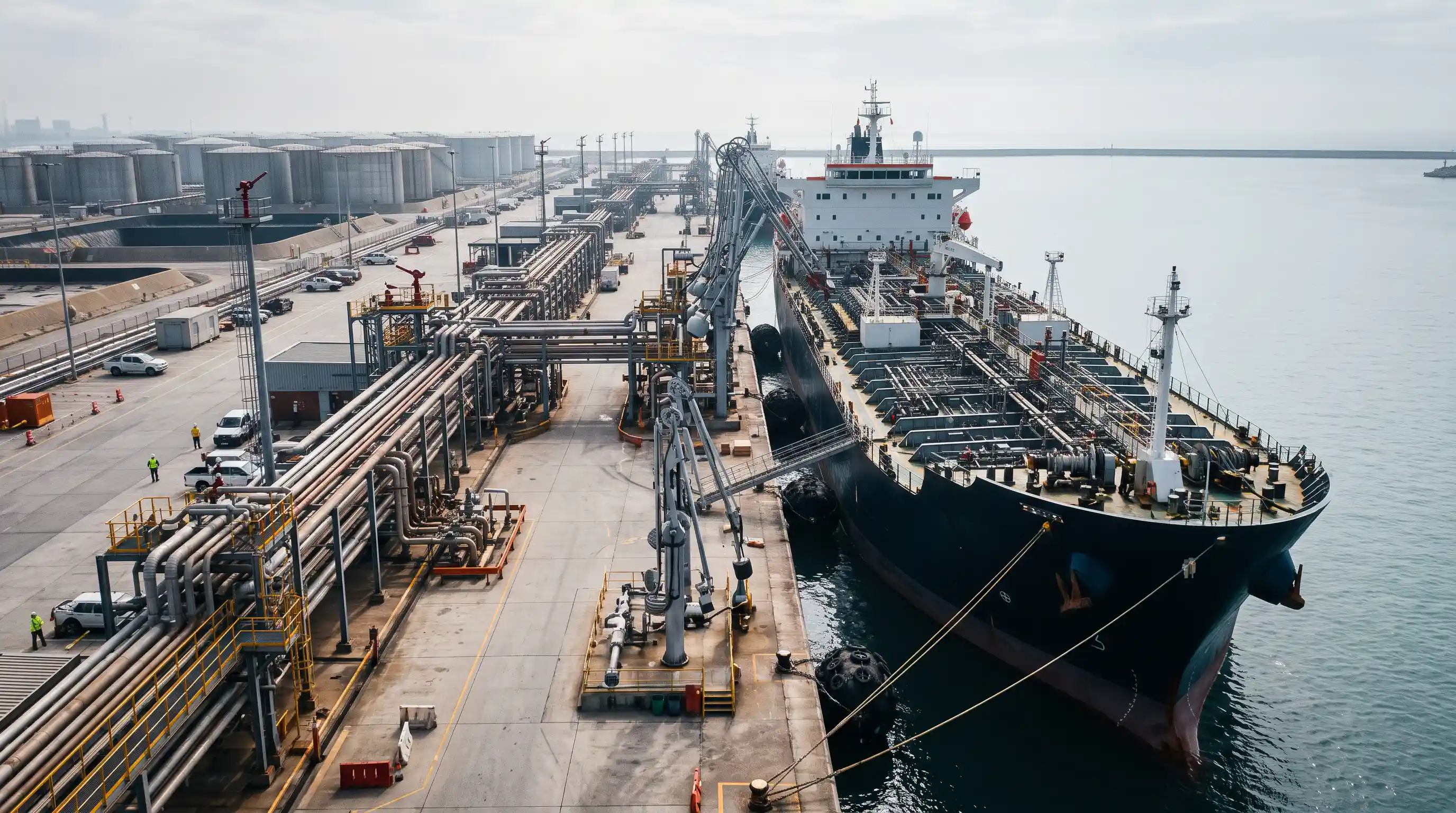
Methanol is shipped internationally as chemical cargo, most notably in bulk chemical tankers or in approved portable tanks carried through containerized and multimodal networks. Road tankers and rail tank cars serve inland and cross-border movements where the infrastructure and applicable rules permit.
The choice is not simply a freight-rate comparison: methanol presents both flammability and toxicity hazards, and the shipping documents, tank acceptance and contractual responsibilities change with the transport mode.
In particular, the rules for a vessel carrying methanol in its own cargo tanks are different from those governing a portable tank loaded aboard a containership. This guide explains those distinctions from the perspective of buyers, procurement teams and trade operations personnel preparing a defensible shipment request.
Key Takeaways:
Before requesting freight quotations, confirm that the receiving site can actually discharge the chosen equipment and accept the cargo.
Ask the carrier or appointed dangerous-goods specialist to confirm the rules that apply to each leg of a multimodal route.
Agree on the sampling point, cargo-quality acceptance criteria and handling of discrepancies before loading.
State the exact named place or port under the selected Incoterms® 2020 rule, then document who arranges transport, insurance, inspection and unloading.
Main Methanol Transportation Methods Compared
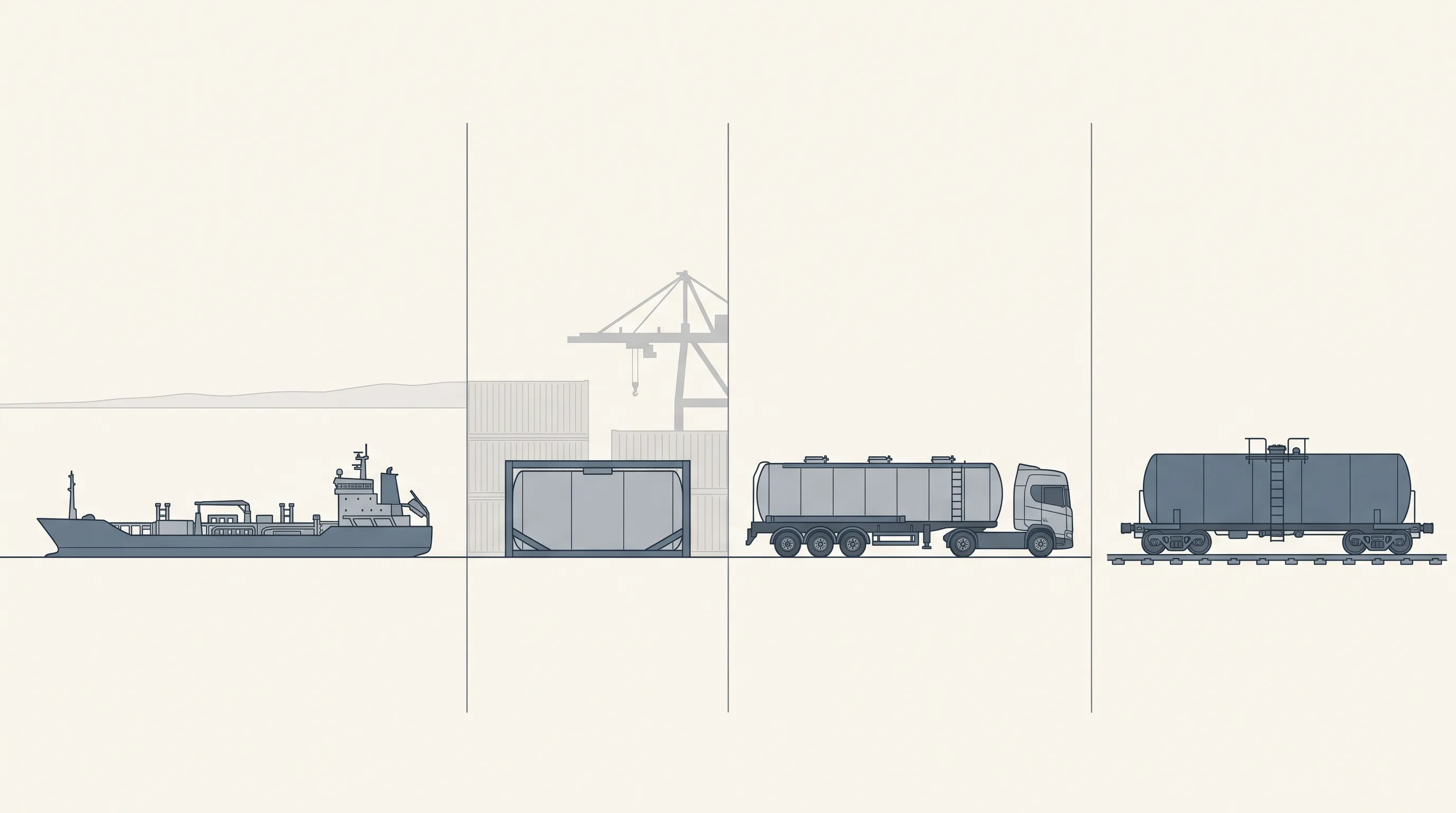
The most useful starting point is the physical cargo format: bulk liquid in ship cargo tanks, liquid inside a certified portable tank, or liquid carried in a dedicated road or rail tank.
These alternatives may connect in one supply chain, but the change of equipment or mode can change the regulatory and documentary requirements.
Method | Typical commercial use | Main acceptance question | Principal regulatory reference |
|---|---|---|---|
Bulk chemical tanker | Seaborne bulk parcel between suitable chemical terminals | Can the ship, cargo tanks and both terminals accept this product? | IBC Code, MARPOL Annex II and applicable vessel requirements |
Approved ISO/portable tank | Containerized sea shipment or intermodal delivery | Is this individual tank approved for methanol and accepted by each carrier? | IMDG Code for the sea leg; applicable rules on land |
Dedicated road tanker | Inland delivery, cross-border distribution, port connections | Are the vehicle, route, operator and receiving installation approved? | ADR where applicable; otherwise the relevant national regime |
Rail tank car | Rail-connected industrial sites or bulk inland corridors | Can the rail network and both transfer sites handle the tank and cargo? | RID where applicable; otherwise relevant rail regulations |
Mixed-mode chain | Factory-to-terminal-to-buyer movement | Where do equipment, documents, risk and custody change? | The applicable rules for every leg, not one code for the whole route |
There is no universal shipment-volume threshold at which an ISO tank becomes preferable to a chemical tanker.
The real comparison includes available terminal facilities, tank supply and returns, carrier acceptance, loading arrangements, delivery flexibility and contractual cost exposure.
The Methanol Institute's Safe Handling Manual, fifth edition covers methanol movements by sea, rail and road, but route-specific requirements must still be checked.
Shipping Bulk Methanol by Chemical Tanker
In bulk seaborne carriage, methanol is loaded into a ship's cargo tanks rather than into a container or portable tank.
A buyer must therefore assess not only the vessel's commercial availability but also its authorized cargo list, tank suitability, terminal interface, loading and discharge arrangements, and documentary basis for cargo acceptance.
The International Maritime Organization (IMO) explains that the International Bulk Chemical Code (IBC Code) addresses design, construction and equipment requirements for ships carrying relevant dangerous chemicals and noxious liquid substances in bulk.
MARPOL Annex II governs the pollution-control aspects of bulk noxious liquid substances.
A ship marketed as a “chemical tanker” is not automatically approved for every chemical cargo; approval for the exact product and voyage must be confirmed against the ship's current documentation and the applicable Code provisions.
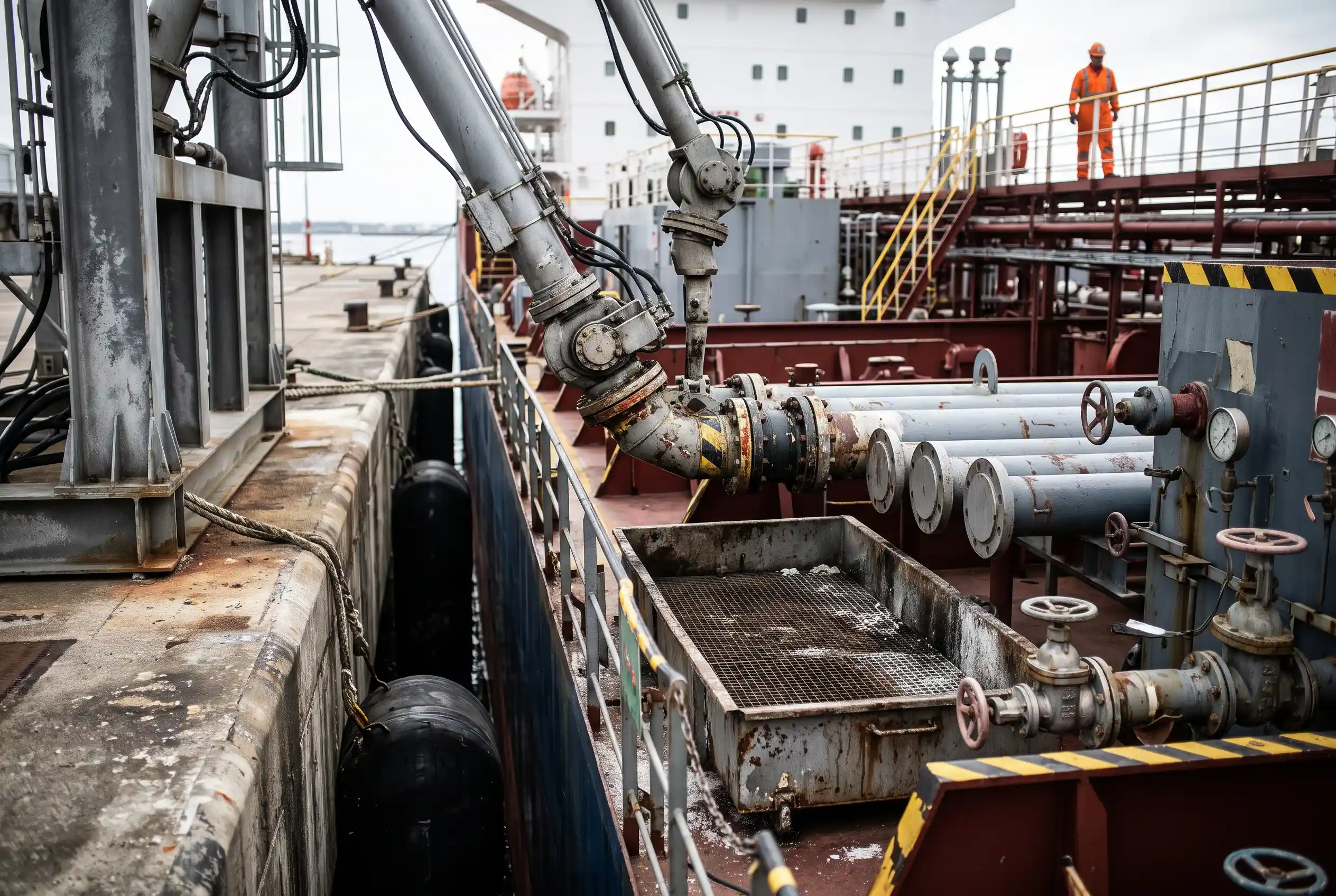
Ship type, pollution category and ship-specific evidence
A useful, explicitly source-scoped example comes from Shell's Methanol/Methyl Alcohol Cargo Handling Sheet, revision 9, dated 22 January 2026.
This operator document records IMO Ship Type 3, MARPOL Annex II and Pollution Category Y for the product it describes.
Shell states that the sheet is intended for vessels chartered on its behalf. These entries illustrate the kind of technical references a freight team must examine; they do not certify a proposed vessel or replace a check of current IBC provisions, the ship's Certificate of Fitness and terminal acceptance.
The IMO's chemical-pollution guidance defines Category Y within the MARPOL Annex II system.
That environmental category and a vessel's IBC ship-type designation address different issues. Neither is interchangeable with Packing Group II, which appears in dangerous-goods classifications for relevant packaged transport.
Cargo preparation, quality and transfer interfaces
Methanol quality can be affected by contamination from water, residues or incompatible contact materials.
Before a ship is nominated, the buyer, seller, charterer and operator should settle the quality basis and require appropriate review of prior cargo history, tank condition, coating and line compatibility, and terminal readiness.
What constitutes an acceptable cleaning record or wall-wash result depends on the cargo specification, contract, operator and receiver. It is not appropriate to impose one cleaning test on all methanol voyages.
A Certificate of Analysis (COA) records test results for the identified sample or batch under specified methods. It does not automatically prove that the complete parcel will meet the destination specification after transfer.
Contracts should state where and when samples are taken, who may witness sampling, whether retained samples are used and how a disputed result is resolved.
Any independent quantity-and-quality survey is a negotiated control unless a particular requirement makes it mandatory.
Finally, methanol carried as cargo is not the same regulatory scenario as methanol supplied for consumption as a ship's fuel.
The UK Maritime and Coastguard Agency makes that distinction explicit. This article concerns cargo transportation, not bunkering a methanol-fuelled vessel.
ISO Tanks, Portable Tanks, Road and Rail
An ISO tank is a transport unit built around a tank within a container-compatible frame. The term describes equipment; it is not a blanket authorization to carry any dangerous liquid.
Each actual tank must have the appropriate design, testing, identification, inspection status and approval for the substance and applicable transport operation. Its fittings, seals and construction materials must be suitable for methanol.
A regular freight container holding packages of methanol is not the same thing as an ISO tank.
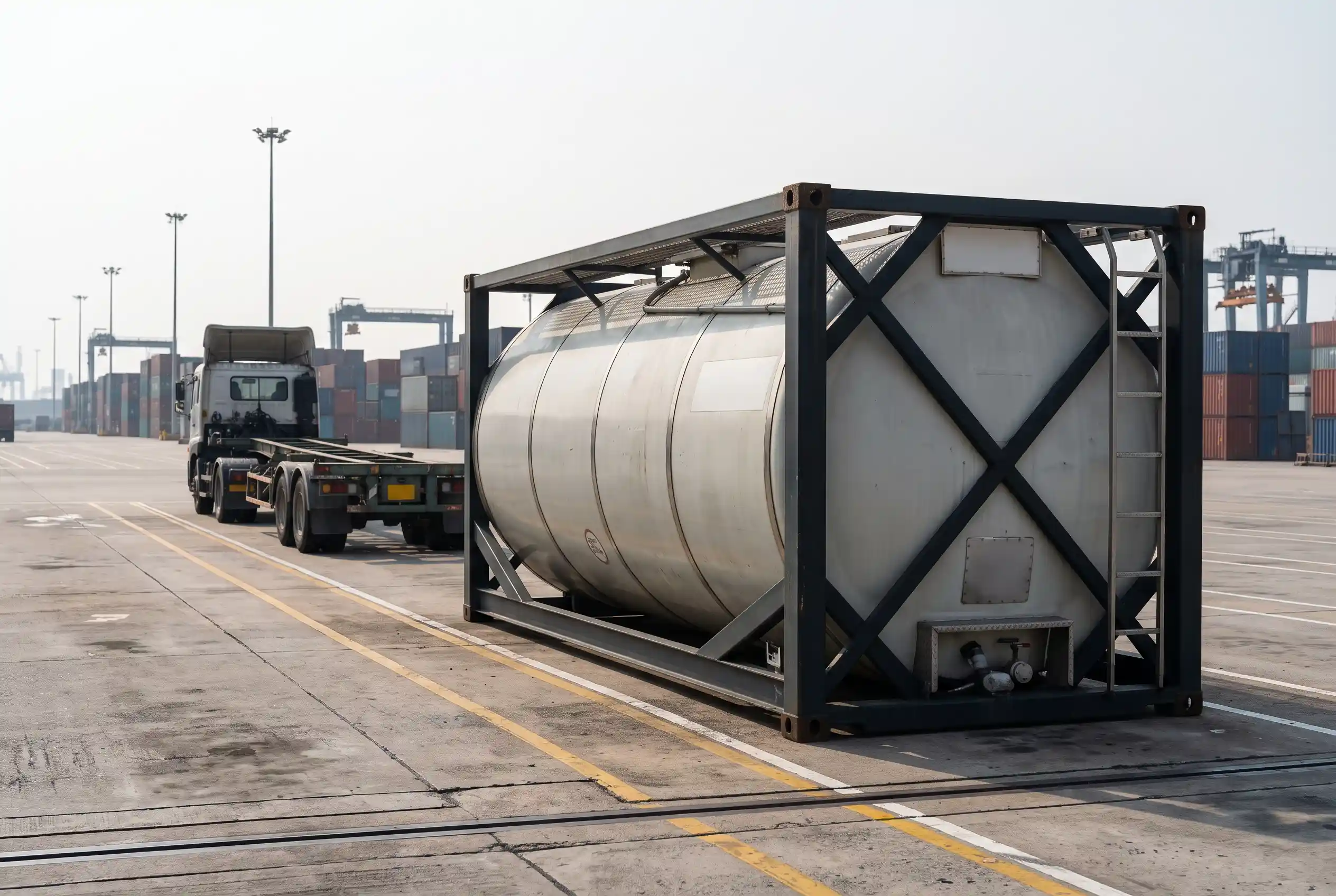
For a sea leg, an approved portable tank must be accepted under the relevant IMDG Code provisions and by the particular shipping line and terminal.
Acceptance does not automatically follow from the tank's apparent ISO dimensions or from its previous use for another chemical. The dangerous-goods declaration, tank identification, inspection status, marking and any instructions specific to the equipment need professional review.
An intermodal movement may follow a factory–road–port–sea–port–road sequence without decanting the cargo at every transfer.
That operational advantage does not remove the need to check the applicable road, port and maritime rules separately. It also creates decisions about rental, empty-tank repositioning, free time, terminal storage and who receives the unit at destination.
Road tankers can connect a plant or storage site to a port or industrial buyer. Rail tank cars can serve an established rail corridor where tank cars and receiving installations are available.
The UNECE ADR 2025 governs applicable international road movements within its legal scope; the OTIF RID framework concerns applicable international carriage of dangerous goods by rail.
Neither should be presented as the law of every non-European country. Local competent authorities and carriers determine the additional route-specific conditions.
A mode should be rejected at the planning stage if the receiving site lacks an accepted unloading connection, suitable storage or a lawful way to handle the dangerous goods.
Low quoted freight cost does not compensate for an undeliverable cargo.
Methanol Hazard Classification and Transport Codes
For relevant dangerous-goods transport entries, the German Federal Institute for Materials Research and Testing (BAM) records the following in its IMDG information for methanol:
Classification field | Recorded value | Meaning for a shipment review |
|---|---|---|
Proper shipping name | METHANOL | Use the name prescribed for the applicable transport entry |
UN number | UN 1230 | Principal dangerous-goods identifier |
Primary hazard class | 3 | Flammable liquid |
Subsidiary risk | 6.1 | Toxic hazard must not be omitted |
Packing group | II | Relevant to the applicable packaged-goods and tank provisions; not vessel certification |
A chemical's hazard identification is the starting point, not a finished transport approval.
The final dangerous-goods description, tank instruction, markings, carrier notifications, segregation and documentation must be checked under the code and edition actually applying to the movement.
Do not use this summary as a substitute for a dangerous-goods declaration prepared by a qualified person.
Which code applies to each leg?
Transport case | Main framework | What the buyer should verify |
|---|---|---|
Methanol in the cargo tanks of a bulk chemical tanker | IBC Code, SOLAS and MARPOL Annex II as applicable | Ship's product authorization, Certificate of Fitness, cargo/terminal conditions |
Methanol in packaged units or an approved portable tank aboard a seagoing vessel | IMDG Code | Correct entry, tank approval, declaration, carrier and terminal acceptance |
Road movement | ADR in applicable jurisdictions, or national rules elsewhere | Tank/vehicle approval, competent operator, route and documentation |
Rail movement | RID in applicable jurisdictions, or relevant rail rules elsewhere | Rail-tank and corridor acceptance, documents and transfer points |
The IMO confirms that the 2024 IMDG Code edition including Amendment 42-24 became mandatory on 1 January 2026.
This is the applicable publication context at the time of this article draft, not a promise that the rules will stay unchanged. Verify the edition and any national or carrier-specific requirements again for the actual shipment date.
Which Documents Are Needed to Ship Methanol?
A document is required because of a law or code, a carrier/terminal acceptance condition, a customs requirement or a contract. These are distinct reasons.
Calling every item on a generic export checklist “legally mandatory” obscures the real point of control.
In the matrix below, usual means common in relevant commercial practice, conditional means the precise obligation depends on the transaction or transport mode, and mode-specific means a distinct form or requirement applies.
Neither “usual” nor “conditional” is a substitute for jurisdiction-specific legal verification.
Document or record | Bulk chemical tanker | ISO tank / packaged sea | Road / rail |
|---|---|---|---|
Sales contract, SPA or purchase order | Commercially usual; agreed terms control | Commercially usual | Commercially usual |
Commercial invoice | Usual for an international sale/customs process | Usual | Usual where cross-border/customs relevant |
Product specification and COA | Contractual quality evidence; often requested | Contractual; often requested | Contractual; often requested |
Current Safety Data Sheet (SDS) | Operational safety and acceptance reference | Relevant to DG assessment and acceptance | Relevant to local DG and operator assessment |
Transport document | Appropriate maritime bill of lading or other carriage record | Appropriate sea or multimodal transport document | Road consignment note or rail document, as applicable |
Dangerous-goods declaration / carriage information | Vessel-specific bulk-cargo documentation; not automatically an IMDG container declaration | IMDG transport document/declaration and associated packing or tank documentation as applicable | Required DG carriage information under the applicable road/rail regime |
Packing list | Not a universal separate document for liquid cargo in ship tanks | Depends on packaging, carrier, customs and contract | Depends on packaging and trade requirements |
Verified Gross Mass (VGM) | Not the packed-container VGM requirement | Applicable to packed containers loaded on qualifying ships, including relevant tank containers | Relevant if the unit later enters containerized sea carriage |
Certificate of origin | Conditional on customs, preferential treatment or contract | Conditional | Conditional |
Insurance policy or certificate | Based on Incoterm, contract and coverage arrangements | Based on terms and policy | Based on terms and policy |
Tank readiness / survey / Q&Q report | According to contract, vessel and terminal requirements | According to carrier, receiver and contract | According to operator, receiver and contract |
Export/import declarations and permits | Jurisdiction- and route-specific | Jurisdiction- and route-specific | Jurisdiction- and route-specific |
The IMO's VGM guidance explains the verified gross mass requirement for packed containers under SOLAS. It should not be copied onto a ship's own bulk-liquid cargo tanks.
Likewise, an SDS describes hazards and controls, whereas a COA reports analysis and a dangerous-goods transport declaration serves a prescribed carriage function.
One does not replace the others.
Pre-shipment document consistency check
Before the shipper issues final instructions, reconcile one controlled master shipment record against the draft documents.
At minimum compare the exact product name and UN entry where relevant; grade and contract specification; quantity and unit; gross/net mass when applicable; origin and destination; consignor, consignee and notify party; equipment identifiers; named Incoterms place; inspection basis; and transport document references.
Differences should be resolved before they reach the carrier, terminal, bank or customs filing.
The central question is not only “Do we have the document?” but also “Does it describe the same physical cargo, parties and handover as every other document?”
For general export-document context, see the Coolak International Group export documentation guide; the transport-mode distinctions here apply specifically to methanol.

Cargo Quality, Tank Compatibility and Safe Transfer
Methanol requires controls for fire, exposure and contamination.
The Methanol Institute's Safe Handling Manual discusses transportation, handling and occupational risks.
An up-to-date product-specific SDS and approved operator procedures remain essential for the actual activity.
At the procurement and nomination stage, confirm five matters:
Product identity: the shipment grade, specification, relevant SDS and quality-testing basis match the purchase contract.
Containment compatibility: the cargo tank, coatings, seals, pipes, valves and transfer interfaces have been reviewed for the particular methanol service.
Contamination control: past cargoes, tank condition and sample/inspection arrangements have been assessed against the agreed quality limits.
Qualified operations: the carrier and terminal have approved procedures addressing ignition control, ventilation, suitable equipment, worker protection and emergency arrangements.
Evidence and claims: responsibilities for quantity measurement, sampling, retained samples, re-testing and quality or shortage claims are written into the contract or operating arrangements.
There is no general operating temperature, pressure, nitrogen-blanketing rule or wall-wash acceptance value that can be responsibly prescribed for every methanol shipment.
Such settings belong to the approved equipment, vessel, terminal and product-specific procedures.
This article is not a loading, cleaning, gas-freeing or emergency-response procedure.
Freight Cost Drivers and Incoterms® 2020
The delivered cost of methanol depends on the entire transport chain, not just the quoted sea freight.
Commercial comparisons should account for mode and equipment availability, distance and route, terminal eligibility, charter or freight conditions, tank rental and repositioning, port charges, cargo handling, storage, survey and inspection, cargo insurance, route restrictions and delay exposure.
Demurrage and detention should be examined under their respective contracts rather than treated as one universal tariff.
No reliable price or transit time can be supplied without the shipment's dates, route, quantity, equipment and contractual basis.
Choosing a rule that matches the handover
Shipment arrangement | Rules often worth evaluating | Key contractual question |
|---|---|---|
Bulk chemical tanker with on-board delivery | FOB, CFR, CIF | At which loading port is the cargo delivered on board, and who arranges freight and insurance? |
ISO/portable tank handed to a carrier or terminal for intermodal carriage | FCA, CPT, CIP; possibly DAP/DPU for destination-based delivery | When and where does the carrier take delivery, and who bears destination handling? |
Road or rail delivery | FCA, CPT, CIP, DAP or DPU depending on the handover | Is the named place accessible, and does delivery include unloading? |
Under CFR and CIF, the seller pays for carriage to the named destination port, but the standard risk-transfer event is delivery on board at the port of shipment, not arrival at the destination.
Under CPT and CIP, payment of carriage to a named destination similarly does not mean the seller carries transit risk until that point: delivery and risk transfer occur under the rule's carrier-handover provisions.
The contract must distinguish delivery point, named destination, freight payment and title transfer. The Incoterms rules do not themselves determine when ownership passes.
The ICC Incoterms® 2020 decision checklist explains why FCA/CPT/CIP usually match container-terminal handovers better than maritime FOB/CFR/CIF.
The ICC's Incoterms® 2020 summary also notes different default seller-procured insurance levels: Institute Cargo Clauses (C) under CIF and Clauses (A) or equivalent under CIP, subject to the actual rule and parties' agreement.
Neither description guarantees that every methanol or route-specific risk is insured; exclusions, war/strikes cover, dangerous-goods conditions and insurer acceptance require review.
For a full explanation of the eleven rules, consult the Incoterms 2020 guide.

In a methanol RFQ, the selected three-letter rule is only the beginning: specify the named place, version, risk point and parties responsible for carrier nomination, product inspection, terminal fees and receiving operations.
Pre-Shipment Decision Checklist for Methanol Buyers
Use this checklist at the pre-RFQ stage.
Mark each item Confirmed / Pending / Not applicable, and assign a real owner to every pending answer before committing to shipment.
These are commercial planning questions, not a substitute for the operator's regulatory checklist.
# | Question to resolve | Suggested evidence |
|---|---|---|
1 | What is the exact methanol grade and agreed specification? | Contract specification and current SDS |
2 | What quantity, tolerance and delivery window are proposed? | Commercial inquiry and availability confirmation |
3 | Are origin, destination and receiving installation precisely identified? | Site and terminal details |
4 | Can that destination receive bulk cargo, ISO tanks or road/rail tanks? | Written receiver/terminal acceptance |
5 | Which dangerous-goods regime applies on each route leg? | Qualified compliance review |
6 | Is the specific vessel or tank approved for the cargo? | Current equipment and ship documentation |
7 | Who nominates and accepts the carrier, tank and terminals? | Contract and nomination procedure |
8 | Where will quality and quantity be measured and sampled? | Agreed survey and sampling protocol |
9 | What tank-cleanliness or previous-cargo evidence is needed? | Operator/receiver requirements |
10 | Which dangerous-goods, customs and country-of-origin records apply? | Documentary requirements matrix |
11 | Is the exact Incoterms rule, named place and risk point agreed? | Sale contract and freight instructions |
12 | Who arranges insurance, and what exclusions apply? | Insurer and policy confirmation |
13 | Have route, legal, counterparty and carrier restrictions been screened? | Applicable compliance approval |
14 | Who coordinates final delivery, unloading and claim handling? | Receiving plan and responsibility matrix |
The most expensive missing answer is often not an absent certificate.
It is an unconfirmed operational assumption: the chosen tank cannot enter the terminal, a receiving line is incompatible, or the party expected to arrange unloading has not accepted that responsibility.
Three Illustrative Methanol Shipping Scenarios
The following are hypothetical planning scenarios, not accounts of shipments arranged by Coolak International Group.
No quantities, rates, named ports or realized commercial outcomes are assumed.
Scenario A: Bulk chemical tanker between two terminals
A buyer needs a bulk liquid cargo discharged directly into a chemical terminal.
Bulk shipping may be suitable if both terminals can accept the cargo and the proposed vessel holds the necessary approval.
Before an RFQ can become an executable arrangement, the parties must establish the grade and COA basis, terminal eligibility, vessel nomination and inspection conditions, loading/discharge responsibility, transport document, and Incoterm.
Stop/go gate: do not treat a provisional freight offer as a shipment confirmation until vessel and destination acceptance are established.
For wider commercial context, see methanol exports from Iran.

Scenario B: ISO tank on an intermodal route
Methanol moves from a production or storage facility by road to a container terminal, then by sea and onward by inland transport.
An approved tank can reduce intermediate cargo transfers, but the plan must cover its suitability for the substance, acceptance by the sea carrier, relevant IMDG documentation, the rules for both land legs, VGM for the packed container where applicable, tank-rental return conditions and the actual delivery point.
Stop/go gate: do not dispatch the unit if the receiving facility, relevant carrier or regulatory classification has not accepted the planned movement.
Scenario C: Regional road or rail distribution
A buyer is served from a regional depot through a dedicated road tanker or a rail-connected distribution site.
The choice turns on permitted infrastructure, approved equipment, loading/unloading availability and the destination's hazardous-goods rules, not merely distance.
Contractual quality evidence, customs requirements for cross-border delivery and responsibility for last-mile operations still matter.
Stop/go gate: avoid committing to a route before the operator and receiving site have confirmed lawful and practical acceptance.
Preparing a Useful Methanol Shipping or Sourcing Inquiry
A productive inquiry identifies the requested product and grade, origin and destination, shipment quantity and window, suggested transport format, required delivery place and Incoterm, receiving capabilities, requested quality/inspection records and document requirements.
If important details are still uncertain, identify them as questions rather than presenting guesses as confirmed facts.
Coolak International Group supports commercial decision-making around sourcing and transaction structure.
Parties seeking to discuss a methanol-related trade requirement can use the trade and supply request page to present the commercial context.
Any product availability, freight arrangement, equipment acceptance or service scope must be separately confirmed; a general inquiry does not constitute a transport or supply commitment.
Need product guidance?
Contact our team for specifications, availability, and pricing details.