
Choosing reinforcement is not simply a matter of comparing price or tensile strength. Exposure conditions, stiffness, failure behavior, detailing, construction constraints, and product documentation can all change the right decision. To answer what is GFRP rebar accurately, it is useful to treat it as a distinct composite reinforcement system rather than as another version of steel rebar.
GFRP stands for Glass Fiber Reinforced Polymer. GFRP rebar combines continuous glass fibers with a polymer resin matrix to produce non-metallic reinforcement for concrete. It is considered in projects where corrosion of steel reinforcement, lower reinforcement weight, non-metallic properties, or specific environmental conditions influence material selection.
This guide from Coolak International Group explains what GFRP rebar is made of, how it behaves, where it is used, its advantages and limitations, the main standards associated with it, and the information B2B buyers should request before sourcing. It is an educational selection guide rather than structural design advice.
Key Takeaways:
Do not select GFRP from tensile strength alone; stiffness, failure behavior, surface configuration, and documented product properties matter.
Where corrosion of steel reinforcement is a major project risk, GFRP can be a relevant material option, subject to project-specific evaluation.
A useful RFQ should define at least the fiber/resin system, diameter, surface, required properties, standard, configuration, and supporting documents.
GFRP should not be treated as a direct 1:1 substitute for steel because its mechanical behavior and design requirements are different.
What Is GFRP Rebar?
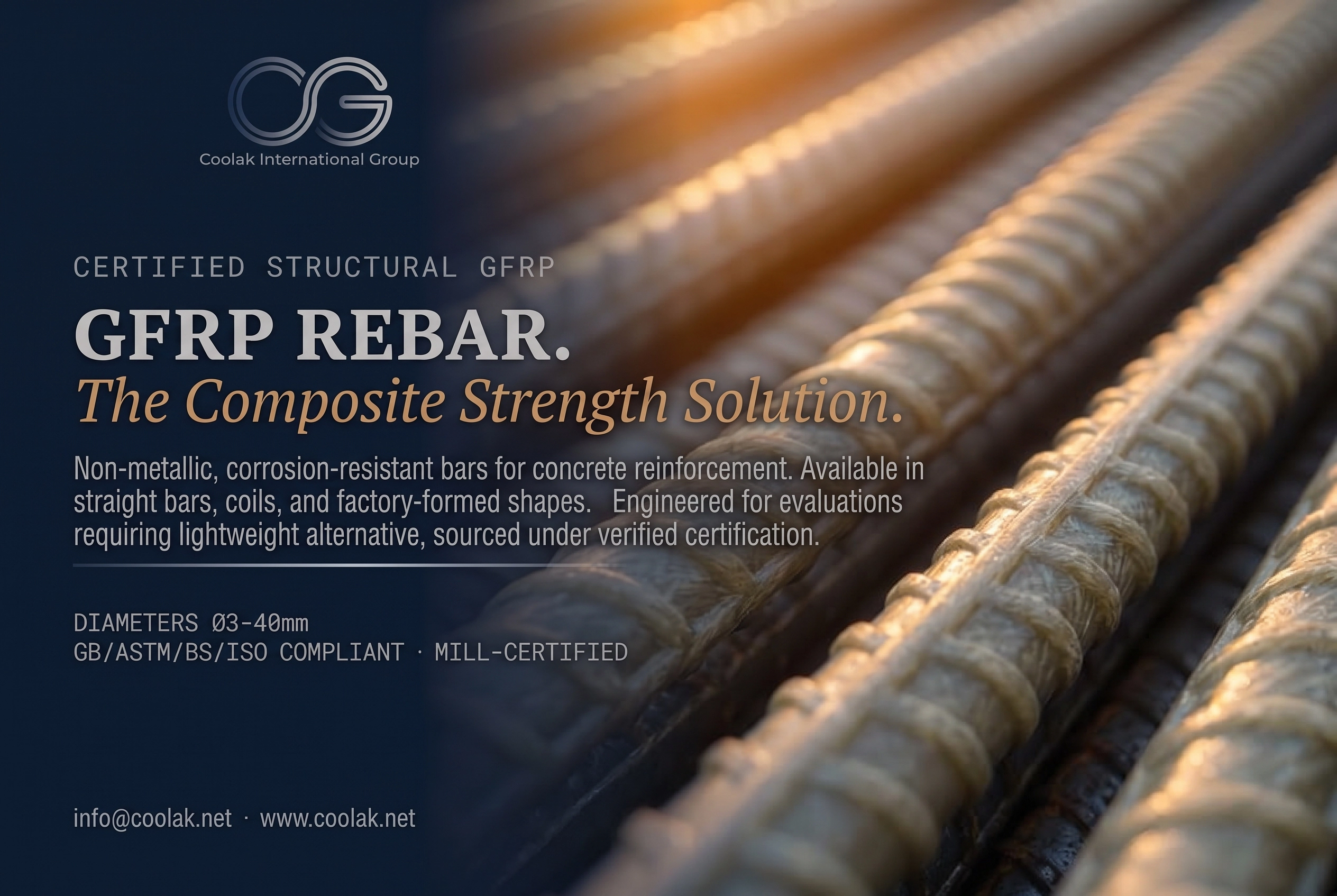
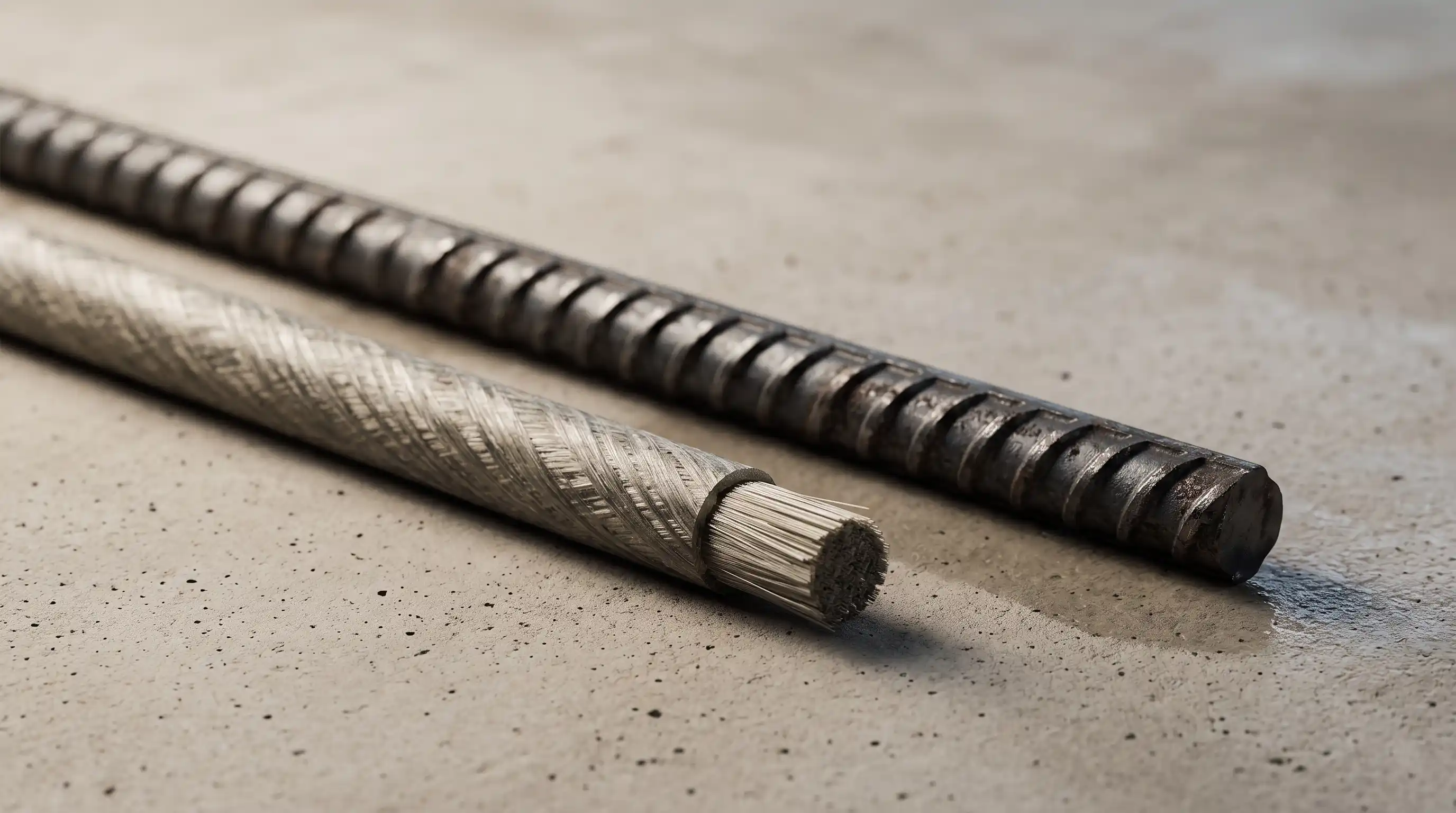
GFRP rebar is a non-metallic composite reinforcing bar used in concrete. It consists primarily of continuous glass fibers embedded in a polymer resin matrix. The fibers provide the principal longitudinal tensile reinforcement, while the resin holds the fiber system together, protects it, and forms the bar.
GFRP means Glass Fiber Reinforced Polymer. Related market terms include fiberglass rebar, FRP rebar, composite rebar, and GFRP reinforcement. These terms can be useful for product discovery, but they should not be treated as complete engineering specifications.
Two products carrying the same general GFRP label may differ in resin system, fiber architecture, nominal diameter, external surface, mechanical properties, qualification basis, and manufacturing controls. A buyer or engineer therefore needs the product-specific documentation behind the name.
The non-metallic material system creates some of the key distinctions from conventional reinforcing steel. FHWA has identified characteristics such as noncorrosive behavior, light self-weight, and nonmagnetic properties as reasons GFRP has attracted attention in infrastructure applications.
The more important distinction is structural: GFRP does not behave mechanically like reinforcing steel. Design assumptions used for steel cannot simply be transferred to a GFRP-reinforced member.
What Is GFRP Rebar Made Of?
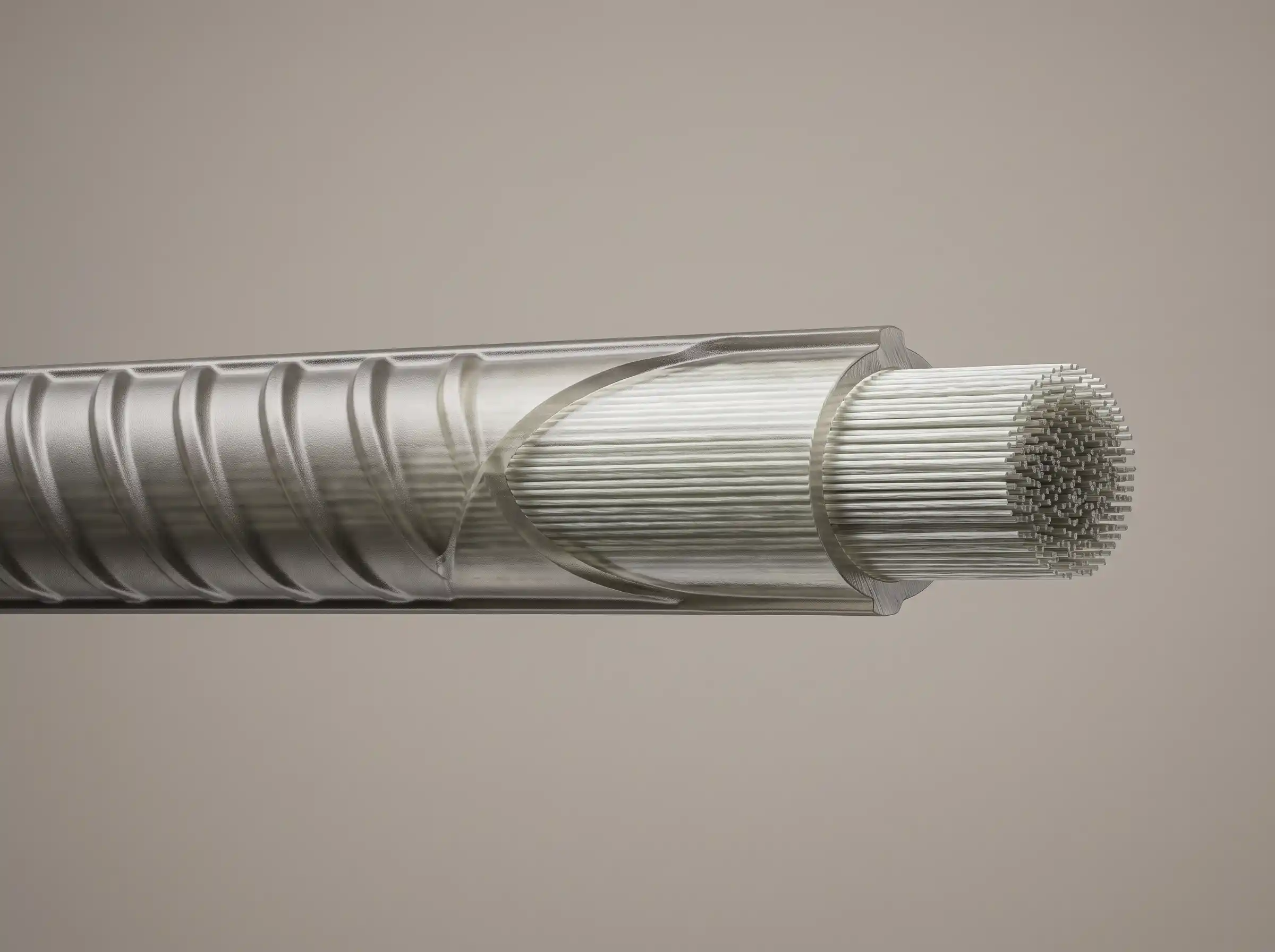
GFRP rebar is built from a fiber system, a polymer matrix, and an engineered external surface. Each element contributes to how the finished reinforcement performs.
Glass Fibers
Continuous glass fibers provide the principal longitudinal load-carrying component of the bar. A large number of glass filaments are aligned along the bar so the composite can resist tensile forces in that direction.
The phrase “glass fiber” does not by itself define final bar performance. Fiber arrangement, fiber content, interaction with the matrix, processing quality, and the rest of the product system all matter.
This is one reason generic market claims should be treated carefully. A value reported by one manufacturer, bar size, or resin/fiber system should not be assumed to apply to every GFRP product.
Polymer Resin Matrix
The polymer resin matrix binds the fibers into a stable composite bar. It helps transfer forces among fibers, protects the reinforcement system, maintains bar geometry, and contributes to environmental performance.
For procurement purposes, the resin system is not a secondary description. It is one of the product characteristics that should be identified when suitability, qualification evidence, and project requirements are being reviewed.
Surface Profile
GFRP reinforcement requires an external surface that can interact effectively with concrete. Depending on the product, the bar may use ribs, sand coating, wrapping, or another profiled surface treatment.
Surface configuration varies between products and should be treated as a specification item. ASTM D7957/D7957M-26 covers GFRP bars with external surface enhancement and excludes plain or smooth bars from its scope.
How Is GFRP Rebar Manufactured?
At a high level, GFRP rebar production combines continuous glass fibers with a polymer resin, forms the composite into a bar, creates the required external surface, and cures the material into its finished condition.
A useful conceptual sequence is:
Glass Fibers + Resin → Forming → Surface Formation → Curing → Finished Reinforcement Bar
This article does not turn that sequence into an industrial manufacturing instruction. For engineers and buyers, the more useful question is what the production process delivers: consistent geometry, a defined surface, documented physical and mechanical properties, and evidence supporting any claimed standard compliance.
Because GFRP is a composite material, final performance is influenced by the interaction of its components and manufacturing controls. Knowing only the nominal fiber or resin type is not enough to judge the finished bar.
That is why a technical data sheet should not be the only procurement document reviewed when qualification or quality-control evidence is required.
What Are the Key Properties of GFRP Rebar?
The main properties that shape GFRP selection are its corrosion behavior, lower weight, tensile response, elastic modulus, and non-metallic electrical and magnetic characteristics.
Corrosion Resistance
GFRP does not contain steel reinforcement, so the conventional electrochemical rusting mechanism associated with reinforcing steel does not apply in the same way. This is one of the principal reasons GFRP is considered for concrete exposed to conditions where corrosion of steel reinforcement is a durability concern.
FHWA research on GFRP reinforcement has identified corrosion of conventional steel as a major durability driver for investigating noncorrosive reinforcement alternatives.
That does not justify a claim that every GFRP product is unaffected by every environment. Composite durability still depends on exposure, material system, design, manufacturing quality, and project requirements. “Corrosion resistant” is more accurate than an absolute universal claim.
Lower Weight
GFRP rebar is lighter than conventional steel reinforcement. Lower mass can simplify parts of transportation, storage, handling, and site logistics.
A universal weight ratio should not be applied across all products without a verified source. Diameter, geometry, and product construction affect the actual figure, so shipment or project calculations should use the supplier's documented product information.
Tensile Behavior
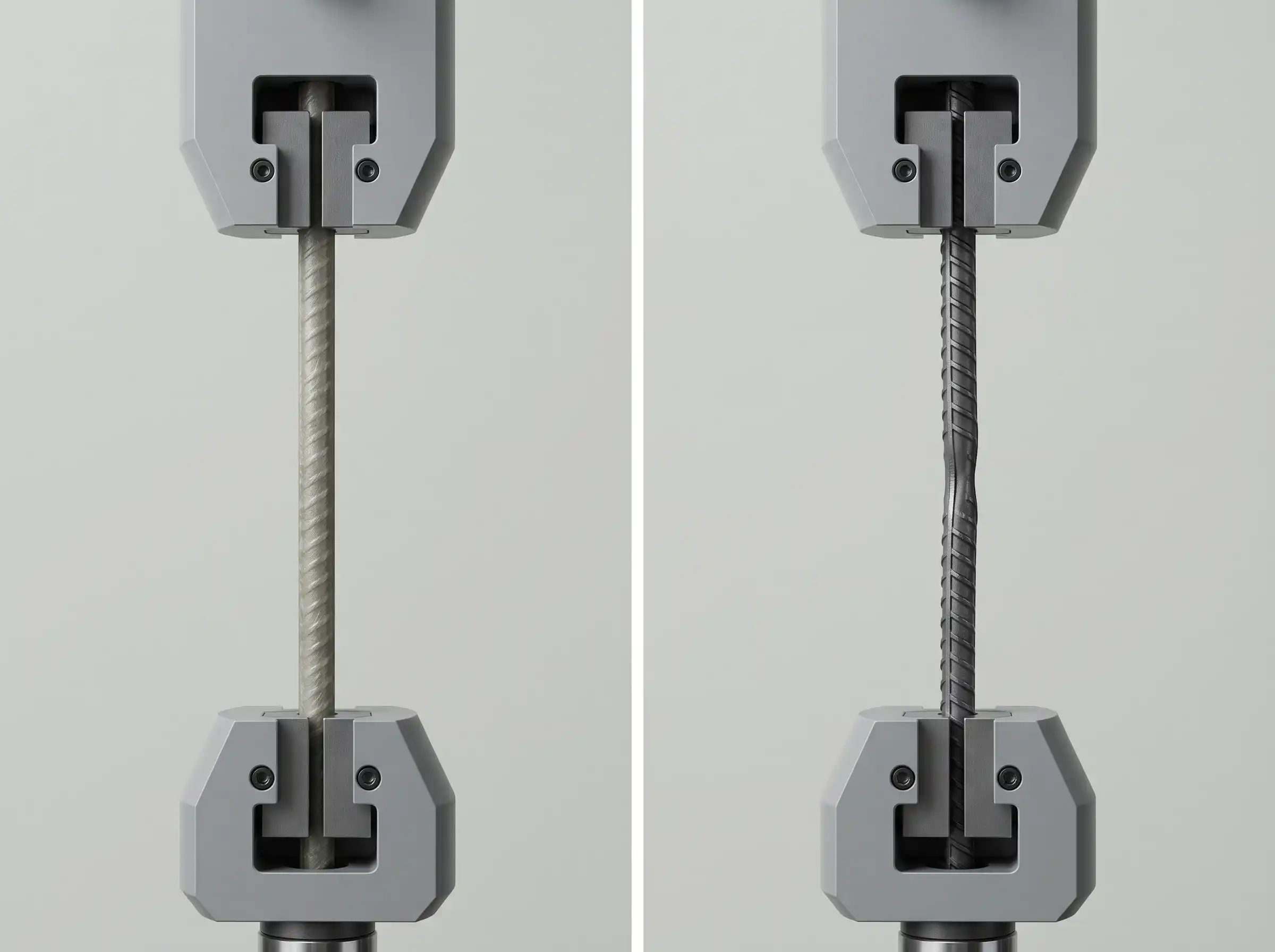
GFRP can provide high tensile capacity, but its tensile behavior differs fundamentally from steel. Under tensile loading, GFRP reinforcement generally behaves in an approximately linear-elastic manner until rupture and does not have conventional steel-like yielding.
This difference matters when someone asks whether GFRP is “stronger than steel.” Tensile strength is only one property. Structural behavior also depends on stiffness, serviceability, reinforcement detailing, failure mode, and the design method used for the member.
Elastic Modulus
GFRP has a different elastic modulus from steel and is commonly less stiff. That distinction matters because reinforcement stiffness affects serviceability behavior, including deformation and crack control.
FHWA analytical work on GFRP-reinforced concrete has addressed the lower elastic modulus of GFRP relative to steel and its effect on structural response.
For design or procurement, the value should come from the applicable product documentation and design framework rather than from a generic number taken from an unrelated bar.
Electrical and Magnetic Characteristics
GFRP is non-metallic, making it relevant to selected structures where metallic reinforcement would create electrical or electromagnetic concerns. ACI materials introducing the GFRP code specifically identify corrosion-prone structures and applications requiring non-ferrous reinforcement because of electromagnetic considerations.
The exact project requirement still needs to be defined. The general label GFRP should not replace an electrical, magnetic, or project-specific performance specification.
How Does GFRP Rebar Differ from Conventional Steel Reinforcement?
The basic distinction is that GFRP is a non-metallic composite with different stiffness and failure behavior, while conventional rebar is steel with familiar yielding characteristics.
Property | GFRP Rebar | Steel Rebar |
Material | Glass-fiber-reinforced polymer composite | Steel |
Corrosion behavior | Does not undergo conventional steel rusting | Can corrode under relevant exposure conditions |
Weight | Lower | Higher |
Tensile behavior | Approximately linear to rupture | Characteristic yielding behavior |
Elastic modulus | Different and commonly lower | Higher characteristic stiffness |
Electrical behavior | Non-metallic | Conductive |
Design approach | GFRP-specific requirements | Steel-specific requirements |
This table is only an introductory comparison. It does not establish an overall winner. A full engineering comparison must separate tensile strength, stiffness, serviceability, durability, detailing, construction constraints, life-cycle considerations, and the specific exposure conditions of the project.
Where Is GFRP Rebar Commonly Used?
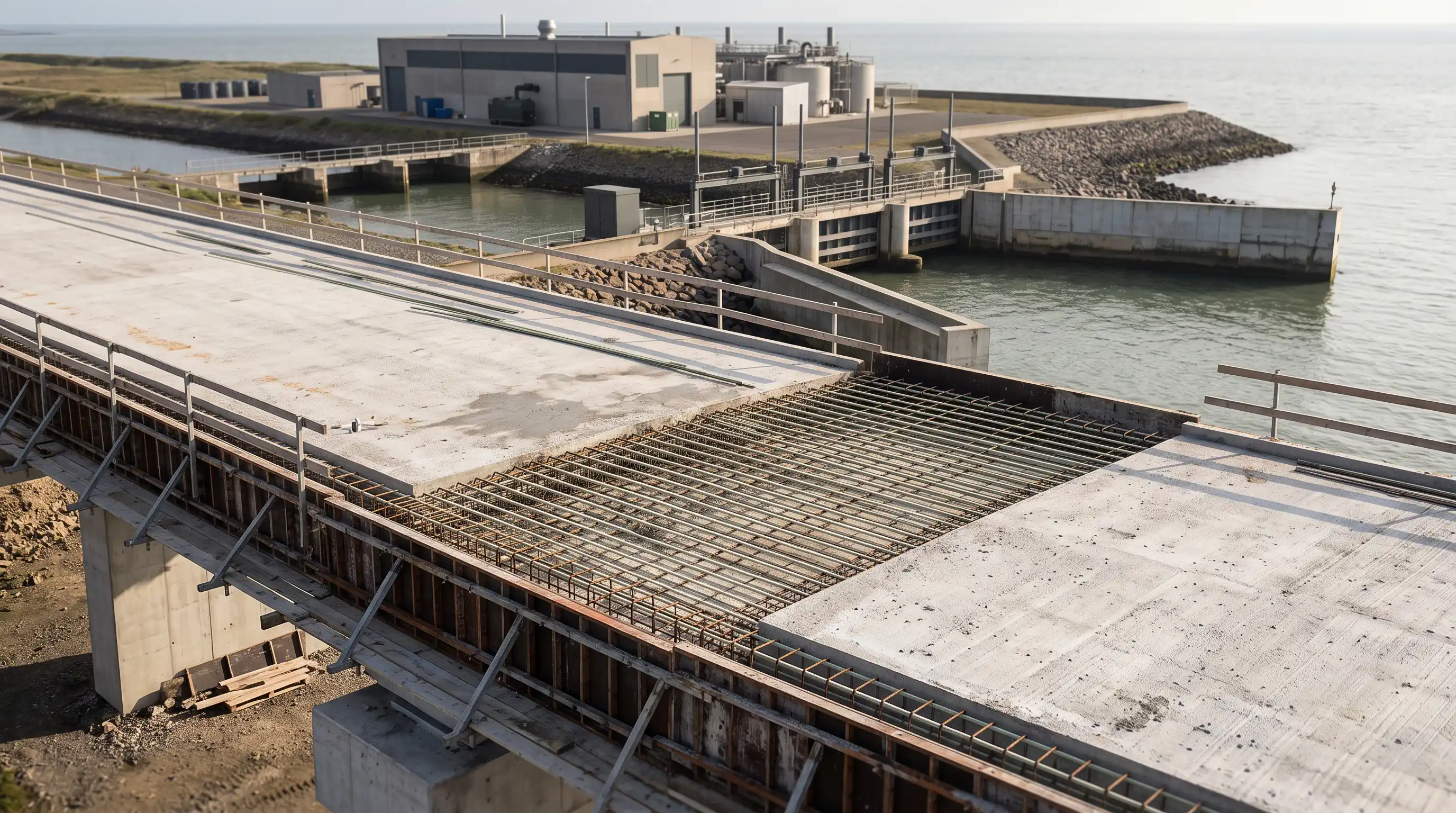
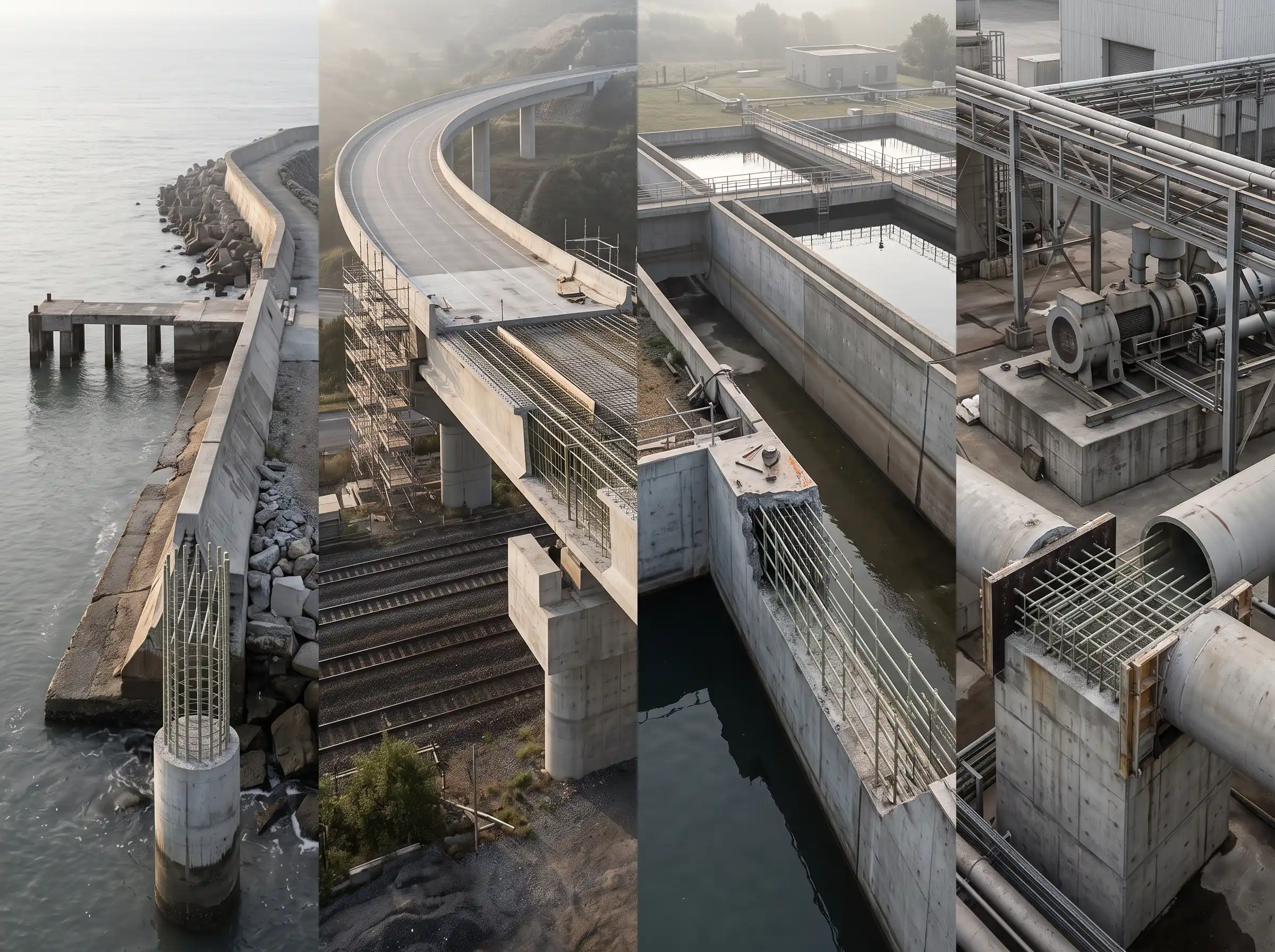
GFRP rebar is commonly considered where corrosion of steel reinforcement, reinforcement weight, or non-metallic material properties have meaningful project value.
Marine and coastal structures: Chloride exposure, moisture, and durability concerns can make corrosion-resistant reinforcement relevant to material selection.
Bridge and infrastructure elements: Composite reinforcement has been studied and applied in transportation infrastructure where corrosion resistance and lower weight may offer project-specific advantages. FHWA work on composite bridge systems reflects both of these drivers.
Water and wastewater structures: Long-term contact with water or aggressive service conditions can make reinforcement durability an important design consideration.
Industrial concrete structures: Selected industrial environments may justify evaluation of non-metallic reinforcement because of chemical exposure or operational requirements.
Concrete exposed to aggressive environments: Where reinforcing-steel corrosion is a central durability concern, GFRP can form part of the material options evaluated by the design team.
Structures with electromagnetic requirements: Non-ferrous reinforcement can be relevant in specialized facilities where metallic reinforcement may interfere with project requirements.
None of these application categories automatically makes a particular GFRP bar suitable. Exposure, structural demand, detailing, applicable codes, and the actual product specification still control the decision.
What Are the Advantages of GFRP Rebar?
The advantages of GFRP are most useful when they solve a defined project problem rather than being treated as universal benefits.
Resistance to the corrosion mechanism associated with steel: This can be highly relevant where reinforcement corrosion is a major durability concern.
Lower weight: Reduced reinforcement mass can support easier transport and handling.
Non-metallic material: Certain electrical, magnetic, or specialty requirements can favor a non-ferrous reinforcement system.
Suitability for selected aggressive environments: GFRP may be considered where conventional steel durability would otherwise require additional protection or maintenance planning.
A different durability strategy: Using non-metallic reinforcement can change how a project addresses the risk of reinforcing-steel corrosion.
These advantages do not mean GFRP is inherently better than steel for every structure. Material value exists only when its properties match the design objective, exposure, construction method, and project specification.
What Are the Limitations and Design Considerations?
GFRP cannot be evaluated with steel assumptions. Different stiffness, lack of conventional yielding, failure behavior, temperature sensitivity, fabrication constraints, and variation between products all require attention.
Different Stiffness
Lower elastic modulus can make serviceability checks particularly important. A member may require careful attention to deformation and cracking even when strength requirements are satisfied.
No Conventional Steel-Like Yielding
Steel reinforcement has familiar yielding behavior before final failure. GFRP does not provide the same conventional yield response, which changes how engineers approach design and failure behavior.
Temperature and Fire
The polymer-based system means elevated temperature and fire behavior require dedicated consideration. ACI CODE-440.11-22 includes provisions addressing fire resistance and elevated service temperature.
A generic claim about fire performance should therefore be avoided. The applicable system, cover, member, code provisions, and project requirements must be evaluated together.
Bending and Fabrication
GFRP should not be assumed to permit the same field-bending practices used for steel. ASTM D7957/D7957M-26 covers both cut lengths and bent shapes and includes requirements related to bent bars. This does not mean straight bars can be freely reshaped on site. Required bar geometry should be defined before procurement.
Product-to-Product Variation
Manufacturer, diameter, fiber/resin system, surface configuration, and process controls can all affect bar properties. A design value or test result for one GFRP product should not be applied to another without supporting evidence.
These limitations are why GFRP should not be presented as a direct 1:1 steel replacement.
What Standards Apply to GFRP Rebar?
Two important references for an introductory GFRP discussion are ASTM D7957/D7957M-26 and ACI CODE-440.11-22, but they serve different purposes.
ASTM D7957/D7957M-26 is the current active specification titled Standard Specification for Glass Fiber Reinforced Polymer (GFRP) Bars for Concrete Reinforcement. Its scope addresses geometric, material, mechanical, and physical requirements, along with qualification, quality-control, acceptance, and testing provisions for the covered GFRP bars.
ACI CODE-440.11-22, Building Code Requirements for Structural Concrete Reinforced with Glass Fiber-Reinforced Polymer (GFRP) Bars—Code and Commentary, provides minimum requirements for materials, structural design, and detailing. ACI describes the Code as applying to GFRP bars conforming to ASTM D7957-22 and covers topics including strength, serviceability, durability, analysis, deflection, development, splicing, inspection, and testing.
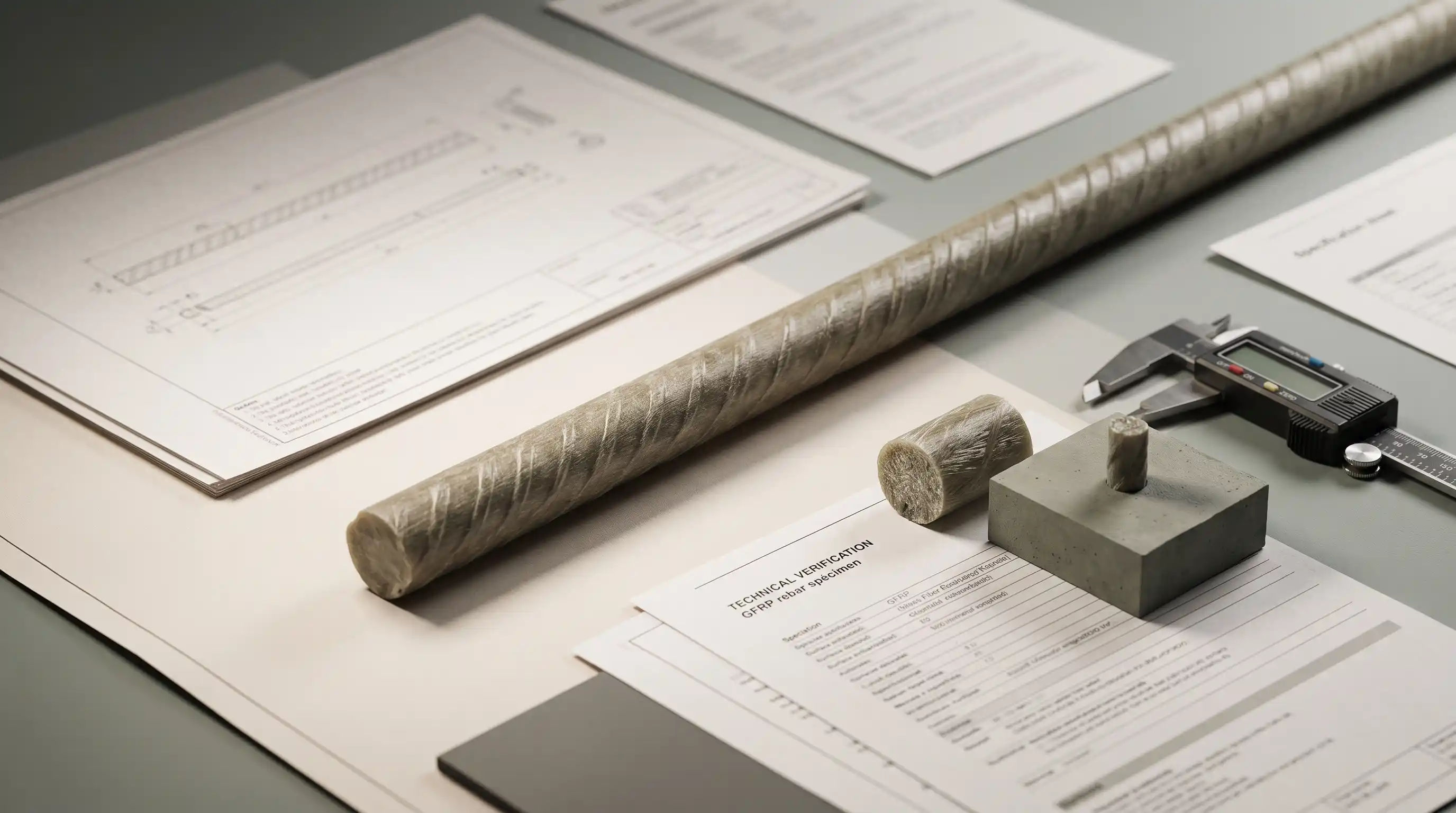
The distinction matters. ASTM D7957 addresses the reinforcement product and its qualification requirements; ACI CODE-440.11 addresses how GFRP reinforcement is used in structural concrete design.
For a real project, the contract documents and governing jurisdiction should identify the applicable standards and editions. Buyers should not infer project compliance from a standard name appearing on a commercial quotation alone.
What Should B2B Buyers Verify Before Sourcing GFRP Rebar?
A professional GFRP inquiry should define the technical requirement before suppliers are compared on price. “GFRP rebar” alone is not a complete purchasing specification.
Item to Verify | Why It Matters |
Fiber Type | Identifies the reinforcement system being offered. |
Resin System | The matrix is part of the product's technical and durability profile. |
Surface Configuration | Surface geometry is relevant to product identification and bond behavior. |
Diameter | Bar size affects geometry and documented product properties. |
Length | Standard or project-specific cut lengths should be defined. |
Mechanical Properties | Required values should be checked against actual product documentation. |
Applicable Standard | The standard and its edition should be stated explicitly. |
Test Reports | Technical claims should be traceable to supporting test evidence where required. |
Qualification / QC Documentation | Helps assess whether production and acceptance requirements are documented. |
Straight or Bent Configuration | Required geometry must be known before ordering. |
Country of Origin | Relevant to procurement documentation, logistics, and contract requirements. |
Packaging | Affects transport, unloading, storage, and handling. |
Project Specification | The project requirement is the final basis for technical acceptance. |
A strong sourcing sequence is:
Project Requirement → Product Specification → Supporting Documentation → Commercial Offer
Starting with price before confirming technical equivalence can result in quotations for bars that are not directly comparable.
Buyers should also distinguish between three different statements: a supplier saying a product is “GFRP,” a datasheet listing certain properties, and documented evidence that the offered product satisfies the project’s required standard. These are not the same level of information.
Where Should a Buyer Start with GFRP Product Evaluation?
Start by converting the project need into a clear technical inquiry. Define diameter, length, surface configuration, straight or bent form, applicable standard, required properties, and documentation before asking suppliers to quote.
Need product guidance?
Contact our team for specifications, availability, and pricing details.