
At Coolak, we believe that successful transactions are built on trust, transparency, and informed decision-making. This belief is reflected in several principles that guide our work: Transparency throughout the commercial process Careful verification before presenting opportunities Risk reduction before problems arise Practical and executable transaction structures Long-term business relationships rather than short-term gains These principles are not marketing statements. They are the standards by which we evaluate our own decisions.

Onyx

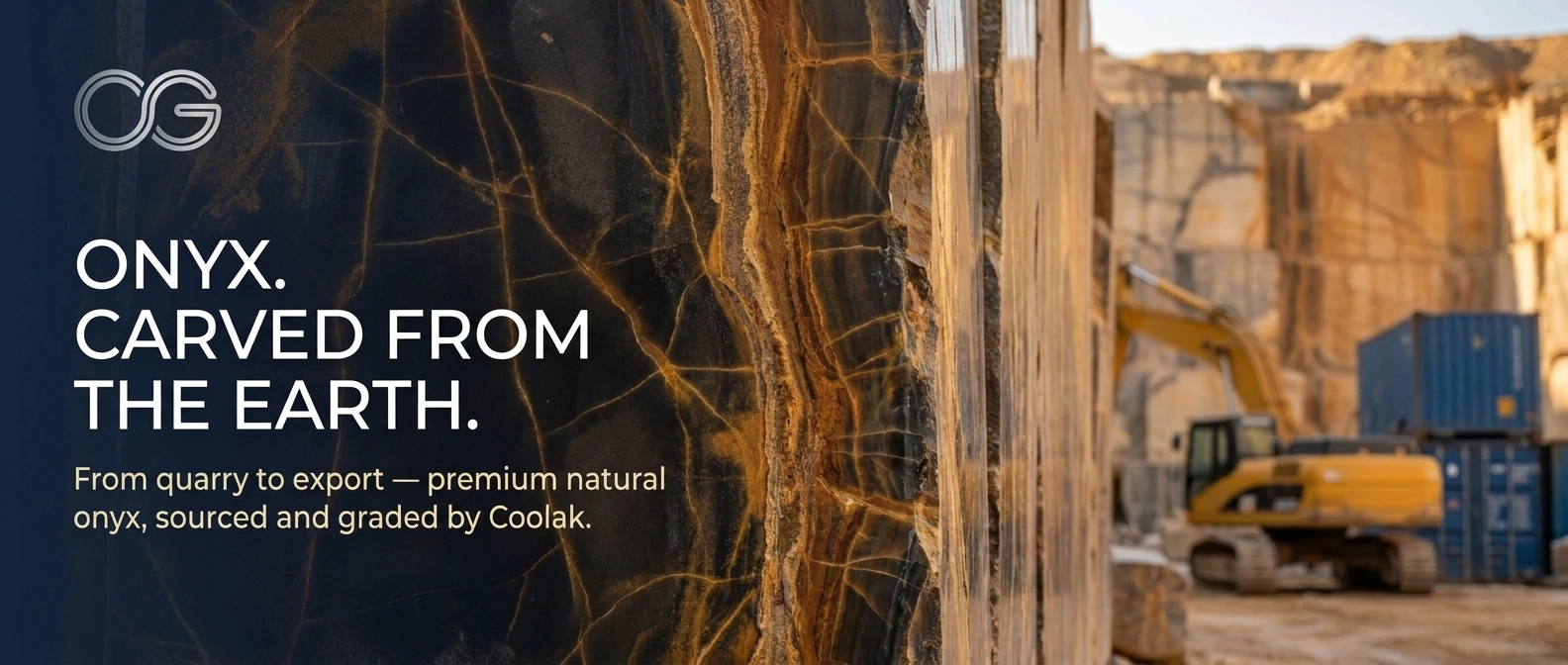
Onyx, unlike true marble, doesn’t form through the metamorphosis of limestone under heat and pressure. Instead, it develops through a slow, quiet process where mineral-rich groundwater deposits calcium carbonate layer by layer inside mountain rock, a process that can take thousands of years to complete. This gradual formation is exactly what creates onyx’s signature wavy banding and translucent quality, features no other decorative stone quite replicates. Chemically, onyx consists primarily of high-purity calcite (CaCO₃), with trace amounts of iron oxide and manganese giving rise to its natural pink, green, and cream tones. On the Mohs scale, its hardness sits around 3, considerably softer than granite, which allows for exceptional polishing and fine carving work. Coolak sources this stone directly from Iranian quarries, offering it in pink, white, and green varieties as raw blocks, cut slabs, or fully finished products. Our primary clients are international traders and stone-processing factories seeking a reliable, export-grade supply chain. From quarry selection to shipment preparation, our team manages the entire process with full transparency.

Onyx

How Onyx Is Formed

Contrary to popular belief, onyx and marble are two entirely distinct stones with separate geological origins. True marble results from limestone transformed under intense heat and pressure deep within the earth. Onyx forms through a much slower and fundamentally different mechanism. Groundwater rich in dissolved calcium and carbonate ions moves through limestone fissures or cave systems, gradually depositing calcium carbonate as it flows. This layer-by-layer accumulation, which can take anywhere from thousands to millions of years, produces the parallel, banded structure that defines onyx. Water temperature, mineral concentration, and trace impurities like iron or manganese oxide determine the final color and density of the veining. It’s this slow, natural process that gives onyx its fine porosity and distinctive translucency, a quality that sets it apart from every other ornamental stone on the market.

From Mountain to Slab and Priceless Sculpture

Block Extraction at the Quarry

Extracting onyx demands far more precision than harder stones like granite, since its layered structure and relative fragility increase the risk of cracking during the cutting process. Experienced extraction teams must identify vein direction and natural weak points in each block before cutting begins, minimizing raw material loss. Choosing the right quarry directly affects color consistency and final quality, making this the foundational step in any export-grade onyx supply chain.

Cutting into Slabs and Tiles

Extracted blocks move to specialized workshops where they’re cut into slabs, typically between 2 and 3 centimeters thick. High-end projects often rely on book-matching, a technique where two adjacent slabs from the same block are positioned side by side so their veining mirrors like a reflection. Widely used in five-star hotel lobbies and premium architectural interiors, book-matching significantly increases both the visual impact and market value of the final product.

Reinforcement and Final Finishing

Due to its naturally porous structure, onyx often contains micro-fissures and small voids that need addressing before final polishing. At this stage, the back of each slab is reinforced with epoxy resin or fiberglass mesh, giving it enough structural strength for transport and installation while preserving its natural light transmission. The quality of this step is what separates a true export-grade product from lower-value stone sold domestically.

Transformation into Fine Art and Luxury Products

The finest onyx pieces continue their journey through the hands of skilled artisans, becoming decorative vessels, hand-carved vases, artistic tabletops, and priceless sculptures. That rare combination of natural translucency and unique veining patterns is exactly why onyx holds a distinguished place among the world’s most sought-after ornamental and artistic stones.

Applications of Onyx

Thanks to its visual richness, natural translucency, and high adaptability, onyx is used across a broad spectrum of projects:

  • Wall cladding and interior façades for office and residential buildings

  • Backlit panels illuminated from behind to showcase natural veining

  • Flooring in low-traffic, design-forward spaces

  • Kitchen countertops and dining tabletops

  • Bathroom vanities, tubs, and decorative tiling

  • Column cladding, railings, and decorative staircases

  • Decorative vessels, vases, and candle holders

  • Classic and contemporary sculpture work

  • Backlit chandeliers and lamp fixtures

  • Retail showcase displays and exhibition interiors

  • Exterior façades for signature architectural projects

  • Luxury handicrafts and premium souvenirs

General Chemical and Physical Analysis

Onyx is composed primarily of high-purity calcium carbonate (CaCO₃), typically ranging between 95 and 99 percent. Natural impurities such as iron oxide (Fe₂O₃), manganese oxide, and copper compounds are responsible for the pink, green, and cream-yellow veining found across different varieties. Its hardness falls between 2.5 and 3 on the Mohs scale, making it considerably softer than granite (roughly 6 to 7), which allows for delicate cutting and carving but also makes it more vulnerable to scratching and acidic exposure. Density typically ranges from 2.6 to 2.8 grams per cubic centimeter, and its natural porosity, usually between 0.5 and 2 percent, is the primary factor behind its signature light-transmitting quality.

  • Pink Onyx: soft, warm veining caused by iron impurities, popular in residential and spa interiors

  • White Onyx: the purest variety with minimal impurities and the highest translucency, most commonly chosen for backlit installations

  • Green Onyx: deeper pigmentation from chromium or copper compounds, favored for classic and statement architectural projects

Sourcing Onyx from Coolak

Coolak gives international traders and stone-processing factories direct access to Iranian onyx quarries, backed by transparent shipment documentation and export-scale supply capacity. If you’re looking for a partner who combines stone quality with dependable delivery timelines, our team is ready to review your requirements.
Special Offers

Available offers for this product

Exclusive Allocation: The World’s Rarest Natural Stone – Persian Pink Onyx

Ending Soon
Start Date 2026-07-06
End Date 2026-09-06
Starts In Loading...
Ends In Loading...
MOQ 1000 MT
Origin Iran

Coolak International Group is privileged to present a rare opportunity to secure one of the world’s most exquisite and scarce natural materials: Persian Pink Onyx.

Often described as the “Jewel of Architecture,” this stone is celebrated globally for its ethereal translucency, delicate pink veins, and unparalleled aesthetic value. Sourced directly from our exclusive quarry in Iran, this is a masterpiece of nature reserved for the most prestigious architectural projects.

Exclusive Quarry Access & Selection

Unlike standard supply operations, we offer our premium partners full, four-season access to our quarry. We invite you to visit our site personally to inspect and hand-select the blocks that best suit your project requirements. This ensures total confidence in quality, color consistency, and structural integrity.

Allocation & Pricing (EXW - Ex Works)

Product Grade

Application

Price (USD/MT)

Premium Block

For High-End Slab Extraction

$1,400

Slab & Rubble Mix

Processed/Select Pieces

$800

Rubble (Lash-eh)

Artistic & Decorative Crafts

$500

  • Minimum Order Quantity (MOQ): 1,000 Metric Tons.

  • Delivery Term: EXW (Ex Works). Full logistics support for local handling and loading provided.

Transaction Procedure

DDue to the scarcity of this inventory and to ensure a professional environment, we follow this secure protocol:

  1. Expression of Interest: Issuance of an official LOI (Letter of Intent).

  2. Credential Verification: Completion of standard KYC (Know Your Customer) and due diligence.

  3. Invitation to Site: Upon successful verification, we welcome your representative to our quarry for quality inspection and hand-selection of blocks.

  4. Contracting: Finalization of the Sales Agreement and logistics planning.

Need a formal quotation or purchase document?

Submit your LOI or ICPO request here. Your request will be reviewed together with the selected product details.

Go to request form
Our FAQs
Onyx’s higher price reflects both its rarity and the complexity of producing it. Unlike marble, which is quarried in far more locations worldwide, Onyx forms in only a handful of sites through an extremely slow natural process. Its fragility also means higher material loss during extraction and cutting, and the resin reinforcement required on the back of each slab adds to finishing costs. These factors combine to produce a price that accurately reflects the stone’s genuine rarity and quality.
Onyx is a natural stone, and vein patterns and color intensity naturally vary between blocks, even from the same quarry. Before shipping any final order, we send photos and, on request, a physical sample from the selected block for your approval. This step prevents any discrepancy after the shipment has left our facility.
Every shipment includes standard export documentation: certificate of origin, packing list, and commercial invoice. Lab analysis of density, porosity, and chemical composition is also available upon request. This documented transparency reflects Coolak’s commitment to building long-term partnerships with international traders.
Minimum order volumes vary depending on the product type (raw block, cut slab, or finished piece) and destination market. We clarify exact volume and shipment capacity during initial negotiations, so pricing and lead times are transparent from the start.
Yes. Coolak provides samples in two formats: polished tiles (to evaluate color, veining, and surface finish) and small sample blocks (to assess vein depth and structural consistency). These samples are typically sent before bulk orders are finalized, giving buyers full confidence in their decision.
Request Information

Submit LOI / ICPO

Choose the request type and complete only the required fields.

Additional details for ICPO
Required document
Allowed file type: PDF | Maximum size: 20 MB
Required documents

Upload the five required files below. Maximum size is 20 MB for each file.

Allowed file types: PDF, JPG, JPEG, PNG | Maximum size: 20 MB per file

Our Products

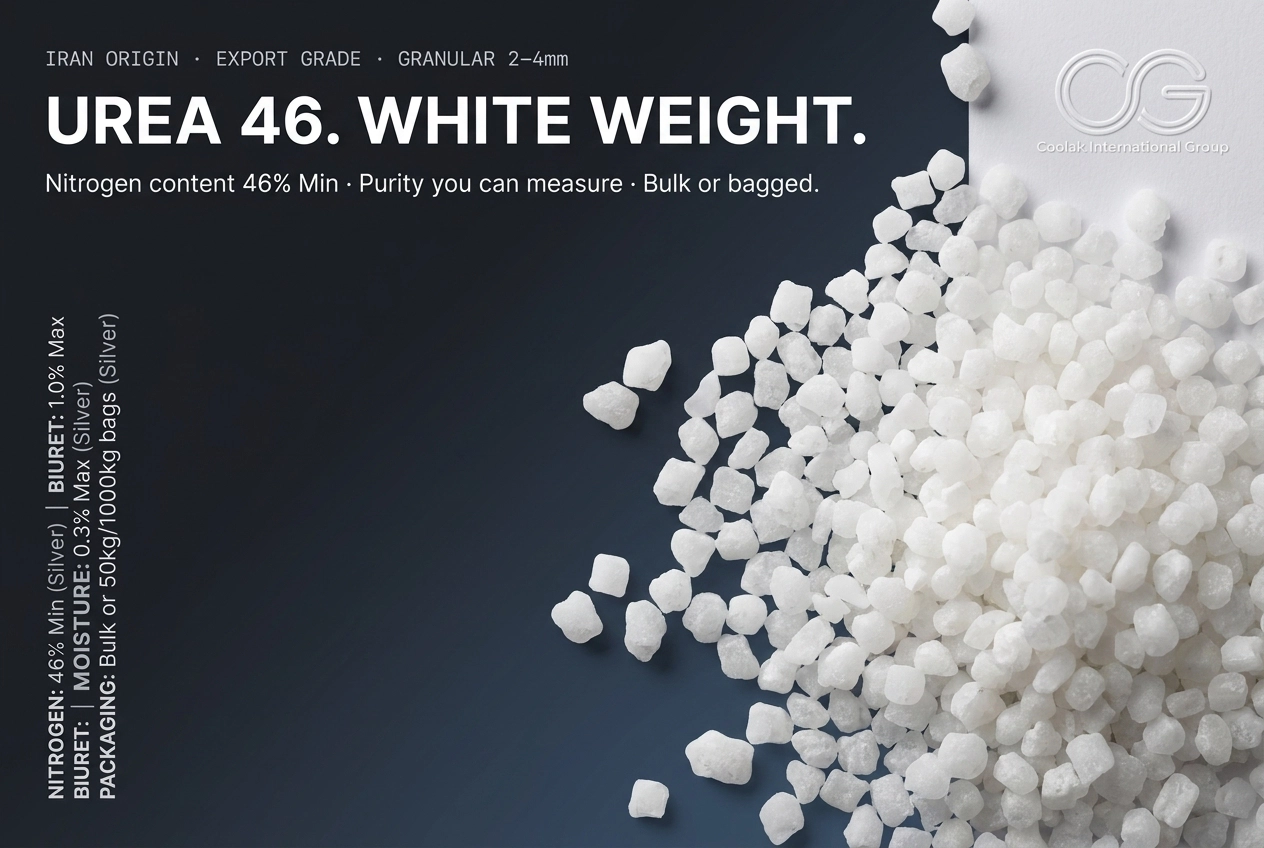
Urea 46%
Urea 46%
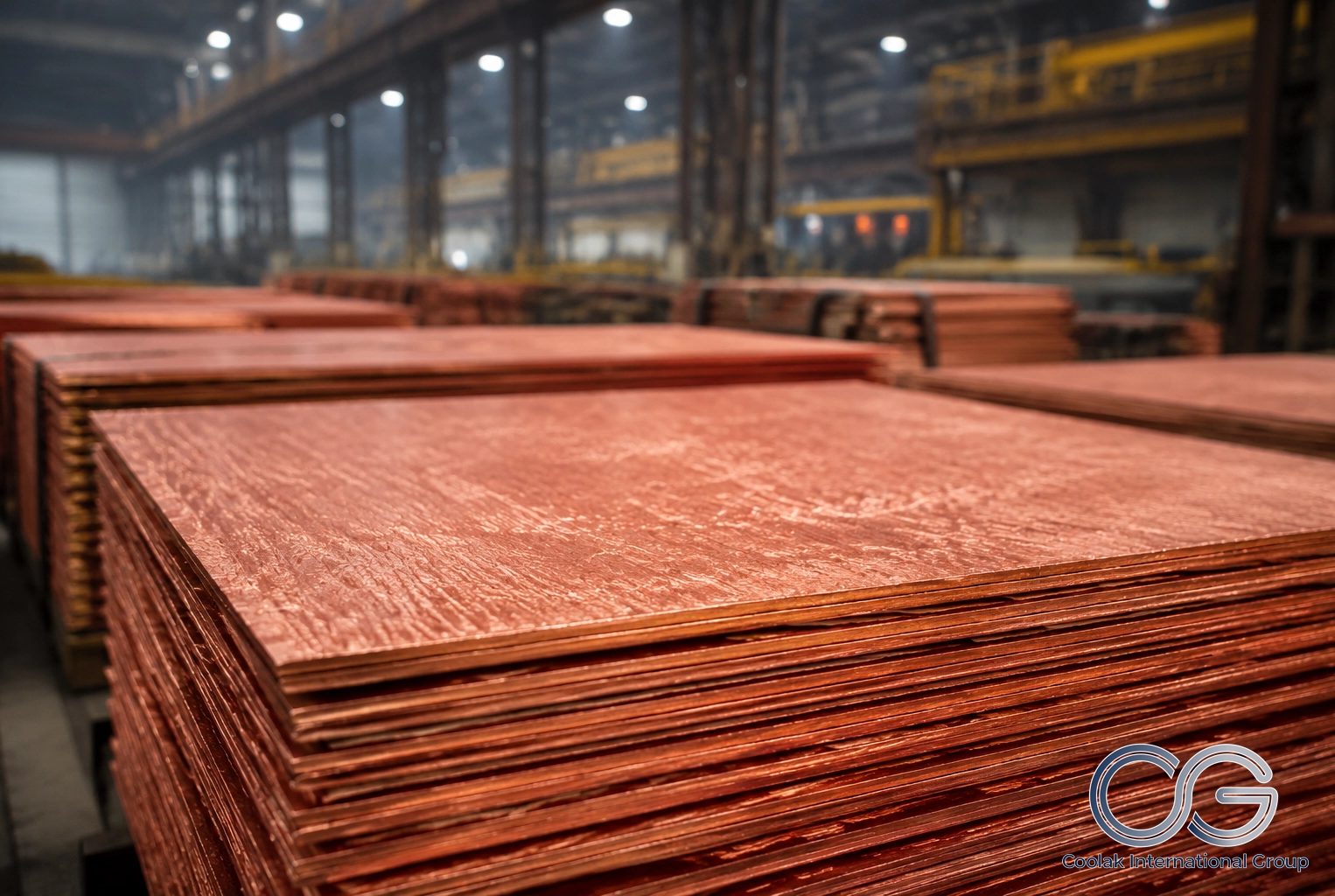
Refined Copper Cathode
Electrolytic Copper Cathode
EN590 Diesel Fuel
Diesel EN590